
Sunday, October 11, 2026

AI Trading Systems Deploy Across Crypto and Traditional Markets as Bitcoin Hits ATH Then Corrects

Flow Traders and BitMart are deploying deep learning and multi-generation AI systems into trading infrastructure as Bitcoin reached all-time highs before correcting. The expansion comes as NVIDIA's earnings beat expectations and Meta shifts TPU resources, providing compute capacity for algorithmic trading strategies. Regulatory pressure intensifies with USDT downgrades and China reaffirming crypto bans.

AI Trading Systems Deploy Across Crypto and Traditional Markets as Bitcoin Hits ATH Then Corrects
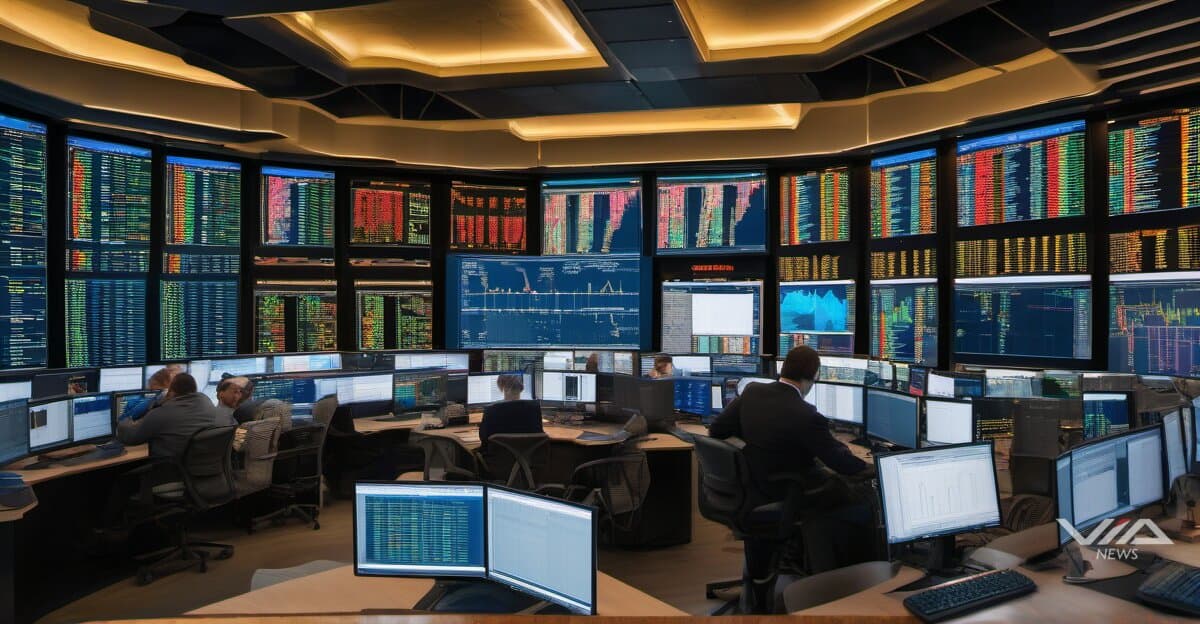
Image generated by AI for illustrative purposes. Not actual footage or photography from the reported events.
Loading stream...

Flow Traders has deployed deep learning initiatives into its core trading infrastructure while BitMart launched multi-generation AI trading systems, marking rapid integration of machine learning into both traditional and crypto markets.

The deployments coincide with Bitcoin reaching all-time highs before entering correction territory. Trading platforms are leveraging AI capabilities to navigate volatility patterns that accompany these price swings.

NVIDIA beat earnings expectations, signaling continued strength in AI compute infrastructure that powers algorithmic trading systems. Meta's shift in TPU resource allocation creates additional capacity for firms building sophisticated trading algorithms.

Google released Gemini 3 Pro, expanding the AI model ecosystem available for financial market analysis and trading strategy development. These compute developments enable more complex pattern recognition in price movements and order flow.

Regulatory pressures are mounting alongside technical expansion. USDT received a downgrade, affecting stablecoin trading pairs across exchanges. China reaffirmed its cryptocurrency ban, eliminating retail trading volume from the world's second-largest economy.

AI-powered systems are processing increased trading volumes as crypto market volatility creates opportunities for algorithmic strategies. Traditional finance firms are applying deep learning to identify arbitrage and trend signals across asset classes.

The infrastructure buildout reflects market structure changes. Algorithmic trading now influences volatility patterns in both crypto and traditional markets through rapid order execution and liquidity provision.

BitMart's multi-generation AI approach suggests firms are deploying multiple model versions simultaneously to compare performance under varying market conditions. Flow Traders' deep learning integration indicates traditional market makers are adopting techniques previously confined to quantitative hedge funds.

The convergence of AI compute capacity increases and trading infrastructure upgrades is reshaping how markets process information and execute trades. Firms without algorithmic capabilities face disadvantages in speed and pattern recognition against AI-equipped competitors.

Source documents

Via News is a conduit. We point to the source documents behind this report — we don't replace them. Trace any claim to its source and decide what to trust. How we source

Source Trace Score3 source documents3 with a live linkVerifiability: Strong
  1. [1]Press releaseGlobeNewswire· January 13, 2026
    BitMart 2025 Annual Review: Building a More Complete Financial Infrastructure to Drive Long-Term Sustainable Growth
  2. [2]Press releaseGlobeNewswire· December 5, 2025
    CoinEx Research November 2025 Report: Painvember's Brutal Reality Check
  3. [3]News articleYahoo Finance· February 12, 2026
    Flow Traders 4Q and FY 2025 Results

In this story · Knowledge Files

What we know · the intelligence behind this page
Live from the substrate
What we're seeing
Agentic AI Rewires Enterprise Software: Platform Incumbents, Governance, and a Funded Startup Wave
Enterprise software is being rebuilt around autonomous AI agents. Incumbents and large platforms (SAP with its Autonomous Suite and Joule, Zeta with AthenaOS/AIM/Athena MCP, Meta with its new Enterprise Platform) are racing to own the agent layer. Meanwhile, seed and Series A money flows to finance-office and vertical startups (Dextr, Latitude, Dentira, Light), and consolidation continues through acquisitions (Tiny–Oso Cloud, Harvey–Guardrails AI). Investor commentary stresses that AI is better at disrupting around the edges of systems of record than at replacing them, that it should not be trusted with finance calculations, and that governance must be enforced by the system rather than left to agents.
Our read on the data ›
Signals we're tracking
EPKINLY Regulatory-Clinical Success Cascade
High probability of expanded label indications, additional combination approvals, and competitive positioning strength in follicular lymphoma market. Predicts positive commercial uptake and potential accelerated review for related indications.
Patterns we're watching ›
Where sources disagree
ING Group
Both facts record the same metric (shares_outstanding) for ING Group at the identical observation date (2025-12-31). FACT A states 2,902,437,688 shares; FACT B states 2,902 million shares (2,902,000,000). The difference is 437,688 shares (~0.015%). This is a genuine value conflict, though the discrepancy appears to result from FACT B rounding to the nearest million while FACT A provides the precise count.
We flag conflicts openly ›
Recently verified
✓ Checked against the original source
4,986
facts traced to their source — and we flag the ones that don't hold up.
101 entities tracked4,986 facts checked against source5,369 source documents archived
Query this data → isubstrate.com