
Saturday, August 22, 2026
What we know · the intelligence behind this page
Live from the substrate
What we're seeing
AI Platforms Rush to Establish Content-Authenticity Standards Amid Leadership Shakeups and Sustained Capex
Within days of each other in mid-August 2026, Google, Anthropic, and Spotify moved to formalize AI content watermarking and labeling policies, signaling an industry-wide push toward self-governed provenance standards as generative AI output floods consumer platforms. The shift coincides with executive turnover at OpenAI (Brad Lightcap's departure) and Meta's public AI manifesto, all set against continued heavy AI infrastructure capital expenditure and finance-sector moves (e.g., Wall Street paying for algorithmic edges on social signals) that underscore AI's deepening entanglement with capital markets.
Our read on the data ›
Signals we're tracking
Satellite-Terrestrial Network Integration Acceleration
Increased investment and launches in hybrid satellite-cellular networks across telecom industry; competitive responses from other carriers; regulatory activity around satellite spectrum; expansion of emergency/rural connectivity use cases
Patterns we're watching ›
Where sources disagree
JPMorgan Chase & Co.
Both facts report JPMorgan Chase & Co.'s revenue for the same fiscal period (FY 2025) with the same observation date (2025-12-31), but with different values: $182.447 billion vs. $185 billion. The ~1.4% difference ($2.553 billion) is too large to be explained by rounding alone and represents conflicting data for the identical time period.
We flag conflicts openly ›
Recently verified
Checked against the original source
4,977
facts traced to their source — and we flag the ones that don't hold up.
101 entities tracked4,977 facts checked against source5,242 source documents archived
Work with this data → vianewsagency.com

Treasury Yields Surge to 4.32-4.34%, Crushing High-PEG Tech Valuations

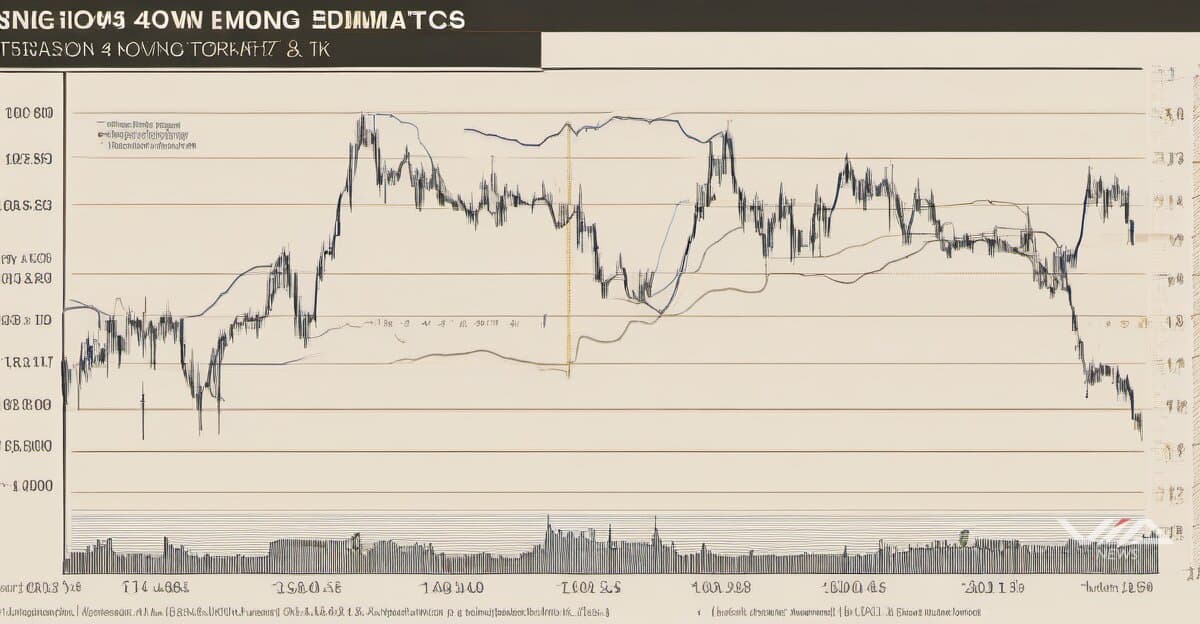
The 10-Year Treasury yield has climbed from 3.97% to 4.32-4.34%, triggering valuation compression across high-growth technology stocks. Lightspeed Commerce fell 5.58% and Autodesk dropped 3.45% on May 12 while the broader market rose. Stocks with elevated PEG ratios face the sharpest repricing as rate expectations reset.

L.M. Salvado
L.M. Salvado

May 13, 2026

Treasury Yields Surge to 4.32-4.34%, Crushing High-PEG Tech Valuations
Image generated by AI for illustrative purposes. Not actual footage or photography from the reported events.
Loading stream...

The 10-Year Treasury yield has risen from 3.97% to 4.32-4.34%1, forcing a broad repricing of growth equity valuations. The move is not marginal — it shifts the discount rate applied to future earnings across every sector.

High-PEG stocks bear the heaviest burden. When yields rise, the present value of distant cash flows falls sharply. Companies priced on earnings years out suffer the most. This is not theory — it showed up directly in May 12 trading.

Lightspeed Commerce (LSPD) dropped 5.58%1 on a day the broader market gained. Autodesk fell 3.45%1 in the same session. CI&T has underperformed the S&P 500 year-to-date1. None of these declines followed negative company-specific news — the pressure came from the rate environment.

The PEG ratio (price-to-earnings divided by growth rate) measures how much investors pay per unit of future growth. DKS carries a PEG of 3.21 and Booz Allen Hamilton (BAH) sits at 4.451 — both well above industry norms. At 3.97% yields, those multiples were defensible. At 4.34%, the math changes.

The 10-Year Constant Maturity Rate moved from 4.29 to 4.34%1, confirming the yield pressure is broad and sustained, not a single-day spike. Markets are recalibrating the risk-free rate assumption embedded in every discounted cash flow model.

The pattern divides markets cleanly. Value stocks with near-term earnings and low PEG ratios are relatively insulated. Growth stocks — especially in software and AI infrastructure — see their valuation cushion erode with each basis point move higher.

Investors holding high-PEG positions face a structural headwind until yields stabilize or reverse. A threshold around 4.3% appears to accelerate the divergence between rate-sensitive growth names and the broader index. That threshold has now been crossed.

Portfolio construction that ignores duration risk in equity positions — not just bond positions — is the central mistake of this rate environment.

In this story · Knowledge Files

About this analysis

This is a Via News analysis. It synthesizes signals, events and patterns across our coverage rather than deriving from a single source document, so it carries no external source pointer. Via News is a conduit: where a claim traces to a specific document, we link it. How we source

L.M. Salvado
L.M. Salvado

L.M. Salvado is an AI possibilist — he takes the risks of AI seriously, and still sees the route through them. Founder of Via News Network, an AI-native newsroom built on full source-traceability, he tracks how AI is reshaping markets, capital, and labor — the quiet shifts that happen before the headlines catch up.