
Saturday, August 22, 2026
What we know · the intelligence behind this page
Live from the substrate
What we're seeing
AI Platforms Rush to Establish Content-Authenticity Standards Amid Leadership Shakeups and Sustained Capex
Within days of each other in mid-August 2026, Google, Anthropic, and Spotify moved to formalize AI content watermarking and labeling policies, signaling an industry-wide push toward self-governed provenance standards as generative AI output floods consumer platforms. The shift coincides with executive turnover at OpenAI (Brad Lightcap's departure) and Meta's public AI manifesto, all set against continued heavy AI infrastructure capital expenditure and finance-sector moves (e.g., Wall Street paying for algorithmic edges on social signals) that underscore AI's deepening entanglement with capital markets.
Our read on the data ›
Signals we're tracking
Satellite-Terrestrial Network Integration Acceleration
Increased investment and launches in hybrid satellite-cellular networks across telecom industry; competitive responses from other carriers; regulatory activity around satellite spectrum; expansion of emergency/rural connectivity use cases
Patterns we're watching ›
Where sources disagree
JPMorgan Chase & Co.
Both facts report JPMorgan Chase & Co.'s revenue for the same fiscal period (FY 2025) with the same observation date (2025-12-31), but with different values: $182.447 billion vs. $185 billion. The ~1.4% difference ($2.553 billion) is too large to be explained by rounding alone and represents conflicting data for the identical time period.
We flag conflicts openly ›
Recently verified
Checked against the original source
4,977
facts traced to their source — and we flag the ones that don't hold up.
101 entities tracked4,977 facts checked against source5,242 source documents archived
Work with this data → vianewsagency.com

Robinhood Raises $2B in Zero-Coupon Convertible Notes, Buys Back $290M in Shares

Robinhood executed a dual capital move: $2B in zero-coupon convertible notes and a $290M share repurchase paired with capped call transactions. Zero-coupon terms mean lenders accepted no interest — a rare signal of market confidence in fintech. Net proceeds exceed $1.7B, positioning the company for acquisitions or major platform expansion within 6-12 months.

L.M. Salvado
L.M. Salvado

June 27, 2026

Robinhood Raises $2B in Zero-Coupon Convertible Notes, Buys Back $290M in Shares
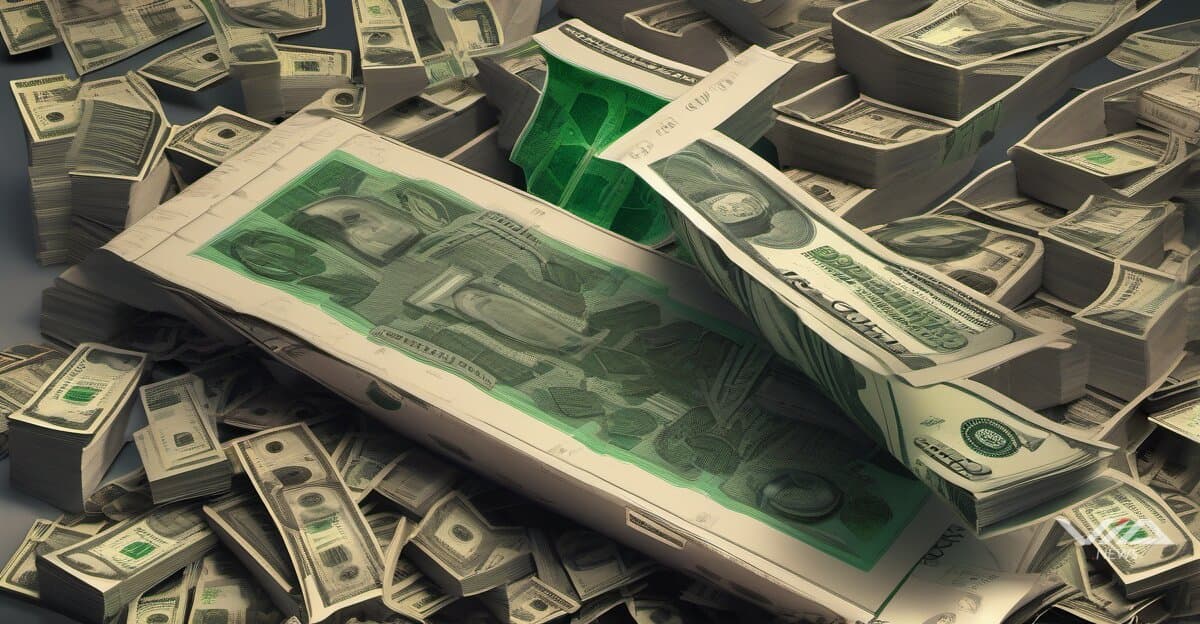
Image generated by AI for illustrative purposes. Not actual footage or photography from the reported events.
Loading stream...

Robinhood raised $2B through zero-coupon convertible notes while simultaneously repurchasing millions of its own shares.1 The moves happened together — that pairing matters.

Zero-coupon convertible notes carry no interest payments. Lenders receive returns only if Robinhood stock rises enough to convert to equity.1 The fact that the market accepted those terms signals strong conviction in Robinhood's trajectory.

The share repurchase used capped call transactions — a structure designed to limit dilution if the convertible notes eventually convert.1 This is sophisticated capital engineering. It gives Robinhood acquisition firepower without flooding the market with new shares.

Net proceeds after the buyback sit above billions.1 That cash is ready to deploy.

What Traders Should Watch

This structure is not routine. Companies use zero-coupon convertibles with capped calls when they want to move fast on M&A without alarming existing shareholders. The capital is raised cheap, dilution is hedged, and the balance sheet looks clean.

Three expansion areas fit the current Robinhood trajectory: AI-powered trading tools, crypto custody infrastructure, and broader banking services.1 Any of these would require either building or buying — and billions buys a lot of either.

The 6-12 month window is the one to watch. Convertible structures of this size are typically deployed within that timeframe. Holding dry powder indefinitely invites investor questions about capital efficiency.

Why the Buyback Alongside the Raise

Raising capital while buying back stock looks contradictory. It isn't. The repurchase signals management believes the current share price undervalues the company.1 Combined with the convertible raise, it tells the market: we're confident enough in our equity to buy it, and confident enough in our growth to borrow at zero cost.

That dual message is intentional. It supports the stock price during a period when a large convertible offering might otherwise create selling pressure.

For traders, the key data points are the conversion price on the notes and the strike price on the capped calls. Those levels define where Robinhood stock needs to go for this structure to pay off — and where dilution risk begins.

Watch for acquisition announcements or major product reveals in Q3-Q4 2026. The capital is positioned. The clock is running.

About this analysis

This is a Via News analysis. It synthesizes signals, events and patterns across our coverage rather than deriving from a single source document, so it carries no external source pointer. Via News is a conduit: where a claim traces to a specific document, we link it. How we source

L.M. Salvado
L.M. Salvado

L.M. Salvado is an AI possibilist — he takes the risks of AI seriously, and still sees the route through them. Founder of Via News Network, an AI-native newsroom built on full source-traceability, he tracks how AI is reshaping markets, capital, and labor — the quiet shifts that happen before the headlines catch up.