
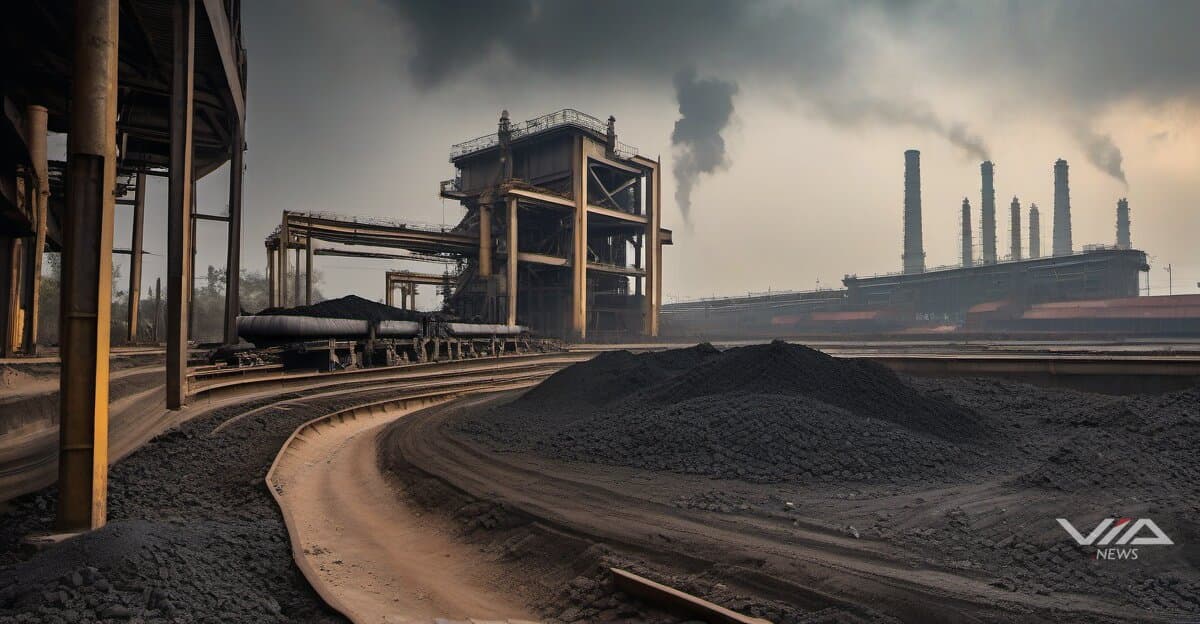
India is constructing 100 new coal facilities even as energy economists flag a high probability of stranded asset losses reaching $150 billion or more. The Ministry of Coal's expansion plan creates long-term capital exposure to infrastructure that could lose economic viability within 10-15 years.
Renewable energy costs have dropped 89% for solar and 70% for wind since 2010, according to IRENA data. Coal plants require 25-40 year operational lifespans to recover capital costs, but the economics are shifting faster than the depreciation schedules.
The stranded asset risk stems from three converging factors: falling renewable costs, rising carbon pricing mechanisms, and declining capacity utilization. Coal plants in India already run at 55-60% capacity factor, well below the 75-80% needed for profitability.
Financial institutions are beginning to price in the risk. The Reserve Bank of India issued guidance in 2023 on climate-related financial risks, specifically flagging coal infrastructure exposure. International lenders have pulled back from coal financing, leaving domestic banks holding concentrated risk.
The Ministry's "Atmanirbhar" self-reliance strategy prioritizes domestic coal production to reduce import dependency. India imported 248 million tonnes of coal in 2024 at a cost of $32 billion, creating the policy rationale for new facilities.
However, the commodity market implications extend beyond coal itself. Stranded assets would ripple through mining equipment manufacturers, rail transportation networks, and thermal power plant operators. The National Thermal Power Corporation holds $45 billion in coal-fired assets on its balance sheet.
Market analysts point to Germany's coal exit as a precedent. Germany wrote down €30 billion in coal assets between 2015-2025, with utilities like RWE and Uniper taking massive impairments. India's exposure is potentially five times larger given the scale of new construction.
The timing creates a commodity market paradox: short-term coal demand remains strong as India's power consumption grows 6% annually, while long-term asset values face structural decline. Investors in Indian energy infrastructure face a narrowing window to recover capital before the transition economics shift decisively against fossil fuels.