
Tuesday, September 1, 2026

Black Angel Mine Targets 2028 Phase 1 Start as Greenland Zinc Project Advances

The Black Angel mine in Greenland is preparing for Phase 1 mining operations scheduled for 2028, with infrastructure improvements and technical feasibility updates underway. The project revives a historically productive zinc-lead-silver deposit that operated from 1973 to 1990. Commodity traders are monitoring the timeline as global zinc supply concerns persist amid energy transition demand.

Black Angel Mine Targets 2028 Phase 1 Start as Greenland Zinc Project Advances
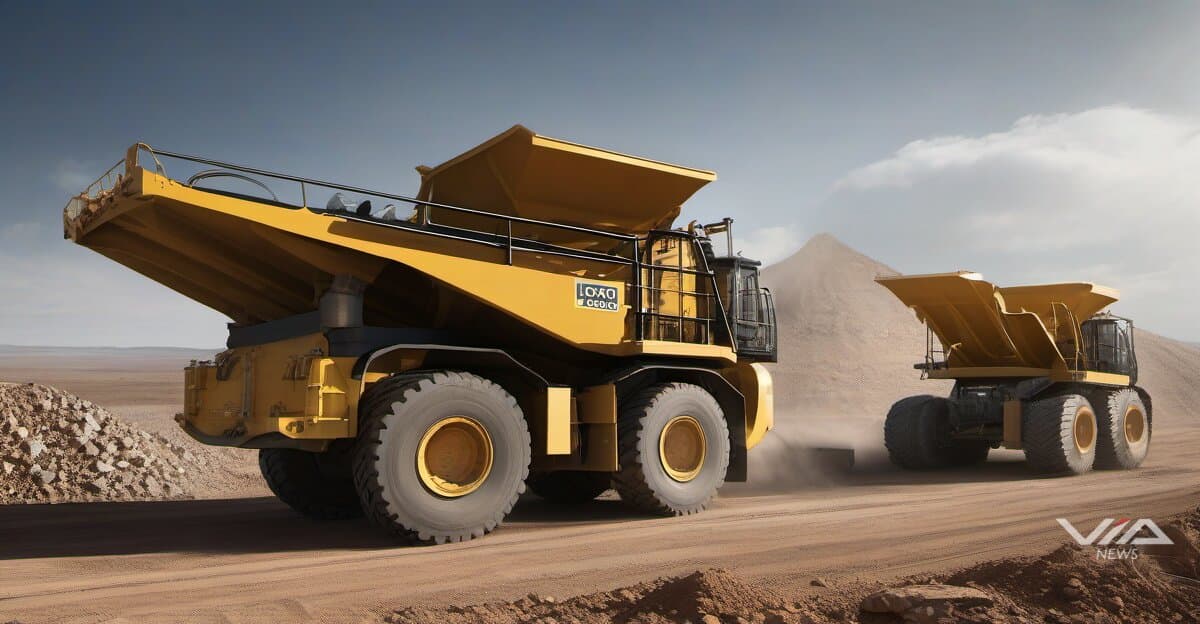
Image generated by AI for illustrative purposes. Not actual footage or photography from the reported events.
Loading stream...

The Black Angel mining project in Greenland is advancing toward Phase 1 operations in 2028, with infrastructure development and technical studies now in progress. The mine previously produced over 11 million tons of ore containing zinc, lead, and silver during its original 1973-1990 operational period.

Project developers are completing technical feasibility assessments while upgrading access routes and support facilities at the remote Maarmorilik site on Greenland's west coast. Phase 1 will test modern extraction methods on a deposit that averaged 12.3% zinc and 4% lead during prior operations.

Zinc prices have traded between $2,500 and $3,200 per ton over the past year as smelter closures in Europe reduced global supply by approximately 800,000 tons annually. Black Angel's restart could help offset deficits, though initial Phase 1 output will likely remain modest compared to major producers in China and Peru.

Greenland's government has prioritized mining development to diversify its economy beyond fishing and Danish subsidies. The territory holds significant rare earth, zinc, and graphite deposits, attracting exploration investment despite logistical challenges and environmental scrutiny.

Battery manufacturers are increasing zinc consumption for energy storage systems as an alternative to lithium-ion technology. Zinc-air and zinc-bromide batteries require 3-5 times more zinc per kilowatt-hour than traditional galvanizing applications, creating new demand vectors.

Infrastructure costs remain a key variable for Black Angel's economics. The project requires year-round shipping access, worker housing, and power generation in an Arctic climate. Previous operators relied on diesel generation, but developers are evaluating renewable options to meet modern environmental standards.

Investors in junior mining stocks and commodity futures are tracking the 2028 timeline against broader zinc supply forecasts. The International Lead and Zinc Study Group projects global deficits continuing through 2027 unless idled capacity restarts or new projects accelerate.

Black Angel's feasibility updates will provide clarity on capital requirements and production targets in coming quarters, informing market expectations for Greenland's emerging mining sector.

Source documents

Via News is a conduit. We point to the source documents behind this report — we don't replace them. Trace any claim to its source and decide what to trust. How we source

Source Trace Score1 source document1 with a live linkVerifiability: Basic
  1. [1]Press releaseGlobeNewswire· February 25, 2026
    Framleiðslumarkmið og afkomuspá ársins 2026
What we know · the intelligence behind this page
Live from the substrate
What we're seeing
AI Capital Surge: Late-August 2026 Funding Wave Spans Fintech, Enterprise Agents, and Robotics
A dense cluster of funding rounds landing on 2026-08-28 — from identity/fraud fintech player Socure ($156M plus its acquisition of Fravity) to enterprise AI agent startups (Instinct, Generalist AI, Owner), model infrastructure (Stability AI, Emerald AI), and autonomous logistics/aerospace (Gatik, Regent Craft) — signals investors are rotating aggressively into AI-native companies with demonstrable ROI, especially in financial risk/compliance and back-office automation. Parallel signals (Multiverse Computing's compression benchmarks cutting inference cost/latency, and Arkestro/CloneOps.ai publishing hard savings and labor-displacement figures) suggest the funding is chasing efficiency and measurable economic impact rather than pure model scale.
Our read on the data ›
Signals we're tracking
Satellite-Terrestrial Network Integration Acceleration
Increased investment and launches in hybrid satellite-cellular networks across telecom industry; competitive responses from other carriers; regulatory activity around satellite spectrum; expansion of emergency/rural connectivity use cases
Patterns we're watching ›
Where sources disagree
ING Group
Both facts record the same metric (shares_outstanding) for ING Group at the identical observation date (2025-12-31). FACT A states 2,902,437,688 shares; FACT B states 2,902 million shares (2,902,000,000). The difference is 437,688 shares (~0.015%). This is a genuine value conflict, though the discrepancy appears to result from FACT B rounding to the nearest million while FACT A provides the precise count.
We flag conflicts openly ›
Recently verified
Checked against the original source
4,980
facts traced to their source — and we flag the ones that don't hold up.
101 entities tracked4,980 facts checked against source5,267 source documents archived
Query this data → isubstrate.com