
Saturday, August 22, 2026
What we know · the intelligence behind this page
Live from the substrate
What we're seeing
AI Platforms Rush to Establish Content-Authenticity Standards Amid Leadership Shakeups and Sustained Capex
Within days of each other in mid-August 2026, Google, Anthropic, and Spotify moved to formalize AI content watermarking and labeling policies, signaling an industry-wide push toward self-governed provenance standards as generative AI output floods consumer platforms. The shift coincides with executive turnover at OpenAI (Brad Lightcap's departure) and Meta's public AI manifesto, all set against continued heavy AI infrastructure capital expenditure and finance-sector moves (e.g., Wall Street paying for algorithmic edges on social signals) that underscore AI's deepening entanglement with capital markets.
Our read on the data ›
Signals we're tracking
Satellite-Terrestrial Network Integration Acceleration
Increased investment and launches in hybrid satellite-cellular networks across telecom industry; competitive responses from other carriers; regulatory activity around satellite spectrum; expansion of emergency/rural connectivity use cases
Patterns we're watching ›
Where sources disagree
JPMorgan Chase & Co.
Both facts report JPMorgan Chase & Co.'s revenue for the same fiscal period (FY 2025) with the same observation date (2025-12-31), but with different values: $182.447 billion vs. $185 billion. The ~1.4% difference ($2.553 billion) is too large to be explained by rounding alone and represents conflicting data for the identical time period.
We flag conflicts openly ›
Recently verified
Checked against the original source
4,977
facts traced to their source — and we flag the ones that don't hold up.
101 entities tracked4,977 facts checked against source5,242 source documents archived
Work with this data → vianewsagency.com

Gold Surges as Middle East Tensions Trigger Safe-Haven Flight from Risk Assets

Precious metals are rallying as escalating Middle East tensions drive investors toward safe-haven assets. Iran's rejection of US peace proposals and Saudi Arabia's negotiations over military base access are fueling classical risk-off flows, pressuring equities while boosting gold and strengthening the dollar and yen.

L.M. Salvado
L.M. Salvado

March 26, 2026

Gold Surges as Middle East Tensions Trigger Safe-Haven Flight from Risk Assets
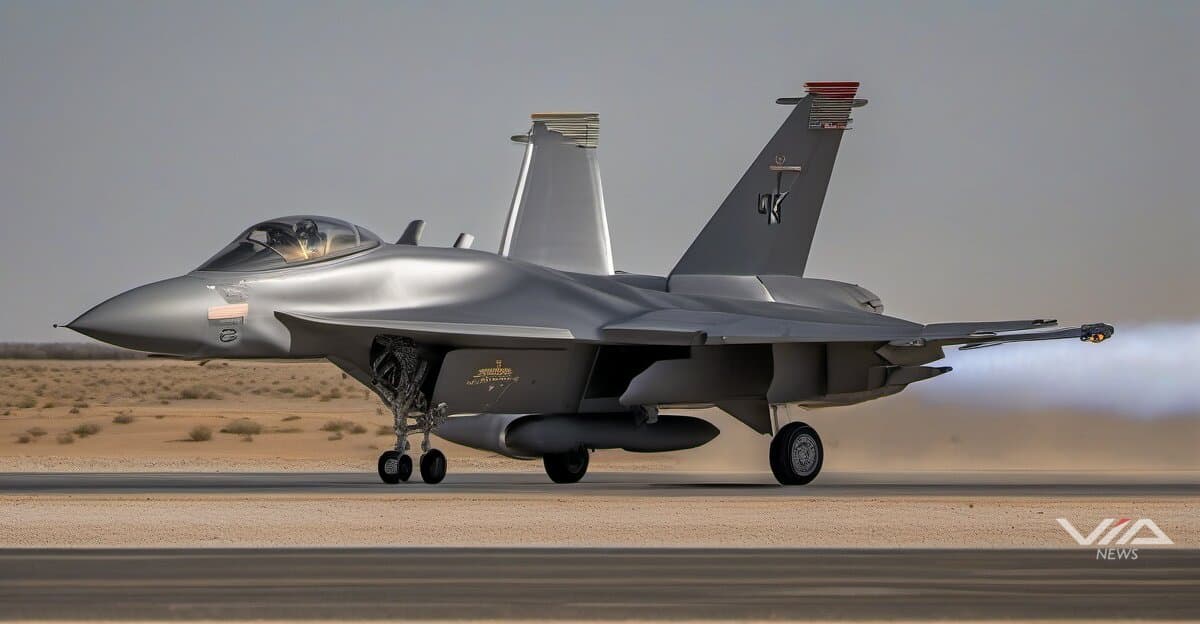
Image generated by AI for illustrative purposes. Not actual footage or photography from the reported events.
Loading stream...

Precious metals markets are experiencing strong safe-haven demand as geopolitical risks in the Middle East intensify. Iran's rejection of a US peace proposal and ongoing Saudi-US negotiations over military base access have triggered classical flight-to-quality flows, pulling capital from risk assets into defensive positions.

The risk-off sentiment is driving investors toward traditional safe havens. Gold and silver are attracting bids as portfolio hedges, while the US dollar and Japanese yen are strengthening against risk-sensitive currencies. Equity markets face selling pressure as uncertainty over potential Middle East escalation prompts traders to reduce exposure.

Energy markets are building in a supply disruption premium despite no immediate threats to production. The potential for conflict involving major oil producers or shipping routes through the Strait of Hormuz—which handles roughly one-fifth of global petroleum traffic—is adding volatility to crude pricing.

The current market dynamic reflects textbook geopolitical risk response. When tensions rise in regions critical to global energy supply, investors systematically rotate into assets with negative correlation to risk events. Precious metals benefit from both safe-haven demand and their historical role as inflation hedges during energy price spikes.

Currency markets are showing similar patterns. The yen typically strengthens during risk-off episodes due to Japan's status as the world's largest creditor nation and the unwinding of carry trades. The dollar gains from its reserve currency status and relative US geopolitical distance from Middle East conflicts.

Market observers expect continued volatility as long as tensions persist. The diplomatic impasse between Washington and Tehran, combined with shifting regional military arrangements, suggests uncertainty will remain elevated in the near term. This environment typically sustains defensive positioning across asset classes.

Energy traders are monitoring developments closely. While current production remains stable, any escalation affecting Persian Gulf shipping lanes or regional oil infrastructure would immediately impact global supply chains. The market is pricing in this tail risk through elevated implied volatility in crude options.

The strength of safe-haven flows indicates professional investors are taking geopolitical risks seriously. Institutional money is moving into defensive positions rather than treating current tensions as temporary headlines, suggesting expectations of prolonged uncertainty.

About this analysis

This is a Via News analysis. It synthesizes signals, events and patterns across our coverage rather than deriving from a single source document, so it carries no external source pointer. Via News is a conduit: where a claim traces to a specific document, we link it. How we source

L.M. Salvado
L.M. Salvado

L.M. Salvado is an AI possibilist — he takes the risks of AI seriously, and still sees the route through them. Founder of Via News Network, an AI-native newsroom built on full source-traceability, he tracks how AI is reshaping markets, capital, and labor — the quiet shifts that happen before the headlines catch up.