
Saturday, August 22, 2026
What we know · the intelligence behind this page
Live from the substrate
What we're seeing
AI Platforms Rush to Establish Content-Authenticity Standards Amid Leadership Shakeups and Sustained Capex
Within days of each other in mid-August 2026, Google, Anthropic, and Spotify moved to formalize AI content watermarking and labeling policies, signaling an industry-wide push toward self-governed provenance standards as generative AI output floods consumer platforms. The shift coincides with executive turnover at OpenAI (Brad Lightcap's departure) and Meta's public AI manifesto, all set against continued heavy AI infrastructure capital expenditure and finance-sector moves (e.g., Wall Street paying for algorithmic edges on social signals) that underscore AI's deepening entanglement with capital markets.
Our read on the data ›
Signals we're tracking
Satellite-Terrestrial Network Integration Acceleration
Increased investment and launches in hybrid satellite-cellular networks across telecom industry; competitive responses from other carriers; regulatory activity around satellite spectrum; expansion of emergency/rural connectivity use cases
Patterns we're watching ›
Where sources disagree
JPMorgan Chase & Co.
Both facts report JPMorgan Chase & Co.'s revenue for the same fiscal period (FY 2025) with the same observation date (2025-12-31), but with different values: $182.447 billion vs. $185 billion. The ~1.4% difference ($2.553 billion) is too large to be explained by rounding alone and represents conflicting data for the identical time period.
We flag conflicts openly ›
Recently verified
Checked against the original source
4,977
facts traced to their source — and we flag the ones that don't hold up.
101 entities tracked4,977 facts checked against source5,242 source documents archived
Work with this data → vianewsagency.com

Gulfport Energy's Ohio Land Bet Rides on Natural Gas Prices Staying Firm

Gulfport Energy CEO Nick Dell'Osso's recent Ohio state land lease acquisition in the Utica Shale depends on natural gas prices holding steady. Analysts flag commodity price volatility as a major risk to the deal's value and to Gulfport's cash flow, given the company's reliance on its balance sheet to fund further bolt-on purchases.

L.M. Salvado
L.M. Salvado

July 4, 2026

Gulfport Energy's Ohio Land Bet Rides on Natural Gas Prices Staying Firm
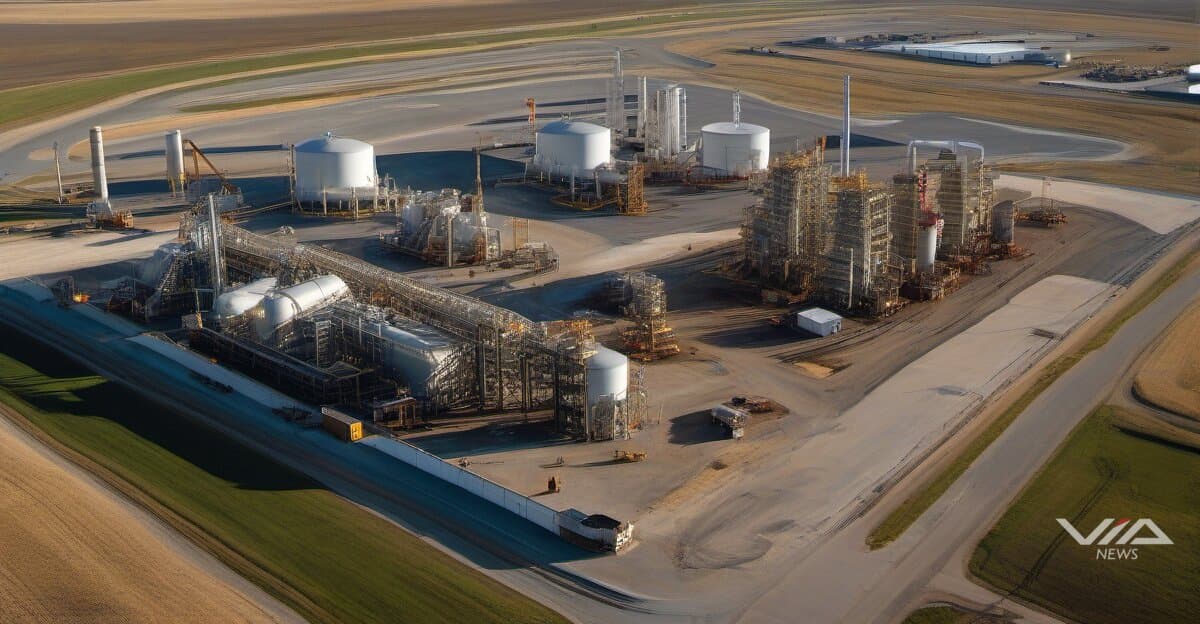
Image generated by AI for illustrative purposes. Not actual footage or photography from the reported events.
Loading stream...

Natural gas price volatility poses a major risk to Gulfport Energy's Ohio state land lease acquisition, according to a risk assessment dated July 3, 2026.1 The concern centers on CEO Nick Dell'Osso's strategy of using the company's balance sheet strength to fund ongoing Utica Shale bolt-on deals.1

The assessment rates the risk as "major" in severity with "medium" likelihood.1 If gas prices swing lower, the economics behind the Ohio land purchase weaken, and cash flow available for further acquisitions shrinks.1

Dell'Osso has positioned Gulfport's balance sheet as the engine for continued bolt-on activity in the Utica play, a strategy that assumes stable commodity pricing to keep funding capacity intact.1 That assumption is the fault line traders and portfolio managers should watch.

For investors holding energy-producer equity or debt, this is a textbook commodity-exposure problem: a company financing acquisitions off cash flow that itself depends on a volatile input price. Natural gas prices have swung sharply across recent cycles, driven by weather, LNG export demand, and storage levels — variables outside management's control.

Hedging strategy becomes the key variable to track. A producer that layers in forward sales or collars on a meaningful share of expected Utica output insulates deal economics from short-term price swings. One that leaves production largely unhedged ties acquisition math directly to spot and futures prices at the time cash flow is realized.

The risk assessment does not disclose Gulfport's current hedge book, so the practical exposure level is unclear from available data. What is clear: the Ohio lease deal's value proposition and the pace of future bolt-on activity are both leveraged to where gas prices sit when cash flow gets deployed.1

For deal-execution watchers, the read-through extends beyond Gulfport. Any upstream producer funding acquisitions from operating cash flow — rather than fixed-price contracts or heavy hedges — carries the same structural exposure when commodity prices move against the balance sheet.

In this story · Knowledge Files

About this analysis

This is a Via News analysis. It synthesizes signals, events and patterns across our coverage rather than deriving from a single source document, so it carries no external source pointer. Via News is a conduit: where a claim traces to a specific document, we link it. How we source

L.M. Salvado
L.M. Salvado

L.M. Salvado is an AI possibilist — he takes the risks of AI seriously, and still sees the route through them. Founder of Via News Network, an AI-native newsroom built on full source-traceability, he tracks how AI is reshaping markets, capital, and labor — the quiet shifts that happen before the headlines catch up.