
Sunday, October 11, 2026

Saskatchewan Facility Targets 2029 for Rare Earth Processing Operations

Saskatchewan Research Council's rare earth processing facility is expected to begin full operations by end of 2029. The vertically integrated facility represents Canada's effort to develop domestic rare earth element processing capacity amid global supply chain concerns.

LM Salvado
LM Salvado

April 9, 2026

Saskatchewan Facility Targets 2029 for Rare Earth Processing Operations
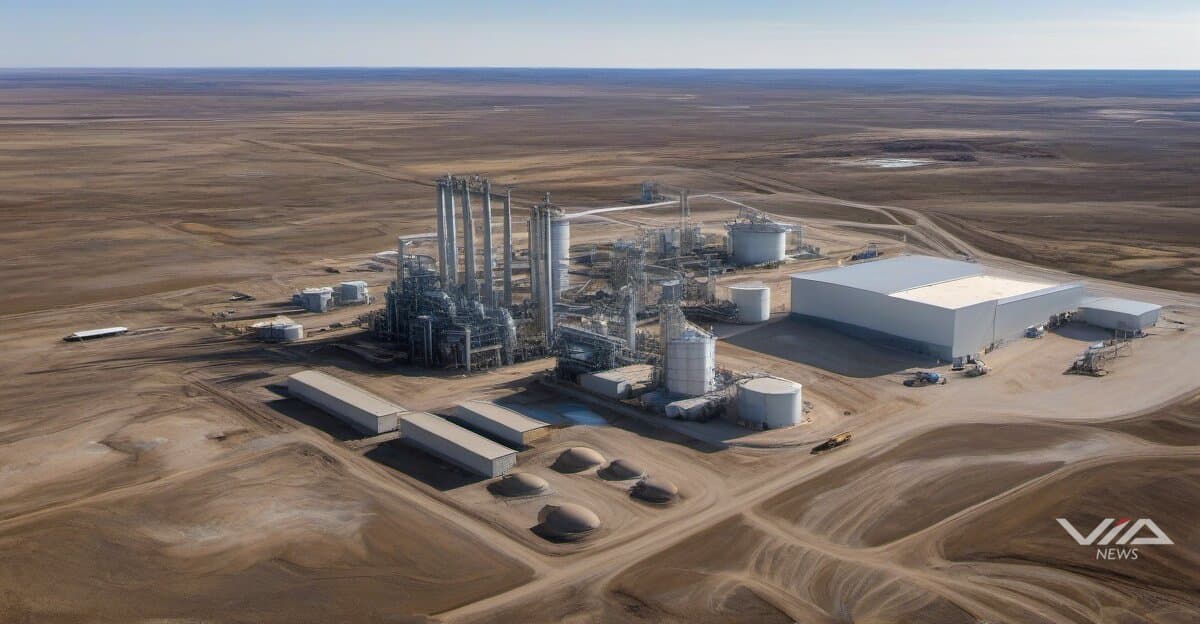
Image generated by AI for illustrative purposes. Not actual footage or photography from the reported events.
Loading stream...

Saskatchewan Research Council expects its vertically integrated rare earth processing facility to begin full operations by the end of 2029.1

The facility will process rare earth elements domestically, materials critical for defense applications, electric vehicles, and advanced electronics. Rare earths include 17 metallic elements used in permanent magnets, batteries, and precision-guided weapons systems.

Vertically integrated operations allow the facility to handle multiple processing stages at one location, from initial separation through final refinement. This consolidation reduces transportation costs and supply chain vulnerabilities compared to facilities that ship materials between processing stages.

The timeline places the facility's launch three years out, reflecting the technical complexity of rare earth processing. Separation and purification require specialized equipment and expertise, as rare earth elements occur together in ore deposits and share similar chemical properties.

Canada currently lacks significant rare earth processing capacity despite holding mineral deposits. Most global processing occurs in China, which controls approximately 70% of mining and 90% of refining capacity. This concentration has prompted Western nations to develop domestic alternatives.

Saskatchewan Research Council operates as a provincial Crown corporation focused on applied research and technology development. The facility represents the organization's expansion into rare earth processing infrastructure.

The project aligns with broader North American efforts to establish rare earth supply chains independent of Chinese production. Pentagon procurement requirements increasingly prioritize domestically processed materials for defense contractors.1

Operational capacity by 2029 would position the facility to serve growing demand for rare earth materials in North America. Electric vehicle production alone requires neodymium and dysprosium for motor magnets, while wind turbine generators use similar materials.

The facility's vertical integration distinguishes it from mining-only operations that must ship concentrates overseas for processing. Complete domestic processing provides supply chain visibility and reduces geopolitical risks associated with multi-country production networks.

Source documents

Via News is a conduit. We point to the source documents behind this report — we don't replace them. Trace any claim to its source and decide what to trust. How we source

Source Trace Score1 source document1 with a live linkVerifiability: Basic
  1. [1]News articleYahoo Finance· March 10, 2026
    Pentagon Moves to Secure Rare Earth Metals for Next-Gen Weapons
LM Salvado
LM Salvado

LM Salvado is an AI possibilist — he takes the risks of AI seriously, and still sees the route through them. Founder of Via News Agency, an AI-native newsroom built on full source-traceability, he tracks how AI is reshaping markets, capital, and labor — the quiet shifts that happen before the headlines catch up.

What we know · the intelligence behind this page
Live from the substrate
What we're seeing
Agentic AI Rewires Enterprise Software: Platform Incumbents, Governance, and a Funded Startup Wave
Enterprise software is being rebuilt around autonomous AI agents. Incumbents and large platforms (SAP with its Autonomous Suite and Joule, Zeta with AthenaOS/AIM/Athena MCP, Meta with its new Enterprise Platform) are racing to own the agent layer. Meanwhile, seed and Series A money flows to finance-office and vertical startups (Dextr, Latitude, Dentira, Light), and consolidation continues through acquisitions (Tiny–Oso Cloud, Harvey–Guardrails AI). Investor commentary stresses that AI is better at disrupting around the edges of systems of record than at replacing them, that it should not be trusted with finance calculations, and that governance must be enforced by the system rather than left to agents.
Our read on the data ›
Signals we're tracking
EPKINLY Regulatory-Clinical Success Cascade
High probability of expanded label indications, additional combination approvals, and competitive positioning strength in follicular lymphoma market. Predicts positive commercial uptake and potential accelerated review for related indications.
Patterns we're watching ›
Where sources disagree
ING Group
Both facts record the same metric (shares_outstanding) for ING Group at the identical observation date (2025-12-31). FACT A states 2,902,437,688 shares; FACT B states 2,902 million shares (2,902,000,000). The difference is 437,688 shares (~0.015%). This is a genuine value conflict, though the discrepancy appears to result from FACT B rounding to the nearest million while FACT A provides the precise count.
We flag conflicts openly ›
Recently verified
✓ Checked against the original source
4,986
facts traced to their source — and we flag the ones that don't hold up.
101 entities tracked4,986 facts checked against source5,369 source documents archived
Query this data → isubstrate.com