
Sunday, September 20, 2026

Talon Metals Faces Low-Probability Tech Failure Risk That Could Disrupt EV Nickel Supply

Talon Metals' Minnesota nickel processing technology carries a catastrophic but low-probability failure risk that could prevent economic extraction or battery-grade quality production. The risk centers on untested ore characteristics that may differ from proven deposits, threatening North American EV supply chain diversification efforts.

Talon Metals Faces Low-Probability Tech Failure Risk That Could Disrupt EV Nickel Supply
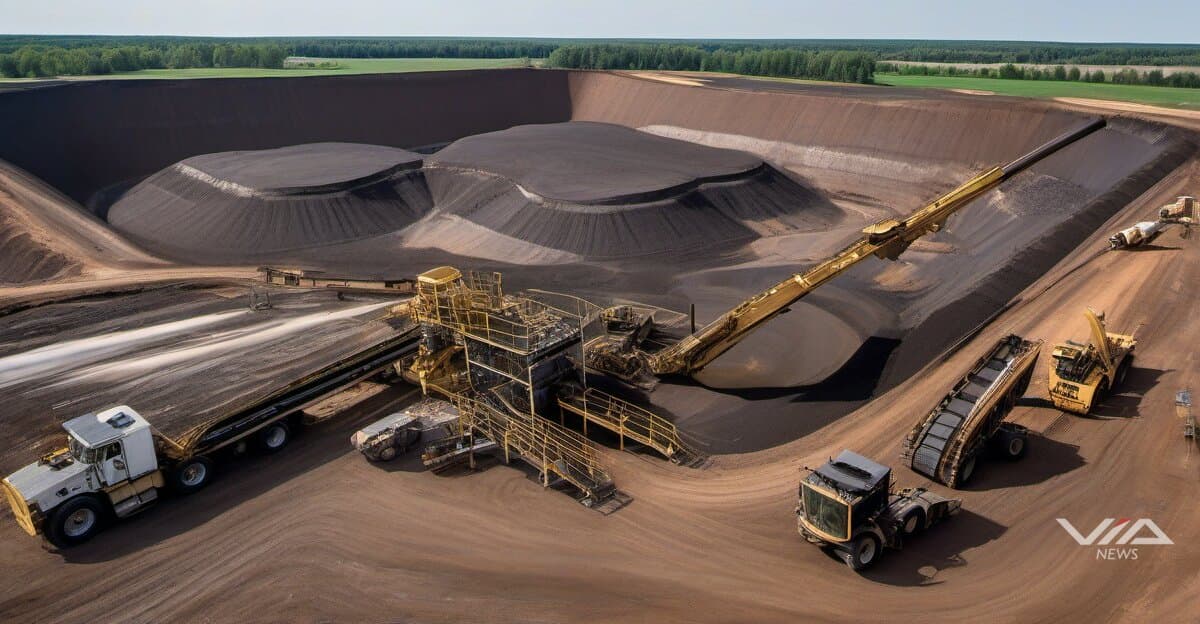
Image generated by AI for illustrative purposes. Not actual footage or photography from the reported events.
Loading stream...

Talon Metals' Minnesota nickel project faces technology failure risks that could derail domestic battery supply ambitions, despite a low likelihood assessment. The company's processing methods must economically extract nickel from ore bodies while meeting battery manufacturers' quality specifications.

The primary risk involves ore characteristics differing from proven deposits. If extraction proves uneconomical or output fails quality tests, the project could collapse entirely. Battery-grade nickel requires 99.8% purity minimum—processing failures below this threshold eliminate market viability.

North American automakers pursuing EV production rely on domestic nickel sources to reduce China supply chain exposure. Talon's Minnesota deposit represents one of few U.S. nickel projects in development. A technology failure would force manufacturers back to Indonesian or Russian suppliers, increasing price volatility and geopolitical risk.

Nickel prices trade at $16,500 per metric ton as of February 2026. A major U.S. project failure could spike prices 15-20% short-term as traders price in continued import dependence. The EV battery industry consumes 300,000 tons of nickel annually, growing 25% yearly through 2030.

Processing technology risks stem from scaling lab results to commercial production. Ore mineralization, sulfur content, and trace elements impact extraction efficiency. Minnesota's Duluth Complex geology differs from proven Canadian Shield deposits where most nickel processing methods were developed.

Battery manufacturers including LG Energy Solution and Panasonic require multi-year supply contracts with penalty clauses for quality failures. A processing breakdown would trigger contract defaults, credit downgrades, and project financing collapses. Talon would face restructuring or asset sales.

The 0.7 confidence assessment reflects limited production data from similar ore types. Pilot plant results provide initial validation, but commercial-scale operations reveal problems invisible at smaller volumes. The severity rating as catastrophic acknowledges the binary outcome—the technology either works economically or it doesn't.

Investors pricing Talon equity must weigh this tail risk against domestic supply premiums. The company's valuation assumes successful production, but a tech failure zeroes the Minnesota asset value overnight.

What we know · the intelligence behind this page
Live from the substrate
What we're seeing
AI Boom Hits a Fork: Slowdown Calls Clash with Capex Confidence as Markets Get Nervous
Dario Amodei's repeated calls for a global slowdown in frontier AI development, echoed by Microsoft's new humanist AI code of conduct and FTC antitrust caution, are being publicly rejected by Nvidia and Meta leadership even as hyperscaler spending draws fresh skeptical scrutiny (Wachter's analysis, Burry-style overbuilding worries) and weak guidance from Adobe and a post-slowdown-comment selloff in GE Vernova signal investor jitters. Meanwhile wealth and security effects of the AI race keep compounding — Zhang Yiming's fortune surging on AI-driven ByteDance value, a Chinese hacking firm weaponizing AI against stolen government secrets, and low-quality AI-generated products (an AI sitcom, a spam-flooding agent platform) fueling backlash even as adoption races ahead.
Our read on the data ›
Signals we're tracking
EPKINLY Regulatory-Clinical Success Cascade
High probability of expanded label indications, additional combination approvals, and competitive positioning strength in follicular lymphoma market. Predicts positive commercial uptake and potential accelerated review for related indications.
Patterns we're watching ›
Where sources disagree
Berkshire Hathaway
Both facts report Berkshire Hathaway's cash position on 2026-01-01 with identical observation timestamps, but claim vastly different values: 380 billion USD vs 400 USD. These cannot both be true for the same entity at the same point in time. The magnitude of the discrepancy (a factor of ~10^9) rules out rounding, unit conversion, or methodological differences.
We flag conflicts openly ›
Recently verified
Checked against the original source
4,982
facts traced to their source — and we flag the ones that don't hold up.
101 entities tracked4,982 facts checked against source5,299 source documents archived
Query this data → isubstrate.com