
Sunday, October 11, 2026

Eaton-Boyd Thermal Merger Faces Regulatory Hurdle, Deal Closure at Risk

Eaton's acquisition of thermal management firm Boyd Thermal faces potential regulatory rejection or conditional approval from merger control authorities. The deal, announced in 2025, targets Boyd's liquid cooling and data center infrastructure capabilities. Investors in both companies face heightened volatility as approval uncertainty persists.

Eaton-Boyd Thermal Merger Faces Regulatory Hurdle, Deal Closure at Risk
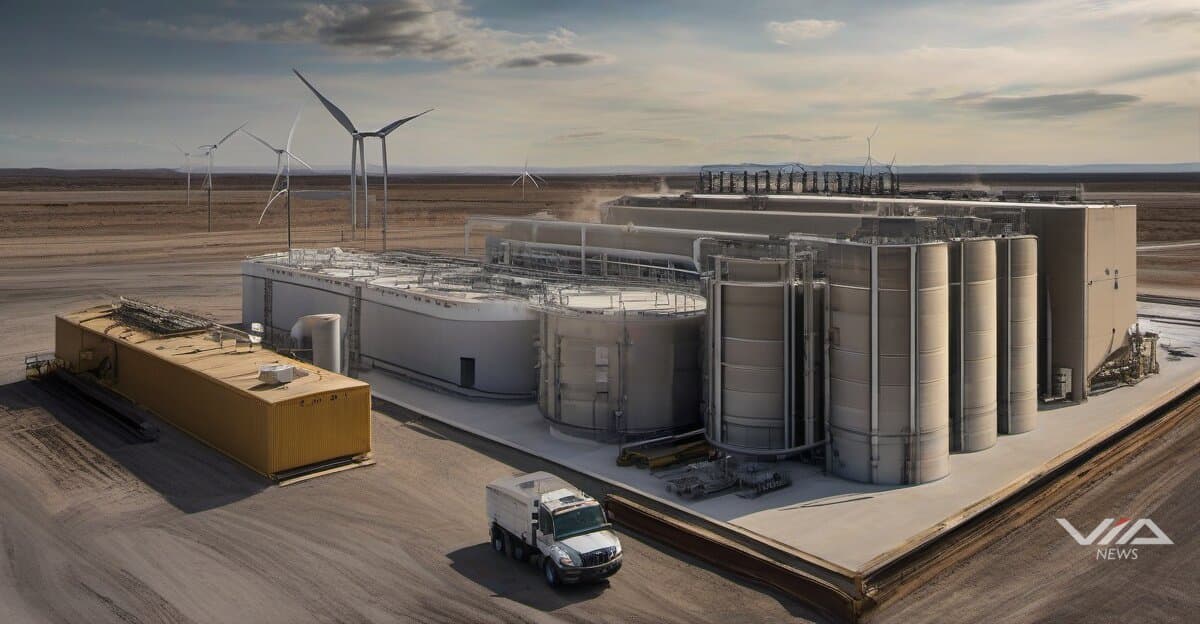
Image generated by AI for illustrative purposes. Not actual footage or photography from the reported events.
Loading stream...

Eaton's pending acquisition of Boyd Thermal faces regulatory approval risks that could block or substantially delay the transaction. Merger control authorities may impose restrictive conditions or reject the deal outright, creating uncertainty for shareholders in both companies.

Boyd Thermal specializes in thermal management solutions, including liquid cooling systems for data center infrastructure. Eaton announced the acquisition in 2025 to expand its capabilities in the growing data center cooling market, driven by AI computing demands.

Regulatory scrutiny typically focuses on market concentration and competitive effects. Authorities may examine whether the combined entity would dominate thermal management supply chains or limit customer choice in liquid cooling technologies. The deal's sector overlap in data center infrastructure increases the probability of detailed antitrust review.

Shares of acquisition targets typically trade below offer prices when regulatory risk emerges, reflecting deal-break probability. Boyd Thermal investors face potential downside if authorities block the merger, forcing the company to operate independently without Eaton's capital and distribution network. Eaton shareholders may see relief if the deal collapses, eliminating integration costs and execution risk.

Trading volatility around merger announcements and regulatory decisions creates opportunities and risks. Options markets typically price in higher implied volatility during approval windows. Investors holding Boyd Thermal shares must weigh the spread between current trading price and Eaton's offer against the probability of regulatory rejection.

The data center cooling market is expanding rapidly as AI workloads generate more heat. Liquid cooling systems offer higher efficiency than traditional air cooling, making Boyd's technology valuable. If the deal fails, Boyd Thermal could pursue alternative buyers or raise capital independently to scale its operations.

Merger arbitrage strategies attempt to profit from the price spread between target company shares and acquisition offers. This deal's regulatory uncertainty makes such strategies riskier, requiring careful assessment of approval timelines and authority positions.

Investors should monitor regulatory filings and authority statements for signals on deal approval likelihood. The outcome will determine whether Eaton gains immediate access to Boyd's technology or must develop competing capabilities internally.

What we know · the intelligence behind this page
Live from the substrate
What we're seeing
Agentic AI Rewires Enterprise Software: Platform Incumbents, Governance, and a Funded Startup Wave
Enterprise software is being rebuilt around autonomous AI agents. Incumbents and large platforms (SAP with its Autonomous Suite and Joule, Zeta with AthenaOS/AIM/Athena MCP, Meta with its new Enterprise Platform) are racing to own the agent layer. Meanwhile, seed and Series A money flows to finance-office and vertical startups (Dextr, Latitude, Dentira, Light), and consolidation continues through acquisitions (Tiny–Oso Cloud, Harvey–Guardrails AI). Investor commentary stresses that AI is better at disrupting around the edges of systems of record than at replacing them, that it should not be trusted with finance calculations, and that governance must be enforced by the system rather than left to agents.
Our read on the data ›
Signals we're tracking
EPKINLY Regulatory-Clinical Success Cascade
High probability of expanded label indications, additional combination approvals, and competitive positioning strength in follicular lymphoma market. Predicts positive commercial uptake and potential accelerated review for related indications.
Patterns we're watching ›
Where sources disagree
ING Group
Both facts record the same metric (shares_outstanding) for ING Group at the identical observation date (2025-12-31). FACT A states 2,902,437,688 shares; FACT B states 2,902 million shares (2,902,000,000). The difference is 437,688 shares (~0.015%). This is a genuine value conflict, though the discrepancy appears to result from FACT B rounding to the nearest million while FACT A provides the precise count.
We flag conflicts openly ›
Recently verified
✓ Checked against the original source
4,986
facts traced to their source — and we flag the ones that don't hold up.
101 entities tracked4,986 facts checked against source5,369 source documents archived
Query this data → isubstrate.com