
Saturday, August 22, 2026
What we know · the intelligence behind this page
Live from the substrate
What we're seeing
AI Platforms Rush to Establish Content-Authenticity Standards Amid Leadership Shakeups and Sustained Capex
Within days of each other in mid-August 2026, Google, Anthropic, and Spotify moved to formalize AI content watermarking and labeling policies, signaling an industry-wide push toward self-governed provenance standards as generative AI output floods consumer platforms. The shift coincides with executive turnover at OpenAI (Brad Lightcap's departure) and Meta's public AI manifesto, all set against continued heavy AI infrastructure capital expenditure and finance-sector moves (e.g., Wall Street paying for algorithmic edges on social signals) that underscore AI's deepening entanglement with capital markets.
Our read on the data ›
Signals we're tracking
Satellite-Terrestrial Network Integration Acceleration
Increased investment and launches in hybrid satellite-cellular networks across telecom industry; competitive responses from other carriers; regulatory activity around satellite spectrum; expansion of emergency/rural connectivity use cases
Patterns we're watching ›
Where sources disagree
JPMorgan Chase & Co.
Both facts report JPMorgan Chase & Co.'s revenue for the same fiscal period (FY 2025) with the same observation date (2025-12-31), but with different values: $182.447 billion vs. $185 billion. The ~1.4% difference ($2.553 billion) is too large to be explained by rounding alone and represents conflicting data for the identical time period.
We flag conflicts openly ›
Recently verified
Checked against the original source
4,977
facts traced to their source — and we flag the ones that don't hold up.
101 entities tracked4,977 facts checked against source5,242 source documents archived
Work with this data → vianewsagency.com

Uber Exits In-House Autonomous Development, Shifts $1B+ R&D to Partnership Model

Uber sold its Uber ATG autonomous vehicle unit in December 2020 and pivoted to partnerships with specialized AV firms including Wayve, Chinese AV companies, and Rivian. The shift eliminates costly proprietary development while enabling deployment through third-party robotaxi integration. Investors should monitor whether operating margins improve as capital-intensive R&D declines.

L.M. Salvado
L.M. Salvado

March 25, 2026

Uber Exits In-House Autonomous Development, Shifts $1B+ R&D to Partnership Model
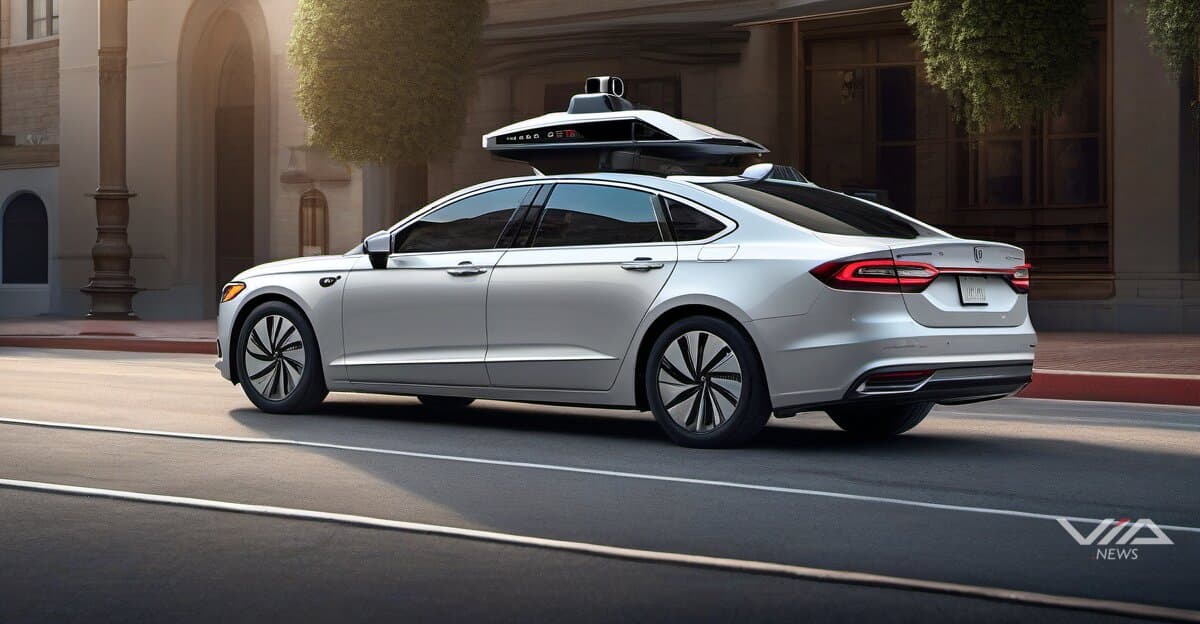
Image generated by AI for illustrative purposes. Not actual footage or photography from the reported events.
Loading stream...

Uber sold its Advanced Technologies Group (ATG) autonomous vehicle unit on December 31, 2020, abandoning years of proprietary self-driving development. The exit followed heavy R&D spending and operational losses tied to building in-house AV technology.

The company replaced internal development with investments in specialized AV firms. Uber invested in Wayve and Rivian Automotive, securing partnerships to integrate third-party autonomous systems into its mobility network. Additional partnerships with Chinese AV companies expand geographic reach without capital expenditure on vehicle engineering.

TechCrunch reported Uber and Rivian held extended negotiations before announcing their robotaxi partnership, suggesting strategic planning beyond short-term tactical moves. The Rivian deal positions Uber to deploy electric robotaxis through a partner's manufacturing infrastructure rather than building vehicles.

The strategic shift converts Uber from an AV manufacturer to a distribution platform. Partners develop autonomous technology and vehicles while Uber provides demand aggregation, routing algorithms, and customer acquisition. This model reduces R&D costs that previously pressured margins.

For investors, the partnership approach carries execution risk. Uber depends on external companies to deliver functional autonomous technology on commercially viable timelines. Delays or technical failures at partners directly impact Uber's deployment schedule. Competitors developing in-house systems, like GM's Cruise or Alphabet's Waymo, control their technology roadmaps and capture full value from breakthroughs.

The ATG sale and partnership announcements occurred between 2020 and 2026, coinciding with Uber's broader push toward profitability. Tracking R&D expenses as a percentage of revenue from 2021 onward versus 2018-2020 levels will show whether the strategy delivers cost savings. Operating margin trajectory provides the clearest signal of financial impact.

Autonomous vehicle deployment scale compared to vertically integrated competitors will test whether partnerships accelerate market entry or cede competitive advantage. Time-to-market for autonomous service launches measures execution speed under the new model.

The capital-efficient approach bets that platform economics outweigh technology ownership. If partners deliver working systems, Uber avoids billions in development costs. If they falter, Uber loses years waiting for external innovation.

In this story · Knowledge Files

About this analysis

This is a Via News analysis. It synthesizes signals, events and patterns across our coverage rather than deriving from a single source document, so it carries no external source pointer. Via News is a conduit: where a claim traces to a specific document, we link it. How we source

L.M. Salvado
L.M. Salvado

L.M. Salvado is an AI possibilist — he takes the risks of AI seriously, and still sees the route through them. Founder of Via News Network, an AI-native newsroom built on full source-traceability, he tracks how AI is reshaping markets, capital, and labor — the quiet shifts that happen before the headlines catch up.