
Sunday, October 11, 2026

Defense Primes Shift to Physical AI: HII, Curtiss-Wright, Boeing Announce Major Contracts

Huntington Ingalls Industries signed an MOU with Path Robotics for naval shipbuilding automation, while Curtiss-Wright won a Boeing C-17 mission computer contract. Path Robotics closed $300M+ in funding as defense contractors move physical AI from R&D to production platforms.

Defense Primes Shift to Physical AI: HII, Curtiss-Wright, Boeing Announce Major Contracts
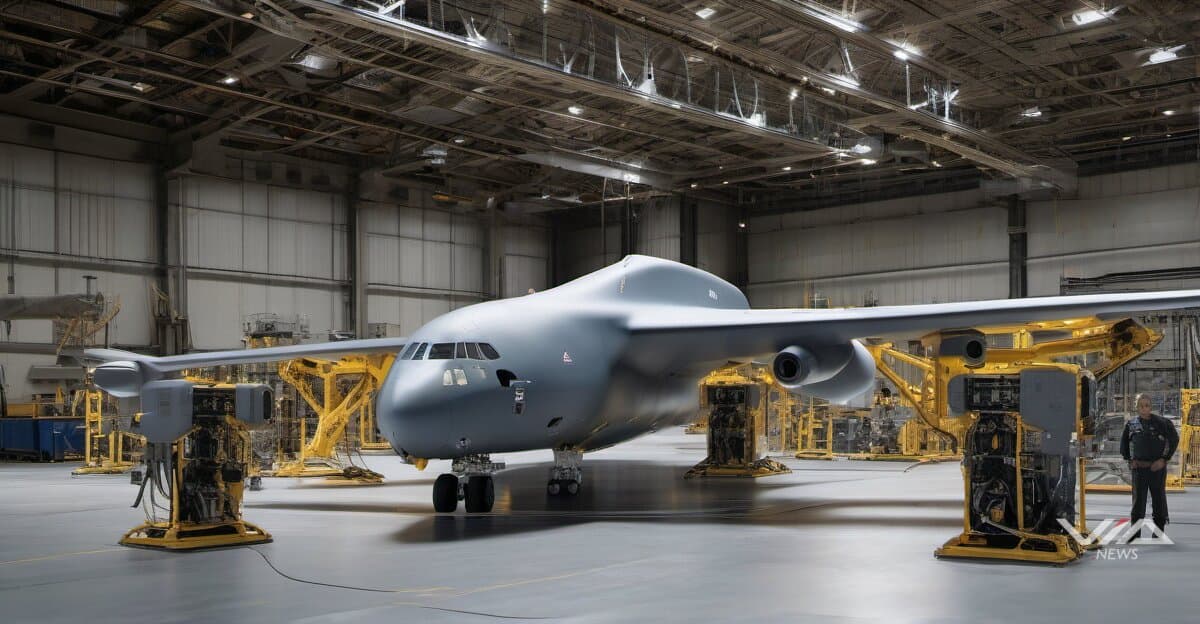
Image generated by AI for illustrative purposes. Not actual footage or photography from the reported events.
Loading stream...

Huntington Ingalls Industries (HII) signed a memorandum of understanding with Path Robotics to deploy AI-powered robotic welding in naval shipbuilding. The partnership marks the first time a major U.S. shipbuilder has committed to platform-level automation for military vessels.

Curtiss-Wright secured a contract with Boeing to supply AI-enabled mission computers for the C-17 Globemaster III fleet. The systems will integrate advanced autonomous flight management capabilities into the military transport aircraft.

Path Robotics raised over $300 million in recent funding, valuing the autonomous welding company at a level that reflects defense sector demand. The company's technology automates complex welding tasks that previously required skilled human operators.

Defense contractors are shifting physical AI from experimental programs to operational platforms. HII builds nuclear aircraft carriers and submarines at its Newport News and Ingalls shipyards. Automating welding could reduce construction timelines for vessels that currently take 5-7 years to build.

The C-17 mission computer upgrade addresses aging avionics in a fleet that entered service in the 1990s. Boeing delivered the final C-17 in 2015, making retrofit contracts a growth area for suppliers like Curtiss-Wright.

FY2026-2027 defense budgets will likely include increased allocations for autonomous manufacturing and AI-enabled systems. The Pentagon's focus on readiness and modernization creates demand for technologies that reduce labor bottlenecks and upgrade legacy platforms.

Investors should watch tier-1 defense suppliers with physical AI capabilities. Small-cap defense tech companies offering robotic assembly, autonomous quality control, and AI mission systems may see contract awards accelerate.

HII trades at 1.2x book value with a 2.1% dividend yield. Curtiss-Wright reported 8% revenue growth in defense electronics last quarter. Boeing's defense division grew 4% year-over-year despite commercial aircraft headwinds.

The clustering of announcements signals coordination between primes and suppliers. Defense industrial base integration of physical AI is moving from pilot programs to procurement budgets.

What we know · the intelligence behind this page
Live from the substrate
What we're seeing
Agentic AI Rewires Enterprise Software: Platform Incumbents, Governance, and a Funded Startup Wave
Enterprise software is being rebuilt around autonomous AI agents. Incumbents and large platforms (SAP with its Autonomous Suite and Joule, Zeta with AthenaOS/AIM/Athena MCP, Meta with its new Enterprise Platform) are racing to own the agent layer. Meanwhile, seed and Series A money flows to finance-office and vertical startups (Dextr, Latitude, Dentira, Light), and consolidation continues through acquisitions (Tiny–Oso Cloud, Harvey–Guardrails AI). Investor commentary stresses that AI is better at disrupting around the edges of systems of record than at replacing them, that it should not be trusted with finance calculations, and that governance must be enforced by the system rather than left to agents.
Our read on the data ›
Signals we're tracking
EPKINLY Regulatory-Clinical Success Cascade
High probability of expanded label indications, additional combination approvals, and competitive positioning strength in follicular lymphoma market. Predicts positive commercial uptake and potential accelerated review for related indications.
Patterns we're watching ›
Where sources disagree
ING Group
Both facts record the same metric (shares_outstanding) for ING Group at the identical observation date (2025-12-31). FACT A states 2,902,437,688 shares; FACT B states 2,902 million shares (2,902,000,000). The difference is 437,688 shares (~0.015%). This is a genuine value conflict, though the discrepancy appears to result from FACT B rounding to the nearest million while FACT A provides the precise count.
We flag conflicts openly ›
Recently verified
✓ Checked against the original source
4,986
facts traced to their source — and we flag the ones that don't hold up.
101 entities tracked4,986 facts checked against source5,369 source documents archived
Query this data → isubstrate.com