
Sunday, September 27, 2026

Aerospace suppliers report 13% commercial growth, 20% defense gains in Q4 as order books strengthen

Aerospace component manufacturers posted strong Q4 results with commercial aerospace revenue up 13%, defense up 20%, and gas turbine segments surging 32%. The performance signals sustained demand from post-pandemic fleet renewals and defense modernization programs, with suppliers reporting stable component pricing despite broader inflation concerns.

Aerospace suppliers report 13% commercial growth, 20% defense gains in Q4 as order books strengthen
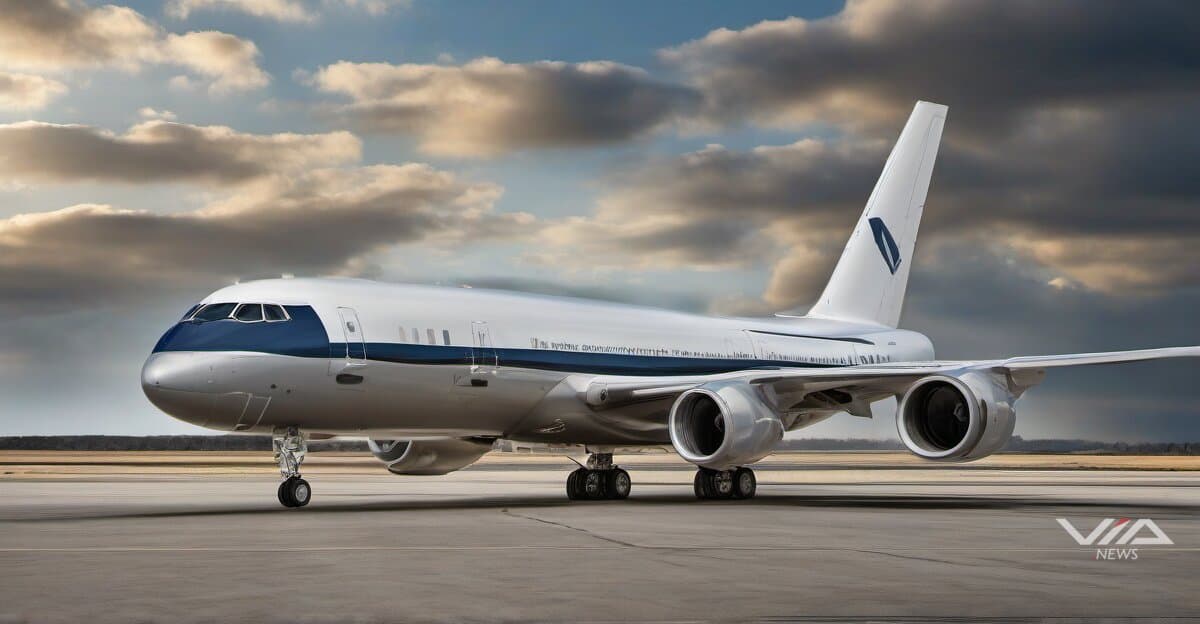
Image generated by AI for illustrative purposes. Not actual footage or photography from the reported events.
Loading stream...

Aerospace sector suppliers delivered robust Q4 earnings with commercial aerospace revenue climbing 13% year-over-year and defense aerospace advancing 20%, according to recent earnings calls from industry participants.

Gas turbine segments outpaced both categories with 32% Q4 growth and 25% full-year gains. Commercial aerospace maintained 12% growth across 2025, reflecting sustained aircraft production ramp-ups at Boeing and Airbus.

Patrick Winterlich, speaking on aerospace market conditions, noted commercial growth "remained strong throughout 2025" while defense aerospace "continued to be robust." The gas turbine division showed "very strong" performance through year-end.

Component cost inflation has stabilized, a key concern for investors monitoring aerospace margins. Andrew Vuono reported "not seeing any incremental inflation in component costs," adding that pricing increases remained positive through the quarter.

The earnings beat comes as aerospace suppliers navigate multi-year tailwinds from commercial fleet renewals. Airlines are replacing aging narrow-body aircraft while expanding wide-body capacity on recovered international routes. Defense budgets in the U.S. and Europe continue prioritizing aircraft modernization programs.

Aerospace stocks have commanded premium valuations relative to broader industrials, with investors betting on sustained order book growth through 2026. The Q4 results support bull cases centered on visibility into 2027 deliveries.

Boeing delivered 528 commercial aircraft in 2025, up from 528 in 2024, while Airbus handed over 766 planes versus 735 the prior year. Both manufacturers maintain order backlogs exceeding seven years of production at current rates.

Supply chain constraints have eased compared to 2024, when component shortages delayed deliveries. Tier-1 suppliers report improved on-time delivery metrics and reduced expedited shipping costs.

Analysts tracking the sector will monitor Q1 2026 order book announcements and Boeing's 737 MAX production rate, currently at 38 aircraft monthly with plans to reach 50 by late 2026. Defense contract awards from the Pentagon's fiscal 2026 budget will provide visibility into sustained 20% growth rates.

Gas turbine strength reflects power generation upgrades and industrial demand in emerging markets. The segment's 32% Q4 surge marks the highest quarterly growth in three years.

What we know · the intelligence behind this page
Live from the substrate
What we're seeing
Vertical AI Agents Attract a Funding Wave Across Fintech-Adjacent Industries
A cluster of AI-native startups applying autonomous agents to narrow, operational problems — hotel front-desk staffing (Dextr AI), identity/fraud risk for financial institutions (Baselayer), insurance distribution (Napo, Connie Health, MGT Insurance) — closed seed-to-Series A rounds within days of each other in September 2026, with CB Insights running a coordinated CEO interview series to spotlight them. The pattern points to agentic AI maturing from generic chat tools into vertical, revenue-generating products, with identity verification for AI agents themselves (Baselayer) emerging as a new fintech infrastructure category responding directly to AI-driven fraud risk.
Our read on the data ›
Signals we're tracking
Satellite-Terrestrial Network Integration Acceleration
Increased investment and launches in hybrid satellite-cellular networks across telecom industry; competitive responses from other carriers; regulatory activity around satellite spectrum; expansion of emergency/rural connectivity use cases
Patterns we're watching ›
Where sources disagree
ING Group
Both facts record the same metric (shares_outstanding) for ING Group at the identical observation date (2025-12-31). FACT A states 2,902,437,688 shares; FACT B states 2,902 million shares (2,902,000,000). The difference is 437,688 shares (~0.015%). This is a genuine value conflict, though the discrepancy appears to result from FACT B rounding to the nearest million while FACT A provides the precise count.
We flag conflicts openly ›
Recently verified
✓ Checked against the original source
4,984
facts traced to their source — and we flag the ones that don't hold up.
101 entities tracked4,984 facts checked against source5,306 source documents archived
Query this data → isubstrate.com