

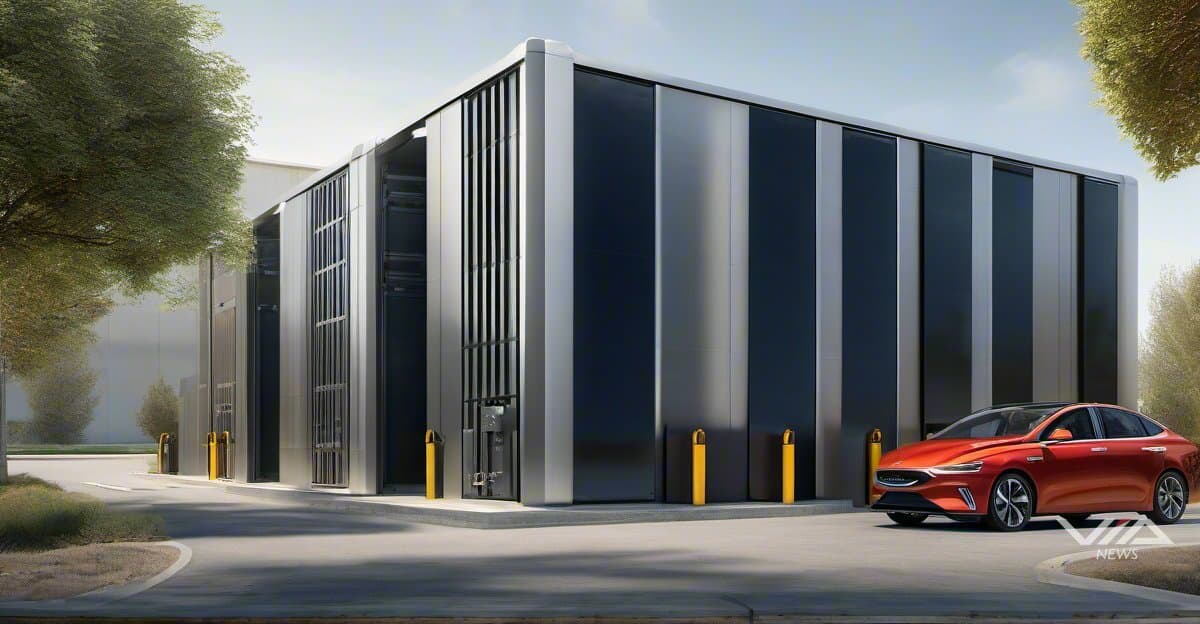
Bloom Energy signed a $1.7 billion fuel-cell power agreement with Nebius AI, one of the largest single contracts in the company's history.1 The deal supplies on-site generation for AI compute infrastructure rather than grid-delivered power.
American Electric Power, one of the largest U.S. utilities, separately struck a strategic agreement with Bloom Energy targeting AI-focused fuel cell deployment.2 A utility partnering with a distributed-generation vendor signals grid interconnection queues are now a business constraint, not just an engineering one.
Bloom Energy also expanded its South Korea footprint through SK Ecoplant and SK Eternix, broadening distribution beyond the U.S. market.3 The company already supplies fuel cell systems to Oracle Corp, an existing hyperscale customer relationship.4
For investors, the pattern matters more than any single contract. Three separate customer types — a cloud compute firm, a regulated utility, and industrial partners in Asia — are all buying the same product for the same reason: AI data centers cannot wait years for grid capacity upgrades.
That reframes Bloom Energy's revenue growth. If fuel-cell orders track hyperscaler capex commitments, such as the roughly $220 billion in 2026 capital spending Amazon has signaled, rather than general utility demand, the stock trades less like a niche power-equipment supplier and more like an AI infrastructure proxy.
The test is straightforward and near-term. Bloom Energy's order backlog and AI/data-center revenue disclosures over the next two to four quarters should show whether contract growth correlates with hyperscaler capex increases specifically, rather than broader utility-sector demand. A tight correlation would confirm distributed generation has become a binding constraint on AI buildout, independent of grid expansion timelines.5
Until that data arrives, the three deals stand as directional evidence: AI compute customers are increasingly willing to pay a premium for power they can control and site themselves, rather than wait in a utility interconnection queue.