
Saturday, September 19, 2026

Novo Nordisk Stock Up 24.9% in 30 Days as AI Restructuring Sharpens GLP-1 Focus

Novo Nordisk shares gained 24.9% over 30 days through Q1 2026, outperforming the broader pharma sector. The company licensed its Parkinson's cell therapy to AI-native partner Cellular Intelligence while shutting its internal unit, redirecting capital to its high-margin GLP-1 franchise. The move reflects a wider big-pharma trend of outsourcing experimental modalities to AI-enabled specialists.

LM Salvado
LM Salvado

June 5, 2026

Novo Nordisk Stock Up 24.9% in 30 Days as AI Restructuring Sharpens GLP-1 Focus
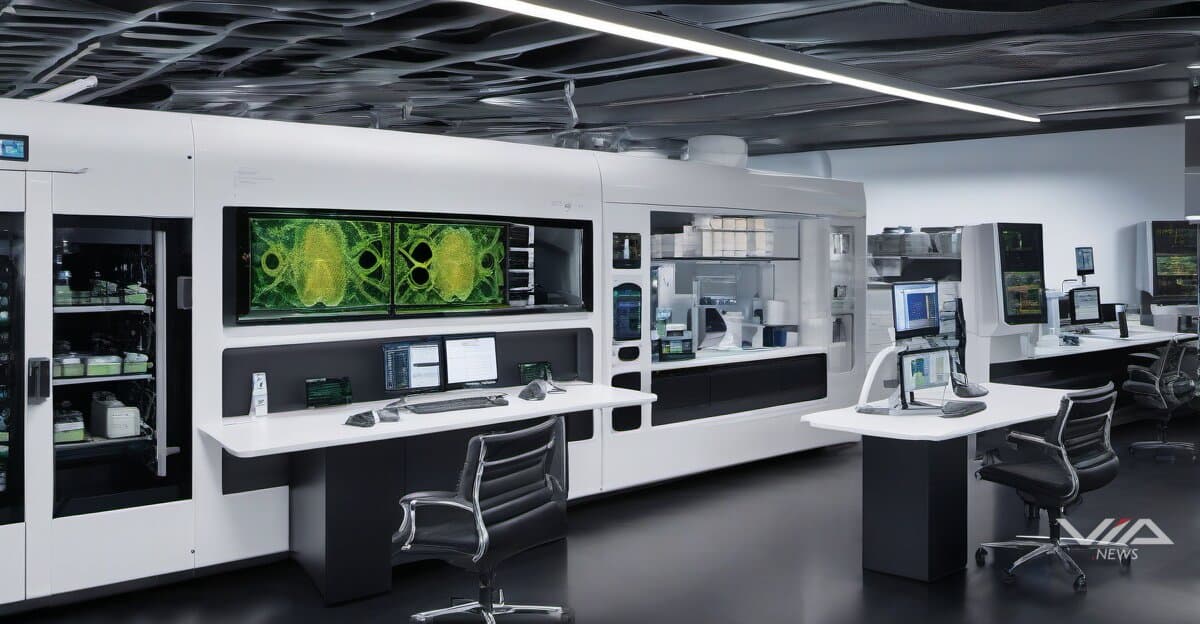
Image generated by AI for illustrative purposes. Not actual footage or photography from the reported events.
Loading stream...

Novo Nordisk shares gained 24.9% over 30 days through Q1 2026, outperforming the broader pharmaceutical sector.1 The driver: a strategic restructuring that sheds internal R&D overhead and bets on AI-native partners.

The company licensed its Parkinson's cell therapy program to Cellular Intelligence, an AI-native biotech.1 Simultaneously, it shut its own internal cell therapy unit. The result is a cleaner balance sheet and sharper focus on GLP-1 — the franchise behind Wegovy and Ozempic.

Big pharma is increasingly outsourcing experimental drug modalities to AI specialists. Novo Nordisk's Cellular Intelligence deal is among the first large-cap examples to produce visible earnings validation. Exiting cell therapy removes a capital drain. The licensing structure monetizes the asset while retaining partnership upside.

NVIDIA's BioNeMo platform is accelerating this industry shift.1 Partnerships with Thermo Fisher and Eli Lilly position BioNeMo as the AI infrastructure backbone for drug discovery. Independent model releases from Terray Therapeutics and Apheris signal broad third-party adoption.

A wave of new foundation model platforms — Natera, Basecamp EDEN, Boltz Lab, Owkin OwkinZero, and Edison Kosmos — marks a maturing buildout phase.1 Infrastructure is stabilizing. Commercial differentiation is starting.

GLP-1 remains Novo Nordisk's core equity thesis. Wegovy and Ozempic continue driving volume growth in obesity and diabetes markets globally. Concentrating resources here — rather than spreading across unproven modalities — reads as disciplined capital allocation.

Sentiment across pharma-AI is bullish and improving, though commercial payoff at scale remains unproven industry-wide. Novo Nordisk's Q1 outperformance sets an early template: exit internal programs lacking AI-native advantages, license assets to specialists, and concentrate capital on proven high-margin franchises.

For healthcare equity investors, the setup favors companies that can credibly execute this playbook — and Novo Nordisk's 30-day performance suggests the market is already pricing in the logic.

Source documents

Via News is a conduit. We point to the source documents behind this report — we don't replace them. Trace any claim to its source and decide what to trust. How we source

Source Trace Score2 source documents2 with a live linkVerifiability: Strong
  1. [1]News articleYahoo Finance· May 11, 2026
    Novo Nordisk Refocuses On GLP‑1 As AI Partner Advances Parkinson’s Bet
  2. [2]News articleYahoo Finance· January 12, 2026
    NVIDIA BioNeMo Platform Adopted by Life Sciences Leaders to Accelerate AI-Driven Drug Discovery

In this story · Knowledge Files

LM Salvado
LM Salvado

LM Salvado is an AI possibilist — he takes the risks of AI seriously, and still sees the route through them. Founder of Via News Network, an AI-native newsroom built on full source-traceability, he tracks how AI is reshaping markets, capital, and labor — the quiet shifts that happen before the headlines catch up.

What we know · the intelligence behind this page
Live from the substrate
What we're seeing
AI Boom Hits a Fork: Slowdown Calls Clash with Capex Confidence as Markets Get Nervous
Dario Amodei's repeated calls for a global slowdown in frontier AI development, echoed by Microsoft's new humanist AI code of conduct and FTC antitrust caution, are being publicly rejected by Nvidia and Meta leadership even as hyperscaler spending draws fresh skeptical scrutiny (Wachter's analysis, Burry-style overbuilding worries) and weak guidance from Adobe and a post-slowdown-comment selloff in GE Vernova signal investor jitters. Meanwhile wealth and security effects of the AI race keep compounding — Zhang Yiming's fortune surging on AI-driven ByteDance value, a Chinese hacking firm weaponizing AI against stolen government secrets, and low-quality AI-generated products (an AI sitcom, a spam-flooding agent platform) fueling backlash even as adoption races ahead.
Our read on the data ›
Signals we're tracking
EPKINLY Regulatory-Clinical Success Cascade
High probability of expanded label indications, additional combination approvals, and competitive positioning strength in follicular lymphoma market. Predicts positive commercial uptake and potential accelerated review for related indications.
Patterns we're watching ›
Where sources disagree
Berkshire Hathaway
Both facts report Berkshire Hathaway's cash position on 2026-01-01 with identical observation timestamps, but claim vastly different values: 380 billion USD vs 400 USD. These cannot both be true for the same entity at the same point in time. The magnitude of the discrepancy (a factor of ~10^9) rules out rounding, unit conversion, or methodological differences.
We flag conflicts openly ›
Recently verified
Checked against the original source
4,982
facts traced to their source — and we flag the ones that don't hold up.
101 entities tracked4,982 facts checked against source5,299 source documents archived
Query this data → isubstrate.com