
Saturday, August 22, 2026
What we know · the intelligence behind this page
Live from the substrate
What we're seeing
AI Platforms Rush to Establish Content-Authenticity Standards Amid Leadership Shakeups and Sustained Capex
Within days of each other in mid-August 2026, Google, Anthropic, and Spotify moved to formalize AI content watermarking and labeling policies, signaling an industry-wide push toward self-governed provenance standards as generative AI output floods consumer platforms. The shift coincides with executive turnover at OpenAI (Brad Lightcap's departure) and Meta's public AI manifesto, all set against continued heavy AI infrastructure capital expenditure and finance-sector moves (e.g., Wall Street paying for algorithmic edges on social signals) that underscore AI's deepening entanglement with capital markets.
Our read on the data ›
Signals we're tracking
Satellite-Terrestrial Network Integration Acceleration
Increased investment and launches in hybrid satellite-cellular networks across telecom industry; competitive responses from other carriers; regulatory activity around satellite spectrum; expansion of emergency/rural connectivity use cases
Patterns we're watching ›
Where sources disagree
JPMorgan Chase & Co.
Both facts report JPMorgan Chase & Co.'s revenue for the same fiscal period (FY 2025) with the same observation date (2025-12-31), but with different values: $182.447 billion vs. $185 billion. The ~1.4% difference ($2.553 billion) is too large to be explained by rounding alone and represents conflicting data for the identical time period.
We flag conflicts openly ›
Recently verified
Checked against the original source
4,977
facts traced to their source — and we flag the ones that don't hold up.
101 entities tracked4,977 facts checked against source5,242 source documents archived
Work with this data → vianewsagency.com

Fed's Rate Pause Fuels AI Deal Frenzy: CoreWeave and Marvell Signal Where Capital Is Flowing

The Federal Reserve's extended rate pause is providing a stable backdrop for accelerating AI sector consolidation, with CoreWeave's $1.17B contract and SoftBank's potential Marvell acquisition revealing where institutional capital is concentrating. While top-line economic metrics remain resilient, a structural divergence is emerging between AI-driven wealth creation and stagnation across traditional sectors.

Fed's Rate Pause Fuels AI Deal Frenzy: CoreWeave and Marvell Signal Where Capital Is Flowing
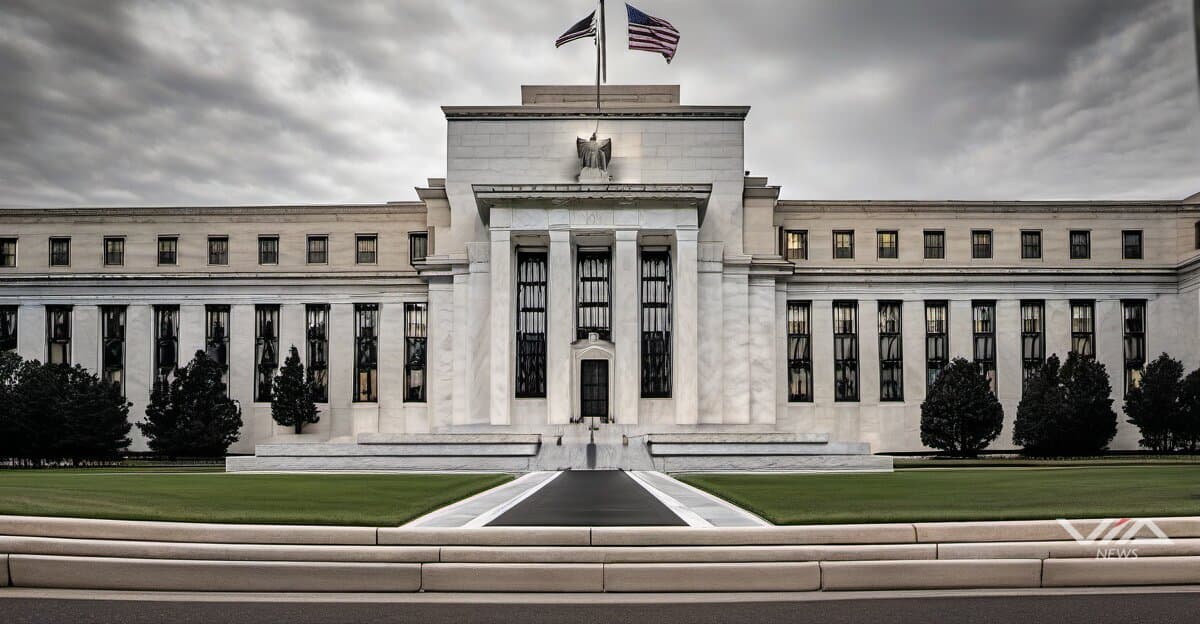
Image generated by AI for illustrative purposes. Not actual footage or photography from the reported events.
Loading stream...

The Federal Reserve's decision to hold rates steady is doing more than managing inflation — it is quietly underwriting one of the most concentrated capital allocation events in recent market history. As policymakers signal an extended pause, institutional money is flooding into artificial intelligence infrastructure at a pace that is reshaping deal flow, equity valuations, and the very structure of the broader economy.

Two transactions illustrate the dynamic with particular clarity. CoreWeave, the AI cloud infrastructure provider, secured a $1.17 billion contract that underscores the insatiable enterprise appetite for GPU-dense computing capacity. Meanwhile, SoftBank is in discussions for a potential acquisition of Marvell Technology, a deal that would consolidate two of the most strategically positioned players in AI chip customization and networking. Together, these moves reflect a deliberate rotation of capital toward the infrastructure layer of the AI stack — the picks-and-shovels bet of this technology cycle.

The monetary policy context matters here. Fed Governor Philip Jefferson recently signaled that rates are in a "neutral range," raising the bar for further cuts. With borrowing costs stable rather than falling, deal economics for highly profitable or contracted AI businesses remain attractive even without the tailwind of cheaper debt. CoreWeave's contract revenue provides the kind of visibility that justifies large-scale financing; Marvell's custom silicon roadmap offers SoftBank a direct line into hyperscaler spending that shows no signs of slowing.

Former Fed Governor Lael Brainard captured the underlying tension precisely: "The economy at the top level is strong, but it's being driven by this really important set of investments in AI. The rest of the economy under the hood is really stuck." That bifurcation is now visible in M&A activity. Dealmaking in traditional industrials, consumer discretionary, and regional banking remains subdued, while AI infrastructure, data center REITs, and semiconductor M&A are accelerating.

Macro risks have not disappeared. Trump administration tariffs and ongoing Supreme Court deliberations over regulatory authority are introducing uncertainty that complicates the Fed's calculus. Inflation has remained stubbornly near 3% for close to four years, constraining the Fed's ability to ease even if growth softens outside the AI-driven segments. IMF First Deputy Managing Director Gita Gopinath has warned that an equity correction of dot-com magnitude could erase $20 trillion in U.S. household wealth — a tail risk that looms larger as AI valuations stretch.

For investors, the signal from current deal flow is unambiguous: capital is concentrating in companies with direct exposure to AI compute, custom silicon, and cloud infrastructure. The CoreWeave and Marvell transactions are not isolated events — they are leading indicators of a broader M&A wave that will likely accelerate through 2026 as hyperscalers compete to lock in supply chain advantages and sovereign wealth funds seek AI exposure.

The Fed's pause, paradoxically, may be the most bullish force in the AI deal market right now. Rate stability reduces refinancing risk for leveraged acquirers, supports equity valuations used as deal currency, and signals to boards that the macro floor is unlikely to drop suddenly. Until inflation breaks decisively lower or growth cracks beyond the AI sector, expect the current deal frenzy to continue — and the structural divergence between AI winners and the broader economy to deepen.

Source documents

Via News is a conduit. We point to the source documents behind this report — we don't replace them. Trace any claim to its source and decide what to trust. How we source

Source Trace Score11 source documents11 with a live linkVerifiability: Strong
  1. [1]News articleYahoo Finance· November 2, 2025
    Fed fallout, missing jobs numbers, and a busy earnings calendar: What to watch this week
  2. [2]News articleYahoo Finance· November 13, 2025
    Fed is in 'unusual juncture' on rates, lack of data: Lael Brainard
  3. [3]News articleCa· December 24, 2025
    'I think time is running out': How to survive a market bubble — if there is one
  4. [4]News articleNasdaq· February 3, 2026
    Software Stocks Retreat and Drag the Broader Market Lower
  5. [5]News articleYahoo Finance· February 6, 2026
    Stock market today: Dow closes above 50,000 for the first time as stocks soar to cap volatile week
  6. [6]News articleYahoo Finance· February 10, 2026
    Stock market today: Dow ekes out third straight record, S&P 500, Nasdaq slide with jobs report on deck
  7. [7]News articleYahoo Finance· November 6, 2025
    Stock market today: Dow, S&P 500, Nasdaq fall as Nvidia leads AI trade lower, jobs jitters reignite
  8. [8]News articleYahoo Finance· February 6, 2026
    Stock market today: Dow soars 1,000 points, leading S&P 500, Nasdaq higher as Wall Street rebounds from rout
  9. [9]News articleYahoo Finance· February 4, 2026
    Stock market today: S&P 500, Nasdaq fall for 2nd day as tech slides on AI worries with Google earnings ahead
  10. [10]News articleNasdaq· January 14, 2026
    Stocks Retreat as Big Tech Falters
  11. [11]News articleNasdaq· February 6, 2026
    Stocks Settle Lower as Tech and Crypto are Routed

In this story · Knowledge Files