
Saturday, August 22, 2026
What we know · the intelligence behind this page
Live from the substrate
What we're seeing
AI Platforms Rush to Establish Content-Authenticity Standards Amid Leadership Shakeups and Sustained Capex
Within days of each other in mid-August 2026, Google, Anthropic, and Spotify moved to formalize AI content watermarking and labeling policies, signaling an industry-wide push toward self-governed provenance standards as generative AI output floods consumer platforms. The shift coincides with executive turnover at OpenAI (Brad Lightcap's departure) and Meta's public AI manifesto, all set against continued heavy AI infrastructure capital expenditure and finance-sector moves (e.g., Wall Street paying for algorithmic edges on social signals) that underscore AI's deepening entanglement with capital markets.
Our read on the data ›
Signals we're tracking
Satellite-Terrestrial Network Integration Acceleration
Increased investment and launches in hybrid satellite-cellular networks across telecom industry; competitive responses from other carriers; regulatory activity around satellite spectrum; expansion of emergency/rural connectivity use cases
Patterns we're watching ›
Where sources disagree
JPMorgan Chase & Co.
Both facts report JPMorgan Chase & Co.'s revenue for the same fiscal period (FY 2025) with the same observation date (2025-12-31), but with different values: $182.447 billion vs. $185 billion. The ~1.4% difference ($2.553 billion) is too large to be explained by rounding alone and represents conflicting data for the identical time period.
We flag conflicts openly ›
Recently verified
Checked against the original source
4,977
facts traced to their source — and we flag the ones that don't hold up.
101 entities tracked4,977 facts checked against source5,242 source documents archived
Work with this data → vianewsagency.com

Four Major M&A Deals Signal Corporate Confidence Across Energy and Tech Sectors

Smithfield Foods acquired Nathan's Famous, ZenaTech bought 18 firms, Evolution Petroleum closed an acquisition, and Chevron's Hess merger advanced—all within a tight window. The deal cluster suggests executives see valuation opportunities despite market volatility, with energy consolidation and tech rollup strategies dominating.

Four Major M&A Deals Signal Corporate Confidence Across Energy and Tech Sectors
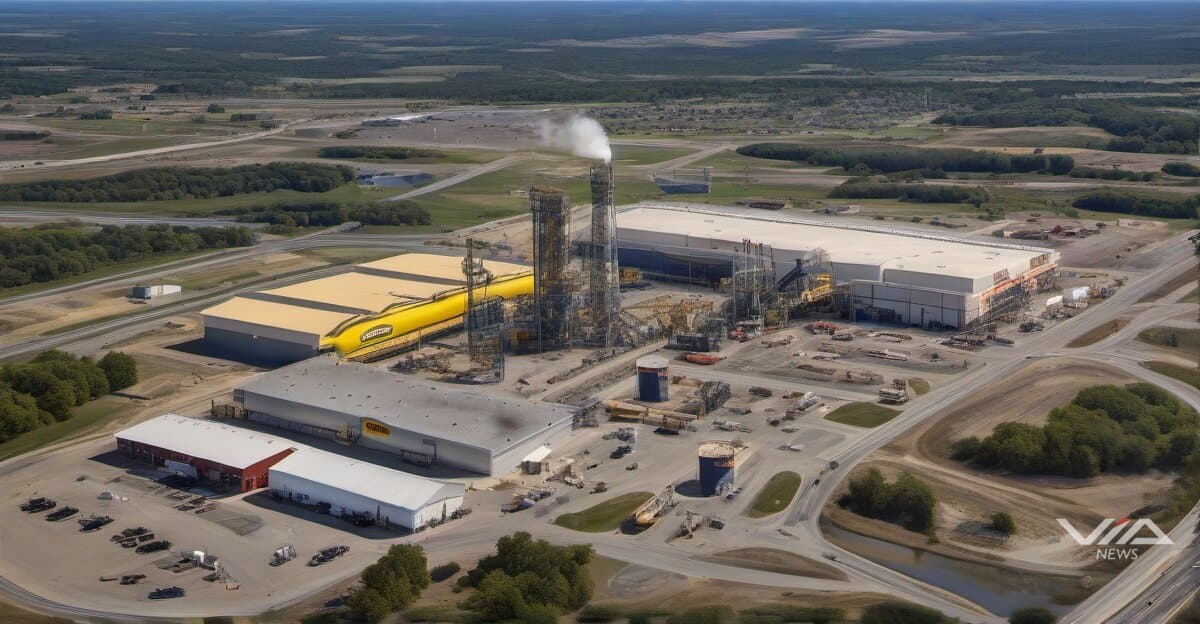
Image generated by AI for illustrative purposes. Not actual footage or photography from the reported events.
Loading stream...

Four significant acquisitions announced recently show corporate America betting on growth through M&A despite uncertain markets. Smithfield Foods purchased Nathan's Famous, ZenaTech acquired 18 companies in a rapid consolidation play, Evolution Petroleum completed a transaction, and Chevron moved forward with its Hess merger.

The clustering of deals across sectors—food services, drone technology, energy production, and oil majors—indicates broad-based confidence in integration capabilities. ZenaTech's 18-firm buying spree stands out as an aggressive rollup strategy in the drone and AI space, suggesting the company sees fragmented valuations it can arbitrage through consolidation.

Energy sector deals carry different weight. Chevron's Hess acquisition pushes forward despite oil price swings, signaling long-term positioning over short-term market timing. Evolution Petroleum's move fits a pattern of smaller producers consolidating to compete with majors on scale.

Smithfield's Nathan's Famous purchase crosses into consumer brands, showing diversification appetite beyond core protein operations. The deal values Nathan's franchise model and brand equity at a time when restaurant chains face mixed consumer spending signals.

M&A activity often precedes market inflection points. When companies deploy capital for acquisitions rather than buybacks, it signals management sees better returns in strategic assets than their own stock. The 73% confidence reading on this trend reflects genuine corporate action, not just talk.

Sector rotation implications matter for traders. Energy consolidation typically compresses valuations for remaining independents—either takeover targets or subscale players facing margin pressure. Tech rollups like ZenaTech's create short-term volatility as markets digest integration risk versus revenue synergies.

The deal flow suggests corporate treasuries are finding opportunities in current valuations. Whether these bets pay off depends on execution and macro conditions, but the willingness to commit capital signals a risk-on posture from boardrooms.

In this story · Knowledge Files