
Saturday, August 22, 2026
What we know · the intelligence behind this page
Live from the substrate
What we're seeing
AI Platforms Rush to Establish Content-Authenticity Standards Amid Leadership Shakeups and Sustained Capex
Within days of each other in mid-August 2026, Google, Anthropic, and Spotify moved to formalize AI content watermarking and labeling policies, signaling an industry-wide push toward self-governed provenance standards as generative AI output floods consumer platforms. The shift coincides with executive turnover at OpenAI (Brad Lightcap's departure) and Meta's public AI manifesto, all set against continued heavy AI infrastructure capital expenditure and finance-sector moves (e.g., Wall Street paying for algorithmic edges on social signals) that underscore AI's deepening entanglement with capital markets.
Our read on the data ›
Signals we're tracking
Satellite-Terrestrial Network Integration Acceleration
Increased investment and launches in hybrid satellite-cellular networks across telecom industry; competitive responses from other carriers; regulatory activity around satellite spectrum; expansion of emergency/rural connectivity use cases
Patterns we're watching ›
Where sources disagree
JPMorgan Chase & Co.
Both facts report JPMorgan Chase & Co.'s revenue for the same fiscal period (FY 2025) with the same observation date (2025-12-31), but with different values: $182.447 billion vs. $185 billion. The ~1.4% difference ($2.553 billion) is too large to be explained by rounding alone and represents conflicting data for the identical time period.
We flag conflicts openly ›
Recently verified
Checked against the original source
4,977
facts traced to their source — and we flag the ones that don't hold up.
101 entities tracked4,977 facts checked against source5,242 source documents archived
Work with this data → vianewsagency.com

Fed Rate Pause Through Q2 2026 Threatens $4.2T Rate-Sensitive Equity Sectors

The Federal Reserve's easing cycle that began September 2025 faces an extended pause through June 2026 as services inflation remains elevated above 3.5%. Standard Chartered forecasts less than 1% probability of rate cuts before May 2026, pressuring REITs, utilities, and growth tech stocks while Bitcoin ETF holders sit on losses exceeding 20%.

Fed Rate Pause Through Q2 2026 Threatens $4.2T Rate-Sensitive Equity Sectors
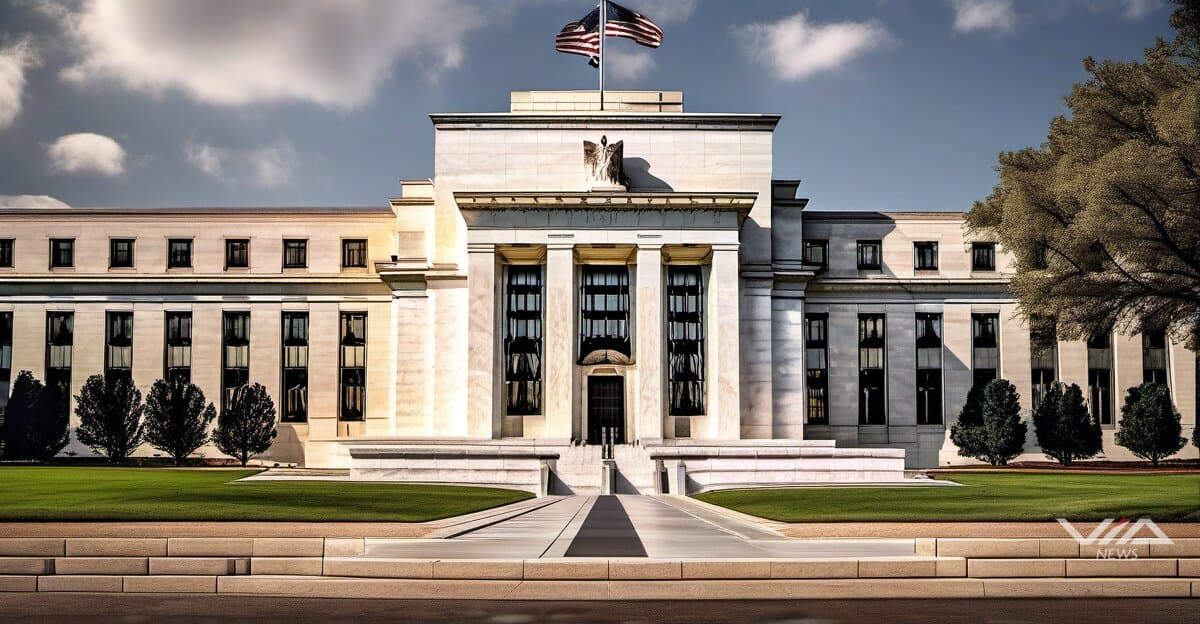
Image generated by AI for illustrative purposes. Not actual footage or photography from the reported events.
Loading stream...

The Federal Reserve's monetary easing cycle initiated in September 2025 will likely remain on hold through Q2 2026, according to Fed official Austan Goolsbee and market strategists tracking persistent services inflation.

Core services inflation excluding housing has stabilized above 3.5% annualized, preventing additional rate cuts despite market expectations for looser policy. Geoffrey Kendrick at Standard Chartered places odds of a Fed rate cut before May 2026 below 1%, citing inflation durability in wage-sensitive sectors.

Rate-sensitive equity sectors face mounting pressure under the prolonged pause scenario. REITs and utility stocks, which collectively represent $1.8 trillion in market capitalization, have historically underperformed during rate-hold periods as their dividend yields lose appeal against risk-free rates. Growth technology stocks carrying high price-to-earnings multiples face valuation compression as the discount rate remains elevated.

The Bank of Canada identified highly indebted households as a critical vulnerability, with rising rates increasing default risk across North American credit markets. This dynamic extends to corporate borrowers in cyclical sectors, where refinancing costs at current rates exceed original debt servicing by 200-300 basis points.

Cryptocurrency markets show acute sensitivity to the rate outlook. Bitcoin ETF investors hold positions with average losses exceeding 20% from peak 2025 valuations. Kendrick projects further capitulation in crypto ETF flows as the opportunity cost of holding non-yielding digital assets increases relative to money market funds paying 4.5-5%.

Trading opportunities emerge in this environment. Short positions in high-duration growth stocks offer asymmetric risk-reward as multiple compression accelerates. Value stocks in energy and financials provide inflation hedges with positive carry from dividends. Investment-grade corporate bonds in the 3-5 year maturity range capture yield without excessive duration risk.

The key monitoring points through June 2026 include FOMC statement language shifts, monthly core services CPI prints, and performance dispersion between growth and value equity factors. A confirmed Fed pause with services inflation above 3.5% validates bearish positioning in rate-sensitive assets while favoring short-duration income strategies.

In this story · Knowledge Files