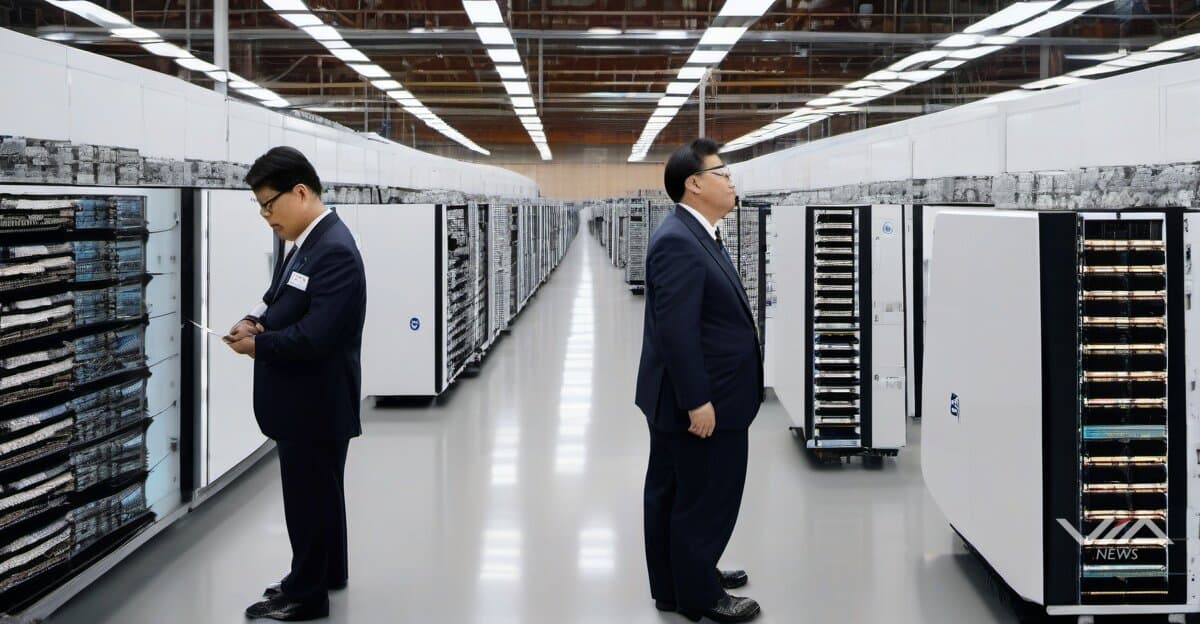
Samsung Electronics and SK Hynix have each surpassed $1 trillion in market capitalization, driven by surging AI chip demand.1 Samsung's chip division profit jumped 48-fold from a year earlier. SK Hynix reported a 406% increase in first-quarter profit.1
The twin valuations mark a turning point for South Korea's chip industry. Export revenue from semiconductors has lifted the country's overall GDP.1 AI-driven memory chip orders are now the central force behind both companies' earnings.1
The profit windfall has reached workers as well as shareholders. Both companies signed union bonus-sharing deals tied to the record earnings.1 Lawmakers have gone further, proposing an "AI dividend" policy to spread chip-sector gains to households outside the industry.1
Not everyone sees only good news in the boom. The Bank of Korea has warned it is producing a K-shaped economy.1 Gains are concentrating in chipmakers and their employees, while growth in the broader economy lags behind.1 The central bank's warning signals concern that AI-driven prosperity at Samsung and SK Hynix is not spreading to the wider economy.
The divide is visible beyond corporate balance sheets. Chip engineers have become sought-after prospects in South Korea's marriage market, a reflection of how far ahead the sector's pay has pulled from other industries.1
For markets, the dual $1 trillion valuations confirm AI chip demand as the defining driver of South Korean equities this year. Samsung and SK Hynix supply the memory chips underpinning the global AI buildout, and their earnings show few signs of slowing. The Bank of Korea's inequality warning, though, suggests policymakers see limits to letting two chipmakers carry the entire economy.