
Sunday, October 11, 2026

American Coastal Holds 25% of Florida Condo Insurance Market, Creating Catastrophic Concentration Risk

American Coastal Insurance controls 4,300 of Florida's 17,000 eligible condominium associations, creating massive exposure to hurricane risk and state regulatory shifts. CEO Brad Martz's company has maintained 18 years of profitability, but the geographic concentration represents structural vulnerability for investors.

American Coastal Holds 25% of Florida Condo Insurance Market, Creating Catastrophic Concentration Risk
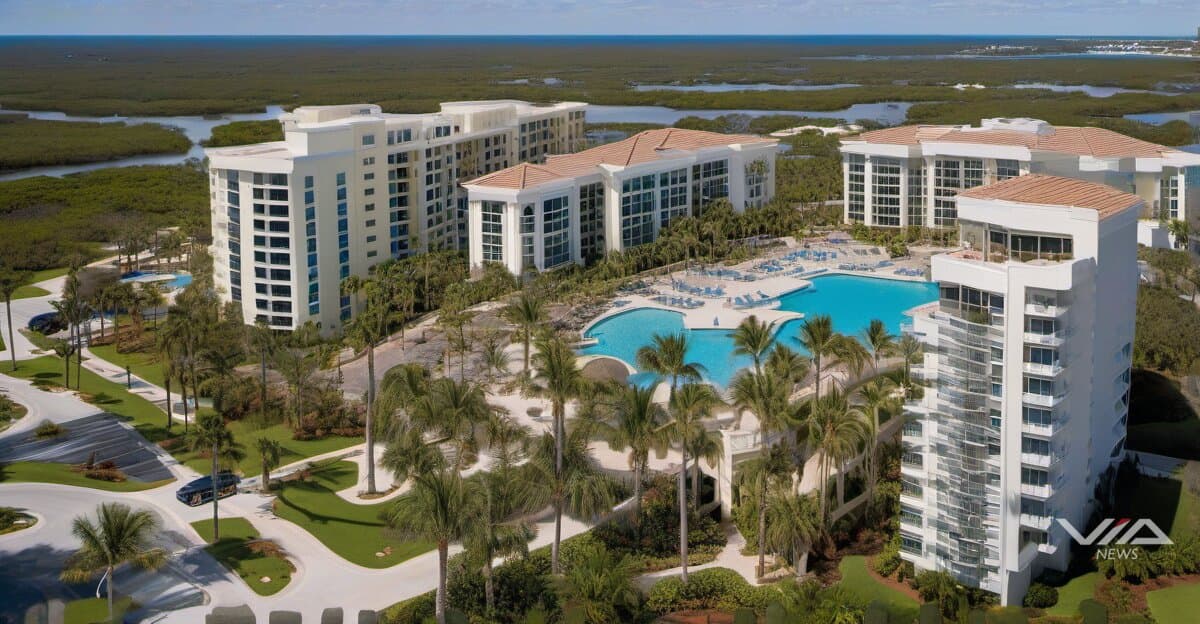
Image generated by AI for illustrative purposes. Not actual footage or photography from the reported events.
Loading stream...

American Coastal Insurance Corporation controls 4,300 of Florida's 17,000 eligible condominium associations, concentrating roughly 25% of the market in the nation's most hurricane-prone state. The concentration creates catastrophic exposure risk despite 18 consecutive years of profitability under CEO Brad Martz.

Florida's property insurance market faces structural instability. Six major carriers have exited the state since 2022. State-backed Citizens Property Insurance grew to 1.3 million policies in 2023, up from 420,000 in 2019, as private insurers retreated from hurricane exposure.

American Coastal's Florida dominance amplifies three risk vectors. First, hurricane losses: a Category 4 storm hitting Miami-Dade County could trigger claims across 25% of the company's book. Second, regulatory risk: Florida lawmakers passed emergency assessment reforms in 2023 that altered carrier liability structures. Third, reinsurance costs: Florida-focused carriers face rate increases 40-60% higher than national averages.

The concentration creates asymmetric volatility for shareholders. Nationwide carriers like State Farm and Allstate spread Florida exposure across 50-state books. American Coastal lacks geographic diversification buffers. A single catastrophic event could wipe out multiple years of underwriting profit.

Martz's 18-year track record demonstrates operational expertise in the Florida market. The company's survival through Hurricane Irma (2017), Hurricane Michael (2018), and Hurricane Ian (2022) shows underwriting discipline. But past performance doesn't reduce future hurricane probability.

Climate risk models project increased hurricane intensity. NOAA data shows Category 4-5 storms in the Atlantic Basin increased 8% per decade since 1980. Sea level rise in South Florida reached 8 inches since 1950, amplifying storm surge damage potential for coastal condominiums.

Investors face concentration risk without diversification options. Unlike publicly traded insurers with geographic spread, American Coastal's stakeholders absorb full Florida market exposure. The company's profitability depends on continued absence of major loss events—a probability that declines with each hurricane season.

Reinsurance markets price this risk. Florida carrier reinsurance costs jumped 50% in 2023 renewal cycles. Capital allocators view Florida exposure as requiring premium returns to justify concentration risk, creating margin pressure for dominant state players.

What we know · the intelligence behind this page
Live from the substrate
What we're seeing
Agentic AI Rewires Enterprise Software: Platform Incumbents, Governance, and a Funded Startup Wave
Enterprise software is being rebuilt around autonomous AI agents. Incumbents and large platforms (SAP with its Autonomous Suite and Joule, Zeta with AthenaOS/AIM/Athena MCP, Meta with its new Enterprise Platform) are racing to own the agent layer. Meanwhile, seed and Series A money flows to finance-office and vertical startups (Dextr, Latitude, Dentira, Light), and consolidation continues through acquisitions (Tiny–Oso Cloud, Harvey–Guardrails AI). Investor commentary stresses that AI is better at disrupting around the edges of systems of record than at replacing them, that it should not be trusted with finance calculations, and that governance must be enforced by the system rather than left to agents.
Our read on the data ›
Signals we're tracking
EPKINLY Regulatory-Clinical Success Cascade
High probability of expanded label indications, additional combination approvals, and competitive positioning strength in follicular lymphoma market. Predicts positive commercial uptake and potential accelerated review for related indications.
Patterns we're watching ›
Where sources disagree
ING Group
Both facts record the same metric (shares_outstanding) for ING Group at the identical observation date (2025-12-31). FACT A states 2,902,437,688 shares; FACT B states 2,902 million shares (2,902,000,000). The difference is 437,688 shares (~0.015%). This is a genuine value conflict, though the discrepancy appears to result from FACT B rounding to the nearest million while FACT A provides the precise count.
We flag conflicts openly ›
Recently verified
✓ Checked against the original source
4,986
facts traced to their source — and we flag the ones that don't hold up.
101 entities tracked4,986 facts checked against source5,369 source documents archived
Query this data → isubstrate.com