
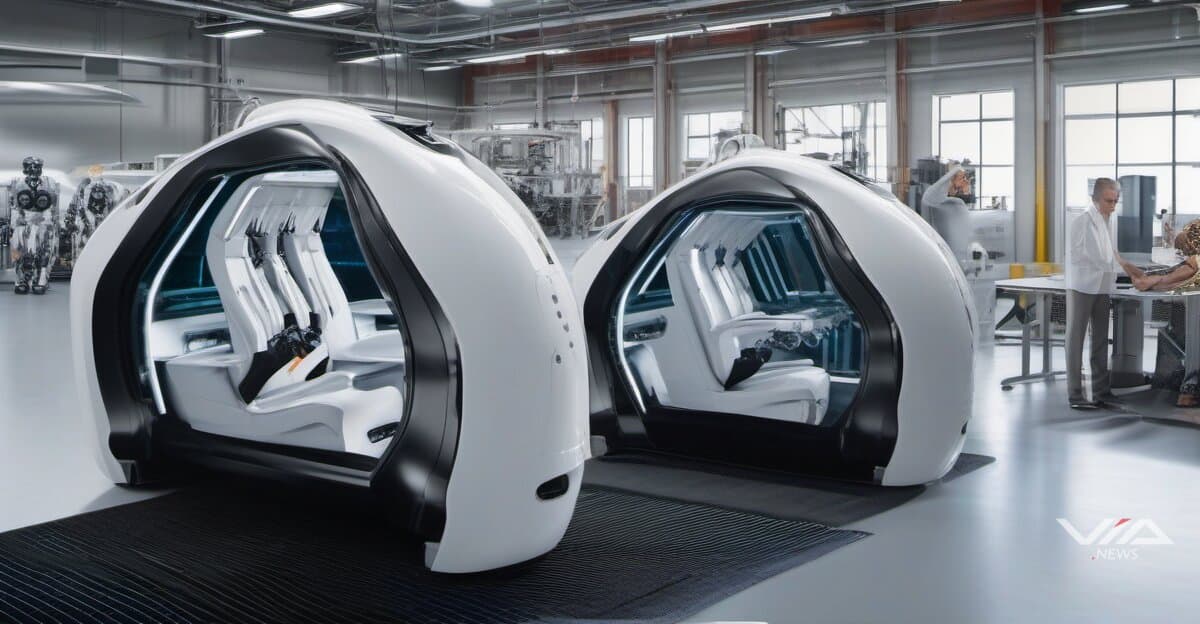
Robotaxi launches are scheduled for 2026, marking the robotics industry's shift from research pilots to commercial production. Commercial autonomous vehicle production is targeted for 2028.
Boston Dynamics pushed its Atlas research platform through final full-body control testing as the enterprise version enters deployment. "Now that the Atlas enterprise platform is getting to work, the research version gets one last run in the sun," the company stated.
Mobileye acquired Mentee Robotics to accelerate humanoid robotics commercialization. "Joining forces with Mobileye gives us access to unparalleled AI infrastructure and commercialization expertise, accelerating our mission to bring scalable, safe, and cost-effective humanoid solutions to market," said Prof. Lior Wolf.
Industrial automation companies are developing fully autonomous manufacturing systems, moving beyond partial automation. Sentiment in the sector continues to improve.
Service robotics companies are gaining market traction through regulatory approvals. Delivery robots, robotic vacuum cleaners, and exoskeletons are expanding beyond early adopter markets. Insurance coverage is expanding access to assistive robotics, removing a key adoption barrier.
The commercialization phase affects multiple stock categories: autonomous vehicle manufacturers entering production, industrial automation firms deploying enterprise systems, and service robotics companies scaling consumer products. The sector spans robotics, autonomous vehicles, industrial automation, and AI hardware domains.
The overall sentiment is bullish as companies transition from development spending to revenue generation. Manufacturing automation and autonomous vehicle stocks face different timelines, with industrial systems deploying now while vehicle production scales through 2028.
The production phase shift changes investor focus from technology validation to execution capabilities, manufacturing scale, and market penetration rates. Companies demonstrating production readiness and commercial partnerships are positioned to capture first-mover advantages in emerging robotics markets.