
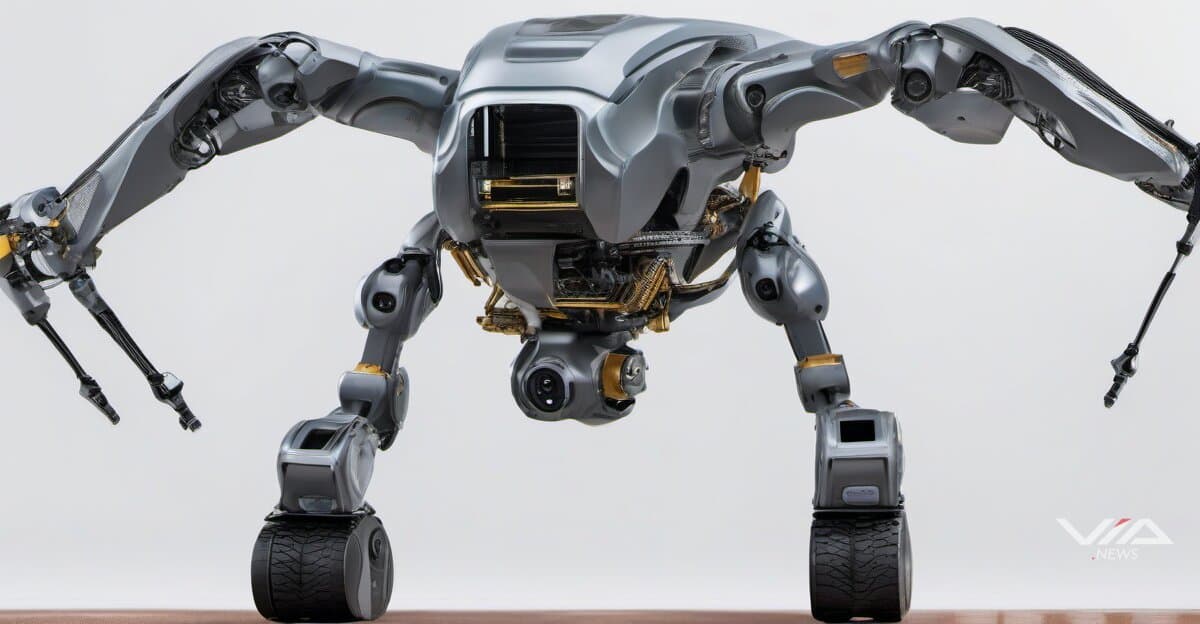
Autonomous robotics companies are launching commercial products across consumer, defense, and industrial verticals as AI capabilities mature. The sector's expansion includes AI-powered robotic pets, autonomous delivery vehicles, defense drones, and warehouse automation systems.
Regulatory barriers are falling. The DoD modified sourcing requirements for drone procurement, opening defense contracts to newer robotics firms. Aetna authorized coverage for powered exoskeleton systems, creating reimbursement pathways for assistive robotics in healthcare.
Commercial production is scaling. Robotaxi manufacturers began volume production, transitioning from pilot programs to fleet deployments. Warehouse operators deployed autonomous mobile robots for order fulfillment, reducing labor costs in logistics operations.
Technology partnerships are accelerating deployment. AI-RAN (AI Radio Access Network) collaborations integrate computer vision with 5G infrastructure for real-time autonomous navigation. Underwater autonomous vehicles gained new sensor capabilities for subsea inspection and maintenance.
Industrial applications are expanding. EV battery disassembly robots entered service at recycling facilities, automating hazardous material handling. Factory automation systems added vision-guided manipulation for complex assembly tasks previously requiring human workers.
The robotics transformation reflects convergent technologies: physical AI models trained on manipulation tasks, advanced computer vision for environment mapping, and autonomous navigation algorithms adapted from self-driving vehicles. These systems are moving from structured factory floors into variable real-world conditions.
Investment is flowing to companies demonstrating commercial traction. Firms with deployed units and recurring revenue models are securing growth capital, while pure-play research projects face funding scrutiny. Market participants are prioritizing robotics platforms with clear unit economics over experimental prototypes.
The sector's breadth—from consumer entertainment robots to defense systems—indicates robotics is entering a commercial phase across multiple industries. Companies capturing market share are those solving specific automation problems with proven technology rather than pursuing general-purpose humanoid platforms.
As regulatory frameworks adapt and production costs decline, robotics deployment is shifting from niche applications to mainstream industrial and consumer adoption.