
Saturday, August 22, 2026
What we know · the intelligence behind this page
Live from the substrate
What we're seeing
AI Platforms Rush to Establish Content-Authenticity Standards Amid Leadership Shakeups and Sustained Capex
Within days of each other in mid-August 2026, Google, Anthropic, and Spotify moved to formalize AI content watermarking and labeling policies, signaling an industry-wide push toward self-governed provenance standards as generative AI output floods consumer platforms. The shift coincides with executive turnover at OpenAI (Brad Lightcap's departure) and Meta's public AI manifesto, all set against continued heavy AI infrastructure capital expenditure and finance-sector moves (e.g., Wall Street paying for algorithmic edges on social signals) that underscore AI's deepening entanglement with capital markets.
Our read on the data ›
Signals we're tracking
Satellite-Terrestrial Network Integration Acceleration
Increased investment and launches in hybrid satellite-cellular networks across telecom industry; competitive responses from other carriers; regulatory activity around satellite spectrum; expansion of emergency/rural connectivity use cases
Patterns we're watching ›
Where sources disagree
JPMorgan Chase & Co.
Both facts report JPMorgan Chase & Co.'s revenue for the same fiscal period (FY 2025) with the same observation date (2025-12-31), but with different values: $182.447 billion vs. $185 billion. The ~1.4% difference ($2.553 billion) is too large to be explained by rounding alone and represents conflicting data for the identical time period.
We flag conflicts openly ›
Recently verified
Checked against the original source
4,977
facts traced to their source — and we flag the ones that don't hold up.
101 entities tracked4,977 facts checked against source5,242 source documents archived
Work with this data → vianewsagency.com

Steak and Ale's 16-Year Closure Tests Brand Equity Valuation in Casual Dining Revival

Steak and Ale reopened its first location in 2024 after closing all 280 restaurants in 2008, creating a 16-year gap that poses catastrophic operational risk. The Norman Brinker-founded chain faces high likelihood of customer acquisition failure as consumers may not remember or trust the brand. The revival tests whether brand equity survives extended dormancy in the $330B U.S. restaurant sector.

Steak and Ale's 16-Year Closure Tests Brand Equity Valuation in Casual Dining Revival
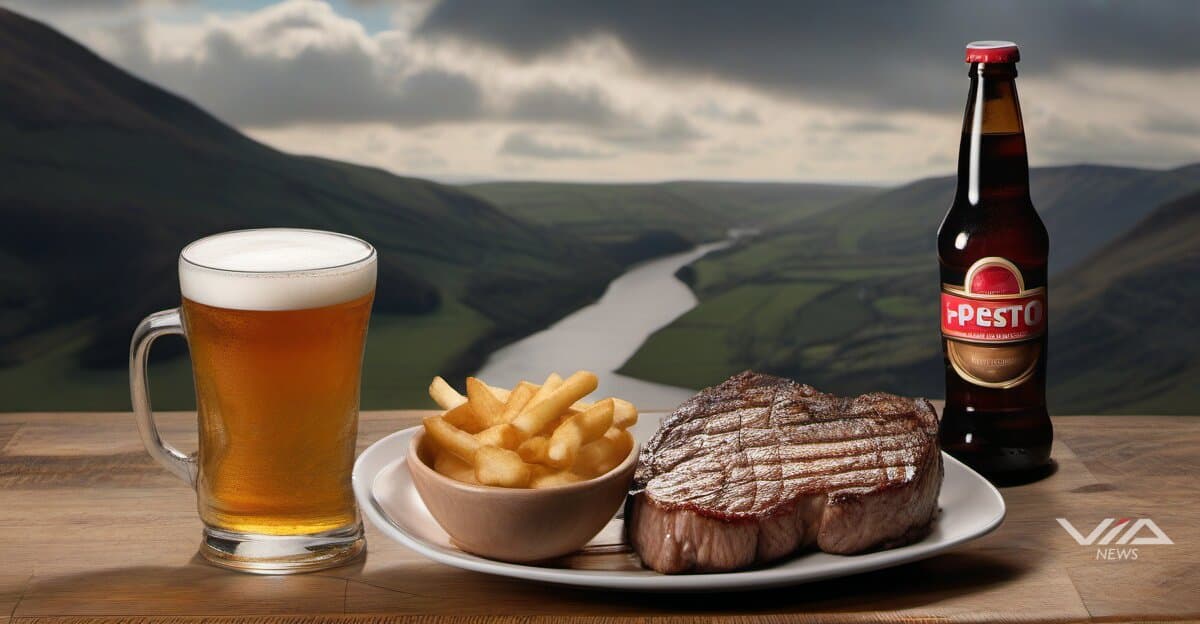
Image generated by AI for illustrative purposes. Not actual footage or photography from the reported events.
Loading stream...

Steak and Ale reopened in 2024 after a 16-year complete shutdown, testing investor assumptions about brand equity durability in casual dining. The chain closed all 280 locations in 2008 and went dark until last year.

Norman Brinker founded the polished casual steakhouse concept in 1966. The brand peaked at 280 restaurants before bankruptcy eliminated all units. No locations operated from 2008 to 2024.

Operational risk analysis rates brand resurrection failure as catastrophic with high likelihood. Customer acquisition faces two barriers: consumers under 35 have no brand memory, and older demographics may associate the name with failure. The 16-year gap exceeds typical brand dormancy periods that allow successful relaunches.

Casual dining chains show brand equity decays rapidly without market presence. Red Lobster's 2024 bankruptcy demonstrates how once-dominant brands lose pricing power and customer loyalty. Steak and Ale faces steeper challenges with zero recent operational history.

The restaurant industry's $330B U.S. market shifted dramatically since 2008. Fast casual concepts captured Steak and Ale's former price point. Texas Roadhouse and LongHorn Steakhouse now dominate the casual steakhouse segment the brand pioneered.

Brand revival investments require consumer recognition to generate returns. Steak and Ale's backers bet nostalgia drives traffic, but 16 years erases functional brand awareness. Marketing must rebuild from zero rather than remind existing customers.

The polished casual segment Brinker created faces oversupply. Same-store sales across casual dining dropped 3.2% in 2023. New entrants need differentiation beyond heritage claims.

Investor implications center on brand valuation methods. If Steak and Ale fails, it confirms brand equity requires continuous market presence. Success would validate dormant brand acquisition strategies, but confidence in positive outcomes remains at 70%.

The test case matters for private equity groups holding shuttered restaurant brands. Delayed revivals may destroy more value than immediate liquidation of intellectual property.