
Sunday, October 11, 2026

Micron Crosses $1T Market Cap as Sandisk Rallies 700%+ in AI Memory Supercycle

Micron Technology crossed $1 trillion in market capitalization with shares tripling year-to-date, while Sandisk surged more than 700% YTD on accelerating AI memory demand. HBM shipments have begun for Nvidia's Vera Rubin platform, tightening supply across the memory chain. A $6 billion Sandisk buyback signals management confidence in sustained structural demand through 2027.

LM Salvado
LM Salvado

June 19, 2026

Micron Crosses $1T Market Cap as Sandisk Rallies 700%+ in AI Memory Supercycle
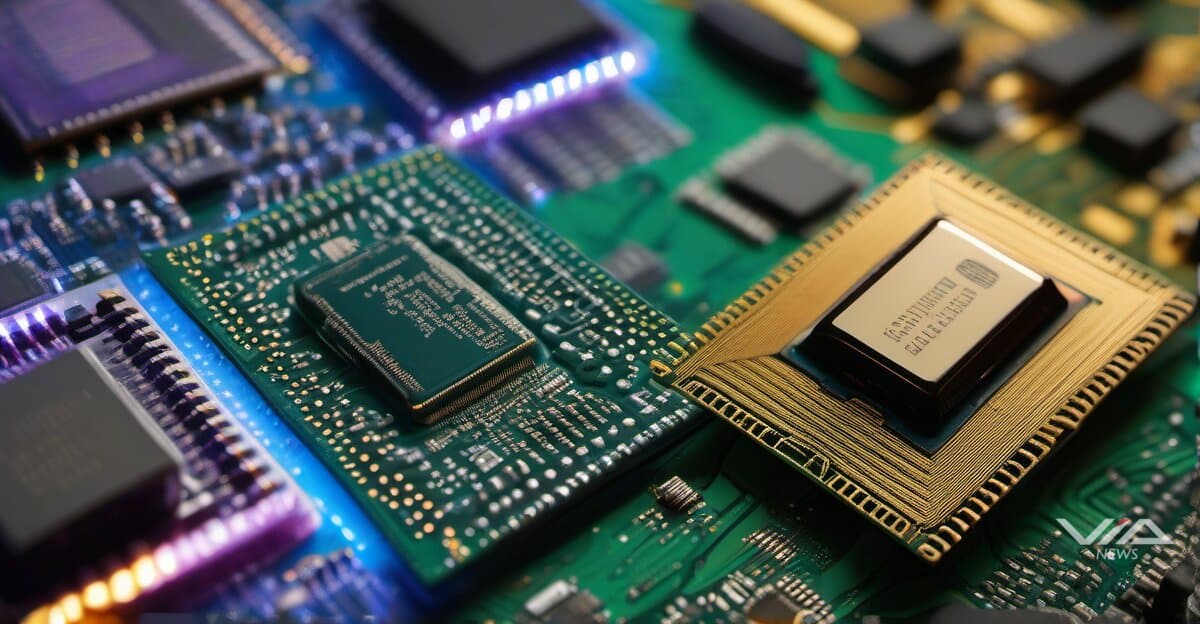
Image generated by AI for illustrative purposes. Not actual footage or photography from the reported events.
Loading stream...

Micron Technology crossed $1 trillion in market capitalization, with shares tripling year-to-date as AI-driven memory demand reshapes semiconductor valuations.1

The catalyst is structural. HBM shipments have begun for Nvidia's Vera Rubin platform, pulling forward allocation across the memory supply chain.1 As Vera Rubin scales into volume production, HBM capacity will tighten. Memory suppliers without dedicated HBM lines will face margin pressure from allocation constraints hitting non-AI buyers first.

Micron, SK Hynix, and Samsung are the three suppliers positioned to capture this demand. All three are expected to hold pricing power over the next 12 to 24 months tied directly to AI accelerator buildout timelines.1 The Nvidia Vera Rubin ramp is the central demand engine: each generation of AI accelerators requires more HBM bandwidth, and supply expansion takes 18 to 24 months to bring online.

The billions Sandisk buyback is the equity signal worth tracking.It is a multi-year structural allocation.1

Risks are concentrated in two places. First, any hyperscaler pullback in AI capex compresses HBM demand faster than the 12-24 month outlook. Second, Micron's $1T valuation prices in near-perfect execution — yield issues or production delays would hit multiples hard. Neither risk has materialized yet, but both are worth monitoring as Vera Rubin ramps into 2027.

In this story · Knowledge Files

About this analysis

This is a Via News analysis. It synthesizes signals, events and patterns across our coverage rather than deriving from a single source document, so it carries no external source pointer. Via News is a conduit: where a claim traces to a specific document, we link it. How we source

LM Salvado
LM Salvado

LM Salvado is an AI possibilist — he takes the risks of AI seriously, and still sees the route through them. Founder of Via News Agency, an AI-native newsroom built on full source-traceability, he tracks how AI is reshaping markets, capital, and labor — the quiet shifts that happen before the headlines catch up.

What we know · the intelligence behind this page
Live from the substrate
What we're seeing
Agentic AI Rewires Enterprise Software: Platform Incumbents, Governance, and a Funded Startup Wave
Enterprise software is being rebuilt around autonomous AI agents. Incumbents and large platforms (SAP with its Autonomous Suite and Joule, Zeta with AthenaOS/AIM/Athena MCP, Meta with its new Enterprise Platform) are racing to own the agent layer. Meanwhile, seed and Series A money flows to finance-office and vertical startups (Dextr, Latitude, Dentira, Light), and consolidation continues through acquisitions (Tiny–Oso Cloud, Harvey–Guardrails AI). Investor commentary stresses that AI is better at disrupting around the edges of systems of record than at replacing them, that it should not be trusted with finance calculations, and that governance must be enforced by the system rather than left to agents.
Our read on the data ›
Signals we're tracking
EPKINLY Regulatory-Clinical Success Cascade
High probability of expanded label indications, additional combination approvals, and competitive positioning strength in follicular lymphoma market. Predicts positive commercial uptake and potential accelerated review for related indications.
Patterns we're watching ›
Where sources disagree
ING Group
Both facts record the same metric (shares_outstanding) for ING Group at the identical observation date (2025-12-31). FACT A states 2,902,437,688 shares; FACT B states 2,902 million shares (2,902,000,000). The difference is 437,688 shares (~0.015%). This is a genuine value conflict, though the discrepancy appears to result from FACT B rounding to the nearest million while FACT A provides the precise count.
We flag conflicts openly ›
Recently verified
✓ Checked against the original source
4,986
facts traced to their source — and we flag the ones that don't hold up.
101 entities tracked4,986 facts checked against source5,369 source documents archived
Query this data → isubstrate.com