
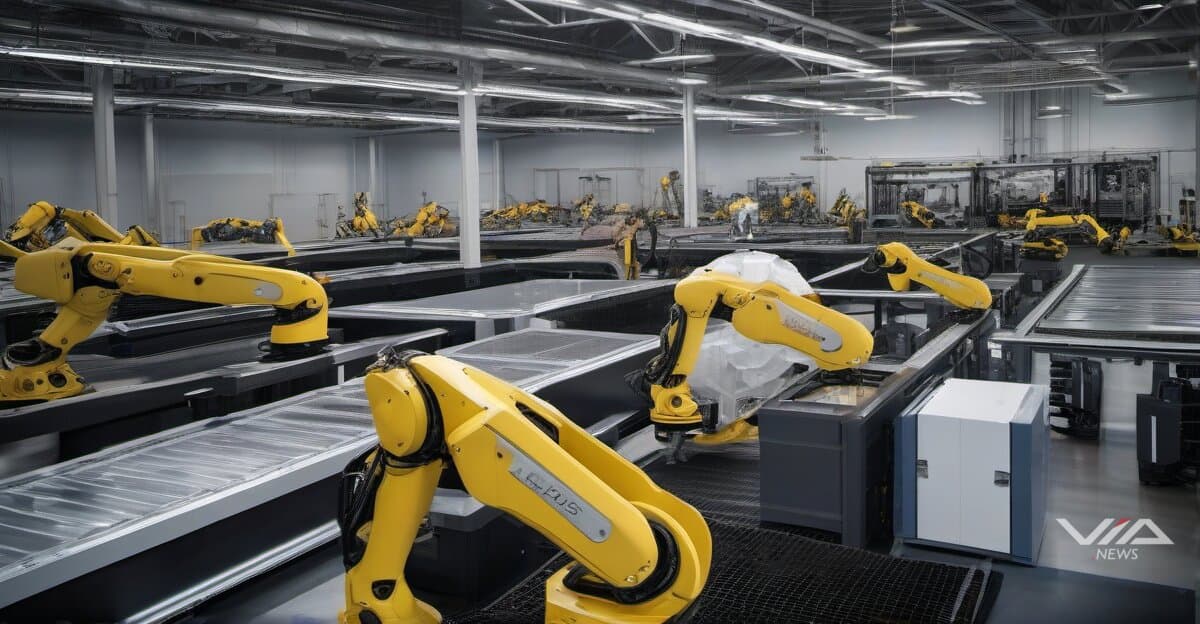
AI-powered warehouse automation systems have reached 98%+ accuracy rates, marking the robotics industry's shift from research to commercial deployment. Autonomous vehicle manufacturers are targeting 2026-2027 production timelines as the sector enters mass-market readiness.
The commercial acceleration spans multiple sectors. Manufacturing facilities are integrating physical AI systems through defense and industrial partnerships. Regulatory approvals are expanding access to assistive robotics in healthcare and consumer applications. AI-RAN 5G infrastructure is enabling real-time control systems required for autonomous operations at scale.
Equipment manufacturers face rising demand as companies automate operations. Warehouse operators are deploying AI-guided robots to handle inventory management, reducing error rates below 2%. Industrial automation software providers are seeing adoption as manufacturers retrofit existing facilities with autonomous systems.
The investment thesis centers on three areas: robotics hardware manufacturers supplying sensors and actuators, software companies building control systems and AI models, and industrial automation integrators deploying turnkey solutions. Defense contracts for autonomous systems are adding government spending to private sector demand.
Autonomous vehicle timelines are compressing. Multiple manufacturers have announced 2026-2027 production starts, moving beyond pilot programs to commercial fleet deployments. The shift requires supply chain scaling for lidar sensors, compute platforms, and safety systems.
Telecom infrastructure upgrades support the transition. AI-RAN 5G networks provide the low-latency connectivity autonomous systems require for real-time decision-making. Network equipment suppliers and tower operators benefit as coverage expands to industrial zones and logistics hubs.
Healthcare robotics are gaining regulatory clearance. Assistive devices for surgery and rehabilitation are moving from clinical trials to hospital procurement cycles. Medical device companies with robotics divisions are positioned to capture share in a market where personalized procedures require automated precision.
The robotics transformation differs from previous automation waves. AI integration allows systems to handle unstructured environments and variable tasks, expanding addressable markets beyond repetitive manufacturing. Companies with AI expertise and robotics platforms are trading at premiums as investors price in commercial deployment timelines.