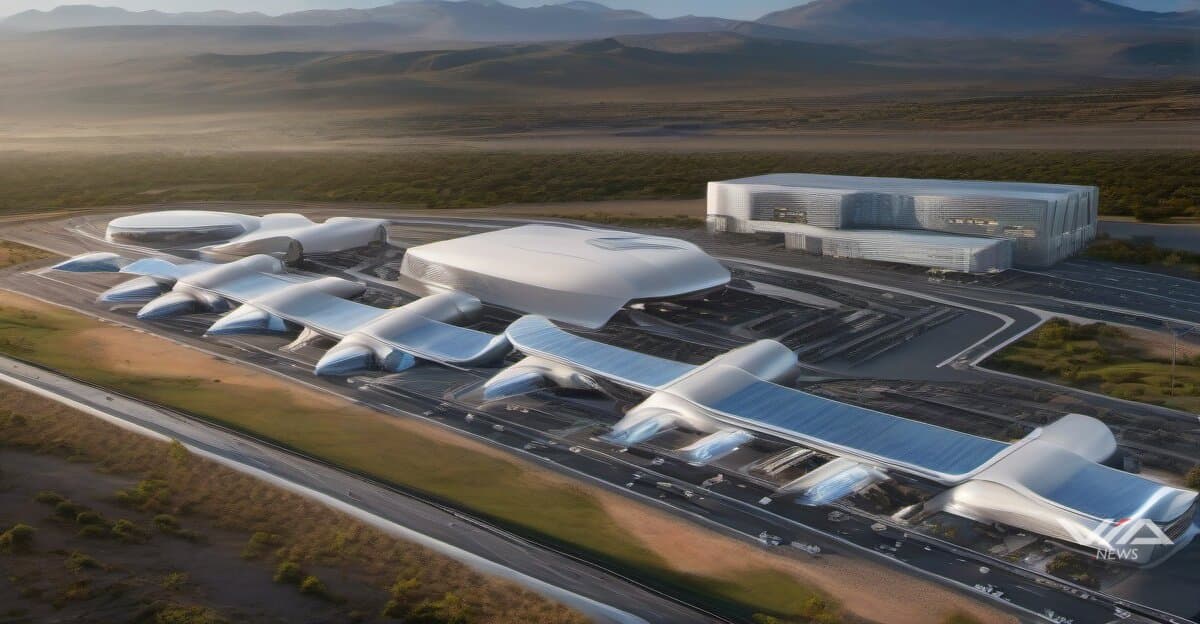
The Big Four AI hyperscalers are collectively committing approximately billions in AI capital expenditure, converging with multiple Broadcom custom chip clients approaching simultaneous launch windows.1 The overlap is not coincidental — it signals coordinated infrastructure scaling at a scale the industry has not previously seen.
Broadcom's custom AI chip business is a direct read on hyperscaler build-out pace. Multiple clients reaching launch proximity at the same time tightens the demand curve for silicon, packaging, and interconnects. Supply chains serving this segment will face sustained pressure across several quarters.1
The spending commitment has direct implications across three infrastructure layers. AI semiconductor designers — specifically AVGO and NVDA — are positioned for upward earnings revisions over the next two to four quarters.1 Power management suppliers and cooling infrastructure vendors sit in the same demand corridor as data center construction accelerates.
Networking equipment is the third beneficiary. At billions in aggregate CapEx, hyperscalers are not just buying chips — they are building out the fabric connecting GPU clusters at scale. High-bandwidth networking components face the same multi-quarter demand tailwind as compute silicon.
The coordination aspect matters for market positioning. When a single hyperscaler ramps, competitors follow on a lag. When multiple hyperscalers ramp simultaneously, supply constraints bite across the stack and pricing power shifts to component vendors. Lead times extend. Spot premiums appear. Suppliers with locked-in capacity agreements gain margin leverage.
For equity investors, the signal points toward sustained rather than episodic demand. Infrastructure build cycles of this magnitude typically run six to eight quarters before digestion. Earnings revision cycles for chip designers and power infrastructure names tend to begin one to two quarters before revenue inflection, as analysts update forward models on announced CapEx guidance.
The current moment sits at that inflection point. Announced commitments are translating into orders. Orders are translating into lead-time extensions. Lead-time extensions historically precede upward estimate revisions. AVGO and NVDA are the named beneficiaries, but the capital deployment breadth touches power management, cooling, and optical networking as well.1