
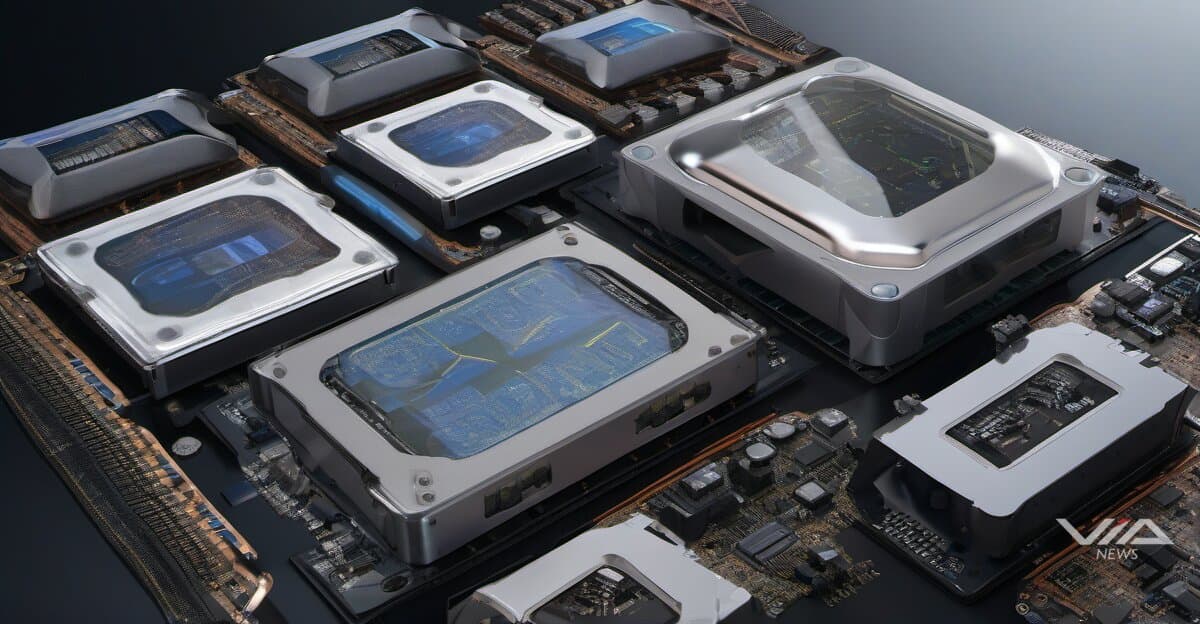
KLA Corp. expects advanced packaging equipment sales to grow in the mid-to-high teens range through calendar 2026, CEO Michael E. Hurlston disclosed in recent guidance. The projection reflects accelerating demand as semiconductor manufacturers shift toward sophisticated packaging techniques to meet AI hardware requirements.
Advanced packaging—which stacks chips vertically or places them side-by-side to boost performance—has emerged as a critical bottleneck in AI chip production. Traditional 2D packaging cannot deliver the bandwidth and power efficiency required for training large language models or running inference workloads at scale.
KLA's stock has outperformed the broader semiconductor equipment index by double digits over the past 12 months. The company supplies process control and metrology tools essential for advanced packaging, giving it exposure to a market segment growing faster than legacy chip manufacturing.
Hurlston also highlighted 20% capacity expansion in indium phosphide production during the December quarter. Indium phosphide enables high-speed optical transceivers used in AI data centers. "Most initial 1.6T transceivers are based on EMLs, and 200-gig lane speed is doing better than expected," Hurlston said.
The 1.6 terabit-per-second transceiver market is ramping faster than anticipated as hyperscalers upgrade networking infrastructure to handle AI training clusters. EML (electro-absorption modulated laser) technology dominates early deployments due to cost advantages over competing architectures.
Investors are now watching whether KLA, ASML, and Lam Research—the three largest advanced packaging equipment suppliers—can sustain revenue growth as semiconductor manufacturers increase capital expenditures. Advanced packaging represented roughly 15% of total equipment spending in 2025, up from 8% in 2023.
The competitive advantage thesis rests on whether packaging capacity constraints persist through 2026. If major fabs like TSMC and Intel successfully expand advanced packaging lines, equipment makers should see sustained order momentum. Conversely, any slowdown in AI chip demand would compress equipment orders faster than traditional semiconductor manufacturing.
Market analysts estimate advanced packaging equipment sales will reach $12 billion by end of 2026, making it the fastest-growing segment within semiconductor capital equipment. KLA's guidance suggests the company aims to capture an outsized share of that expansion.