
Saturday, August 22, 2026
What we know · the intelligence behind this page
Live from the substrate
What we're seeing
AI Platforms Rush to Establish Content-Authenticity Standards Amid Leadership Shakeups and Sustained Capex
Within days of each other in mid-August 2026, Google, Anthropic, and Spotify moved to formalize AI content watermarking and labeling policies, signaling an industry-wide push toward self-governed provenance standards as generative AI output floods consumer platforms. The shift coincides with executive turnover at OpenAI (Brad Lightcap's departure) and Meta's public AI manifesto, all set against continued heavy AI infrastructure capital expenditure and finance-sector moves (e.g., Wall Street paying for algorithmic edges on social signals) that underscore AI's deepening entanglement with capital markets.
Our read on the data ›
Signals we're tracking
Satellite-Terrestrial Network Integration Acceleration
Increased investment and launches in hybrid satellite-cellular networks across telecom industry; competitive responses from other carriers; regulatory activity around satellite spectrum; expansion of emergency/rural connectivity use cases
Patterns we're watching ›
Where sources disagree
JPMorgan Chase & Co.
Both facts report JPMorgan Chase & Co.'s revenue for the same fiscal period (FY 2025) with the same observation date (2025-12-31), but with different values: $182.447 billion vs. $185 billion. The ~1.4% difference ($2.553 billion) is too large to be explained by rounding alone and represents conflicting data for the identical time period.
We flag conflicts openly ›
Recently verified
Checked against the original source
4,977
facts traced to their source — and we flag the ones that don't hold up.
101 entities tracked4,977 facts checked against source5,242 source documents archived
Work with this data → vianewsagency.com

Memory Chip Makers Hit Record Margins as AI Systems Triple LPDDR Content

Micron Technology posted record Q2 results across revenue, gross margin, EPS and free cash flow as AI systems shipping in 2026 contain triple the LPDDR memory content compared to 2025. Semiconductor equipment makers Applied Materials and Analog Devices rallied while Microchip Technology raised Q3 sales forecasts, signaling broad supply chain pressure from AI hardware demand.

Memory Chip Makers Hit Record Margins as AI Systems Triple LPDDR Content
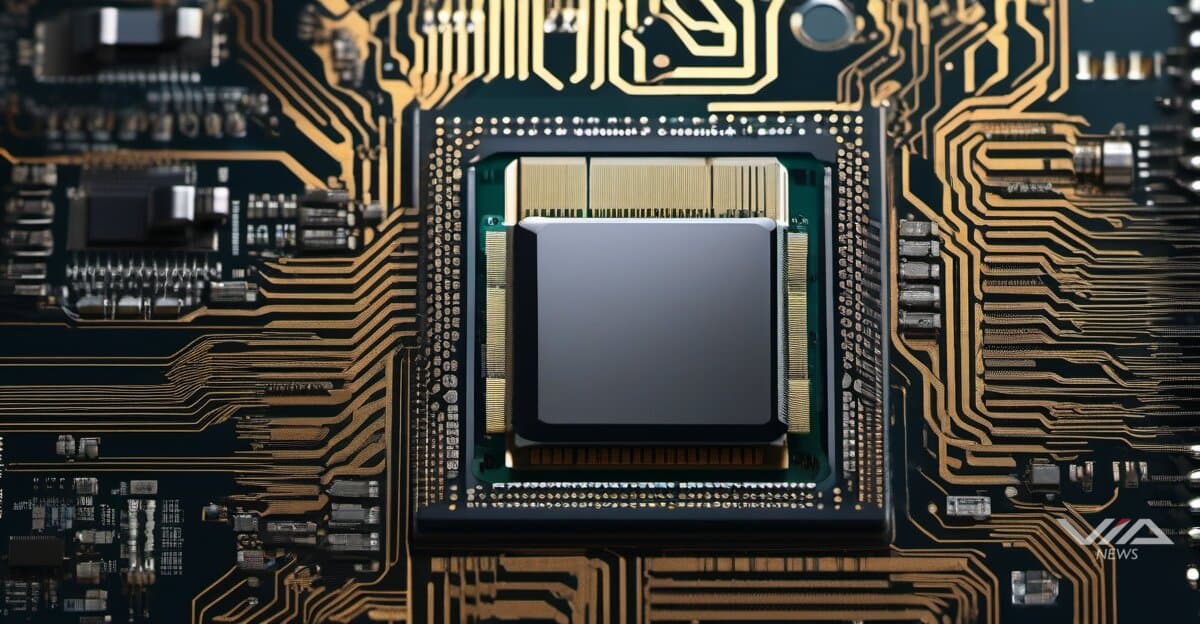
Image generated by AI for illustrative purposes. Not actual footage or photography from the reported events.
Loading stream...

Micron Technology delivered record Q2 performance across revenue, gross margin, earnings per share and free cash flow as AI hardware demand reshapes memory chip economics. Systems shipping in 2026 will contain triple the LPDDR memory content versus 2025 models, according to Satya Kumar's market analysis.

Microchip Technology raised its Q3 sales forecast on January 7, joining Applied Materials and Analog Devices in posting gains as semiconductor equipment and component suppliers benefit from production bottlenecks. The supply chain squeeze stems from specialized component constraints rather than broad chip shortages.

Memory chip pricing has firmed as hyperscale data center builders compete for high-bandwidth memory (HBM) and LPDDR5 supplies needed for AI inference workloads. Micron's margin expansion reflects this pricing power, with production capacity lagging 18-24 months behind AI system demand curves.

Applied Materials' stock gains indicate capital expenditure increases by chipmakers expanding memory and logic fab capacity. Equipment lead times for advanced packaging tools and memory production systems have extended to 12-15 months, up from typical 6-9 month cycles.

Analog Devices' rise suggests growing content per AI system extends beyond memory chips to power management, signal processing and thermal control components. Each AI accelerator card requires 40-60% more analog chips than traditional server boards.

The divergence between memory chip makers posting records and semiconductor stocks showing valuation volatility reflects uncertainty about peak AI infrastructure spending timing. Memory suppliers with locked-in multi-year contracts benefit from predictable revenue, while merchant chip suppliers face quarterly demand fluctuations.

Traders should monitor correlation between AI chip product launches and memory supplier order books. Micron, SK Hynix and Samsung control 95% of HBM production, creating oligopoly pricing dynamics absent in commodity DRAM markets.

Equipment makers face 6-9 month lag between order intake and revenue recognition, making current stock gains a leading indicator for semiconductor capital spending through Q3 2026. Microchip's guidance raise suggests automotive and industrial AI applications are adding incremental demand beyond data center workloads.

In this story · Knowledge Files