
Saturday, August 22, 2026
What we know · the intelligence behind this page
Live from the substrate
What we're seeing
AI Platforms Rush to Establish Content-Authenticity Standards Amid Leadership Shakeups and Sustained Capex
Within days of each other in mid-August 2026, Google, Anthropic, and Spotify moved to formalize AI content watermarking and labeling policies, signaling an industry-wide push toward self-governed provenance standards as generative AI output floods consumer platforms. The shift coincides with executive turnover at OpenAI (Brad Lightcap's departure) and Meta's public AI manifesto, all set against continued heavy AI infrastructure capital expenditure and finance-sector moves (e.g., Wall Street paying for algorithmic edges on social signals) that underscore AI's deepening entanglement with capital markets.
Our read on the data ›
Signals we're tracking
Satellite-Terrestrial Network Integration Acceleration
Increased investment and launches in hybrid satellite-cellular networks across telecom industry; competitive responses from other carriers; regulatory activity around satellite spectrum; expansion of emergency/rural connectivity use cases
Patterns we're watching ›
Where sources disagree
JPMorgan Chase & Co.
Both facts report JPMorgan Chase & Co.'s revenue for the same fiscal period (FY 2025) with the same observation date (2025-12-31), but with different values: $182.447 billion vs. $185 billion. The ~1.4% difference ($2.553 billion) is too large to be explained by rounding alone and represents conflicting data for the identical time period.
We flag conflicts openly ›
Recently verified
Checked against the original source
4,977
facts traced to their source — and we flag the ones that don't hold up.
101 entities tracked4,977 facts checked against source5,242 source documents archived
Work with this data → vianewsagency.com

Nvidia H200 Shipments Halted as US Tightens AI Chip Export Controls Targeting China

The US government has stopped Nvidia's H200 GPU shipments to China under expanded export controls, with new permitting processes under consideration for advanced AI chips. The regulatory crackdown is disrupting defense-AI partnerships, triggering OpenAI's robotics leader resignation over Pentagon contracts and complicating Anthropic's military negotiations despite its supply chain risk designation.

Nvidia H200 Shipments Halted as US Tightens AI Chip Export Controls Targeting China
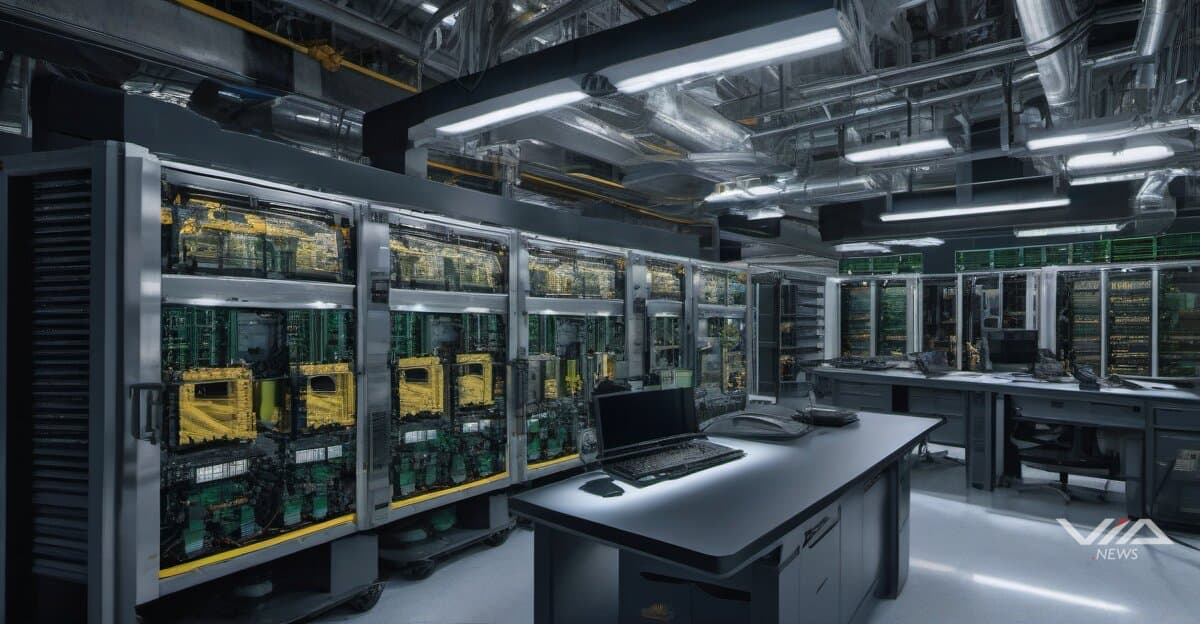
Image generated by AI for illustrative purposes. Not actual footage or photography from the reported events.
Loading stream...

Nvidia's H200 GPU shipments to China have been halted following new US export restrictions on advanced AI hardware, marking the latest escalation in Washington's effort to limit Beijing's access to cutting-edge semiconductor technology. The Biden administration is now considering implementing a formal permitting system for GPU exports, which would add regulatory oversight to shipments of high-performance computing chips.

The controls target AI accelerators capable of training large language models and military applications. Nvidia's H200, featuring 141GB of HBM3e memory and designed for inference workloads, falls under the new restrictions. The company has not disclosed the financial impact of the halt, though China represented approximately 17% of Nvidia's data center revenue in recent quarters before previous export limitations took effect.

Semiconductor stocks face dual pressure from export restrictions and defense sector complications. OpenAI's head of robotics and consumer hardware resigned following internal disputes over the company's expanded Pentagon partnerships, including contracts for cybersecurity and drone software development. The departure signals growing employee resistance to military applications of AI technology at major developers.

Anthropic has resumed negotiations with the Department of Defense after being designated a supply chain risk in federal assessments. The designation, typically applied to entities with foreign ownership concerns or security vulnerabilities, complicates the AI company's efforts to secure government contracts despite its Claude AI model being considered for military use cases.

The regulatory environment is creating market segmentation in AI hardware. Companies developing chips specifically for the Chinese market under export control thresholds—such as Nvidia's previous H20 model—face uncertain demand as Beijing pushes domestic alternatives. Investors are repricing semiconductor valuations based on assumptions that China revenue will remain constrained or decline further.

Supply chain analysts expect the permitting system, if implemented, to create 3-6 month delays for approved shipments and effectively block others. Hardware manufacturers are evaluating production allocation strategies that prioritize domestic and allied markets while minimizing exposure to regulatory reversals.

Source documents

Via News is a conduit. We point to the source documents behind this report — we don't replace them. Trace any claim to its source and decide what to trust. How we source

Source Trace Score1 source document1 with a live linkVerifiability: Basic
  1. [1]News articleYahoo Finance· March 9, 2026
    Tech stocks today: OpenAI's robotics leader resigns after Pentagon deal, Anthropic prepares to battle ban

In this story · Knowledge Files