
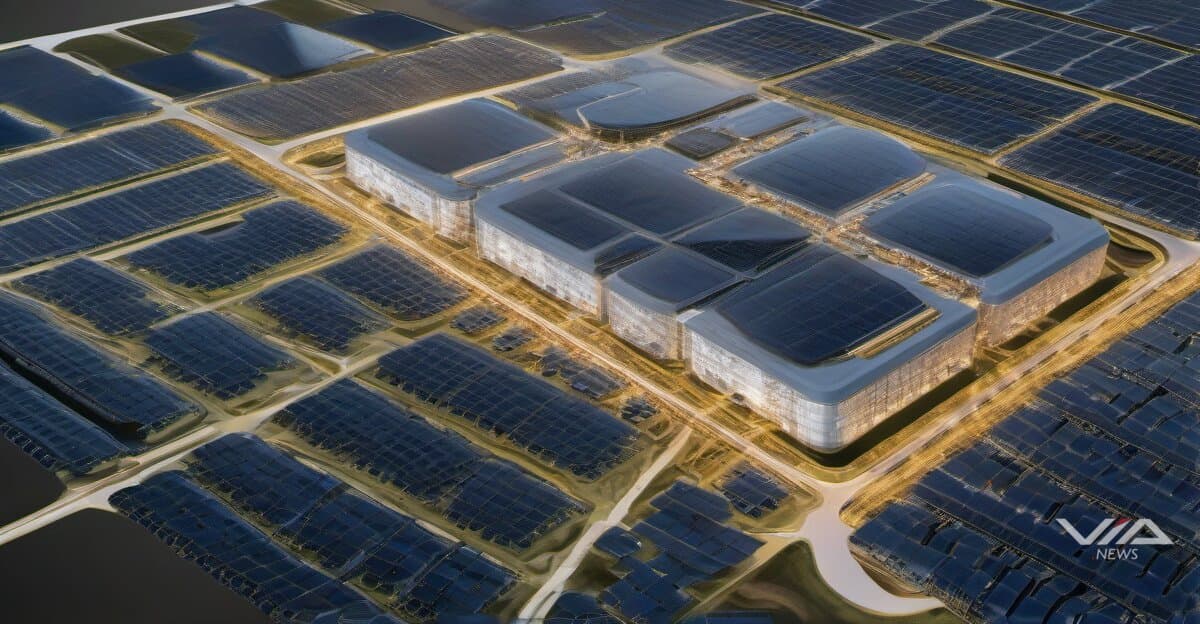
The semiconductor industry faces capital requirements of $5-7 trillion over the next five years as AI infrastructure build-out accelerates, creating both growth opportunities and execution risks for chip makers and their suppliers.
Nvidia has invested $2B in photonics partnerships with Coherent and Lumentum to address data transfer bottlenecks in AI systems. The shift to photonics technology reflects growing constraints in traditional semiconductor interconnects as data centers scale to handle AI workloads.
Analog Devices reported strong demand from industrial and data center customers as the AI boom drives semiconductor sales. The company's performance signals broad-based strength beyond hyperscale AI deployments.
Traditional chip makers continue product cycles with Apple developing the M5 processor and Samsung launching the Galaxy S26, maintaining consumer hardware refresh cycles alongside AI-focused investments.
SiTime Corporation's acquisition of Renesas' timing business is expected to be accretive to non-GAAP earnings per share in the first year post-close, demonstrating consolidation opportunities in specialized semiconductor segments.
Lattice Semiconductor provided Q1 revenue guidance of $158-172 million, reflecting mixed near-term demand signals in the programmable logic segment.
STMicroelectronics expanded its secure connectivity portfolio to support Aliro 1.0 access control configurations, from NFC-only to combined NFC, Bluetooth Low Energy, and ultra-wideband implementations. Nordic Semiconductor also achieved early certification for Aliro silicon and software.
The industry transformation creates divergent equity implications. Photonics suppliers like Coherent and Lumentum gain strategic positioning through Nvidia partnerships, while DRAM cyclicality introduces volatility for memory chip makers despite AI-driven demand trends.
Capital intensity remains the primary risk factor. The $5-7 trillion funding requirement over five years exceeds historical semiconductor investment cycles, potentially constraining smaller players and accelerating industry consolidation.
Specialized semiconductor firms serving AI infrastructure markets show stronger positioning than commodity chip makers, as data center customers prioritize performance and power efficiency over cost in AI deployments.
The photonics shift represents a structural change in semiconductor architecture rather than incremental improvement, with implications for supply chains and competitive positioning across the industry.