
Saturday, August 22, 2026
What we know · the intelligence behind this page
Live from the substrate
What we're seeing
AI Platforms Rush to Establish Content-Authenticity Standards Amid Leadership Shakeups and Sustained Capex
Within days of each other in mid-August 2026, Google, Anthropic, and Spotify moved to formalize AI content watermarking and labeling policies, signaling an industry-wide push toward self-governed provenance standards as generative AI output floods consumer platforms. The shift coincides with executive turnover at OpenAI (Brad Lightcap's departure) and Meta's public AI manifesto, all set against continued heavy AI infrastructure capital expenditure and finance-sector moves (e.g., Wall Street paying for algorithmic edges on social signals) that underscore AI's deepening entanglement with capital markets.
Our read on the data ›
Signals we're tracking
Satellite-Terrestrial Network Integration Acceleration
Increased investment and launches in hybrid satellite-cellular networks across telecom industry; competitive responses from other carriers; regulatory activity around satellite spectrum; expansion of emergency/rural connectivity use cases
Patterns we're watching ›
Where sources disagree
JPMorgan Chase & Co.
Both facts report JPMorgan Chase & Co.'s revenue for the same fiscal period (FY 2025) with the same observation date (2025-12-31), but with different values: $182.447 billion vs. $185 billion. The ~1.4% difference ($2.553 billion) is too large to be explained by rounding alone and represents conflicting data for the identical time period.
We flag conflicts openly ›
Recently verified
Checked against the original source
4,977
facts traced to their source — and we flag the ones that don't hold up.
101 entities tracked4,977 facts checked against source5,242 source documents archived
Work with this data → vianewsagency.com

NVIDIA GTC 2026 Triggers Ecosystem Integration Wave as Adobe, Salesforce, HPE Adopt Agent Infrastructure

NVIDIA's GTC 2026 conference catalyzed immediate enterprise adoption of its OpenShell and Agent Toolkit platforms, with Adobe, Salesforce, HPE, Siemens, and Atlassian announcing integrations.<sup>1</sup> The move signals a strategic shift from standalone AI models to standardized agentic frameworks for autonomous enterprise workflows. Parallel quantum computing advances show 25x performance gains in hybrid classical-quantum integration.

L.M. Salvado
L.M. Salvado

March 19, 2026

NVIDIA GTC 2026 Triggers Ecosystem Integration Wave as Adobe, Salesforce, HPE Adopt Agent Infrastructure
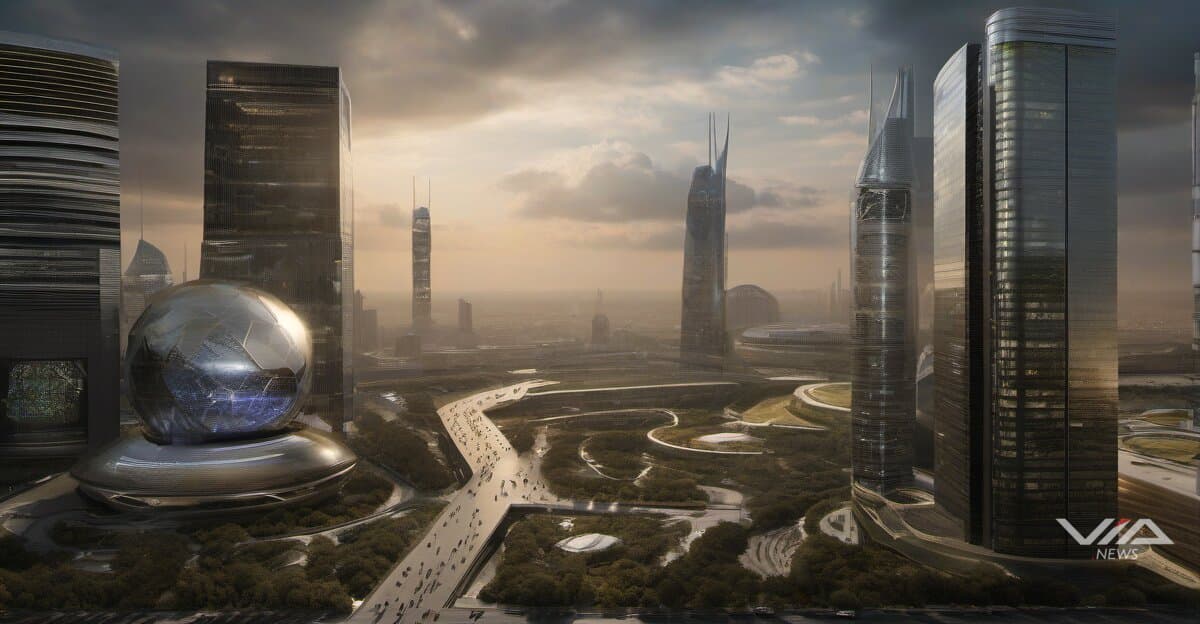
Image generated by AI for illustrative purposes. Not actual footage or photography from the reported events.
Loading stream...

NVIDIA's GTC 2026 conference launched OpenShell and Agent Toolkit platforms that triggered immediate integration commitments from Adobe, Salesforce, HPE, Siemens, and Atlassian.1 The announcements position NVIDIA as the infrastructure layer for long-running autonomous workflows in enterprise environments.

The enterprise AI agent market is consolidating around standardized frameworks rather than standalone models. NVIDIA's platforms provide the foundation for agentic systems that can execute multi-step tasks without constant human oversight.1

The GTC 2026 event showcased parallel advances in quantum computing integration. Researchers demonstrated 68-qubit compilation capabilities alongside 25x performance improvements in QSVT (Quantum Singular Value Transformation).1 These breakthroughs signal early hybrid classical-quantum systems for specialized enterprise workloads.

"Seeing AMD high-performance compute boost the performance of PennyLane is a clear proof point of how quantum and classical technologies can effectively work together," said Madhu Rangarajan.2 The integration between classical and quantum computing expands possibilities for hybrid computing applications using current hardware.2

NVIDIA's strategic positioning targets the enterprise knowledge work sector, where autonomous agents can handle complex workflows across document processing, data analysis, and system integration. The vendor commitments from major enterprise software providers validate the market shift toward infrastructure-level agent platforms.

The quantum computing advances complement NVIDIA's enterprise AI push by addressing computational bottlenecks in specific workloads. Early hybrid systems combine classical GPU acceleration with quantum processors for optimization and simulation tasks that exceed traditional computing limits.

The ecosystem consolidation around NVIDIA's platforms creates network effects as more vendors integrate agent capabilities. Enterprise customers gain standardized interfaces for deploying autonomous systems across multiple software environments without custom development for each tool.
Source documents

Via News is a conduit. We point to the source documents behind this report — we don't replace them. Trace any claim to its source and decide what to trust. How we source

Source Trace Score5 source documents5 with a live linkVerifiability: Strong
  1. [1]News articleYahoo Finance· March 10, 2026
    Xanadu and AMD Accelerate Quantum Computing for Aerospace and Engineering
  2. [2]News articleYahoo Finance· March 16, 2026
    Adobe and NVIDIA Announce Strategic Partnership to Deliver the Next Generation of Firefly Models and Creative, Marketing and Agentic Workflows
  3. [3]News articleYahoo Finance· March 16, 2026
    Aible Launches SafeClaw Long-Running Agents and Presents at Eight Partner Booths and Sessions at NVIDIA GTC 2026
  4. [4]News articleYahoo Finance· March 16, 2026
    NVIDIA Ignites the Next Industrial Revolution in Knowledge Work With Open Agent Development Platform
  5. [5]News articleCrunchbase News
    The Rising Investors Behind The New Unicorn Class

In this story · Knowledge Files

L.M. Salvado
L.M. Salvado

L.M. Salvado is an AI possibilist — he takes the risks of AI seriously, and still sees the route through them. Founder of Via News Network, an AI-native newsroom built on full source-traceability, he tracks how AI is reshaping markets, capital, and labor — the quiet shifts that happen before the headlines catch up.