
Saturday, September 19, 2026

Nvidia Projects $1 Trillion in Chip Sales Through 2027 as AI Semiconductor Race Intensifies

Nvidia forecasts $1 trillion in chip sales through 2027, driving massive capacity expansion across the semiconductor sector. Micron is acquiring new fabrication facilities for High-Bandwidth Memory production, while Meta commits $12B to AI infrastructure partnerships. The surge encompasses both traditional AI accelerators and emerging specialized chips from companies like Olix.

LM Salvado
LM Salvado

March 17, 2026

Nvidia Projects $1 Trillion in Chip Sales Through 2027 as AI Semiconductor Race Intensifies
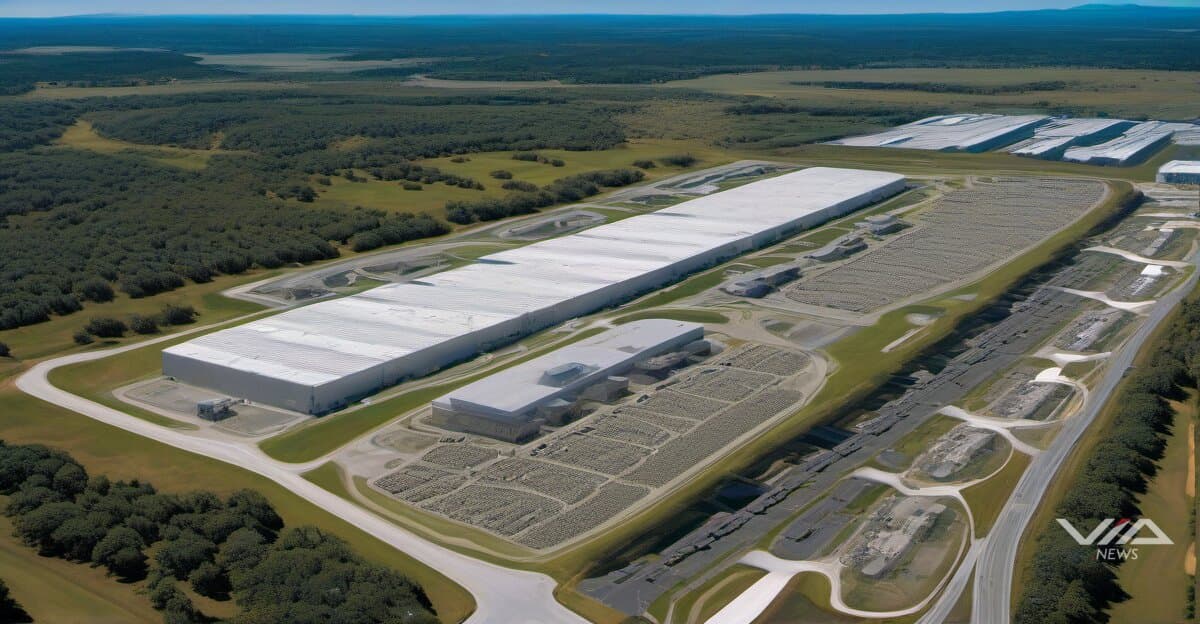
Image generated by AI for illustrative purposes. Not actual footage or photography from the reported events.
Loading stream...

Nvidia announced a $1 trillion chip sales target through 2027 at its GTC conference, triggering an industry-wide expansion in AI semiconductor production capacity.1

The forecast is reshaping supply chains across multiple chip categories. Micron is acquiring new fabrication facilities dedicated to High-Bandwidth Memory production, a critical component for AI accelerators that require massive data throughput.2 Meta has committed $12B to AI infrastructure partnerships as hyperscalers race to secure chip supply.1

Traditional AI chip makers are scaling production of established architectures including Tranium processors and GPUs. These workhorse chips currently power most large language models and neural network training.2

Emerging players are targeting specialized niches. Olix is developing photonic chips and inference-optimized processors, with plans to ship its first product in 2027.1 Language Processing Units represent another category designed specifically for transformer models and natural language workloads.2

The capacity expansion spans the full semiconductor stack. High-Bandwidth Memory fabrication requires advanced packaging techniques that integrate memory dies directly with processing chips. Photonic chips use light instead of electricity for data transfer, promising lower power consumption for inference tasks.1

Market sentiment across semiconductor stocks has improved as the scale of AI infrastructure buildout becomes clear.2 The trillion-dollar forecast suggests sustained multi-year demand rather than a cyclical spike.

Investors face a bifurcated opportunity set. Established chipmakers like Nvidia and Micron offer exposure to near-term volume growth in proven architectures. Startups developing specialized processors present higher-risk bets on architectural shifts in AI computing.

The 2027 timeline for first-generation specialized chips means meaningful revenue contribution remains years away. Traditional GPU and HBM production will capture the majority of spending through at least 2026.1

Supply chain constraints remain a wildcard. Semiconductor fabrication capacity takes 18-24 months to bring online, creating potential bottlenecks if demand accelerates faster than Nvidia's forecast.

Source documents

Via News is a conduit. We point to the source documents behind this report — we don't replace them. Trace any claim to its source and decide what to trust. How we source

Source Trace Score3 source documents3 with a live linkVerifiability: Strong
  1. [1]News articleCrunchbase News
    While OpenAI Shattered Records, Robotics and Semiconductor Startups Quietly Added The Most New Unicorns In February
  2. [2]Press releaseGlobeNewswire· March 13, 2026
    D’importants investissements dans l'infrastructure de recherche placent le Canada en tête de l'innovation mondiale
  3. [3]News articleYahoo Finance· March 16, 2026
    Stock market today: Dow, S&P 500, Nasdaq jump to start week, oil slides amid Trump's warning to allies on Iran

In this story · Knowledge Files

LM Salvado
LM Salvado

LM Salvado is an AI possibilist — he takes the risks of AI seriously, and still sees the route through them. Founder of Via News Network, an AI-native newsroom built on full source-traceability, he tracks how AI is reshaping markets, capital, and labor — the quiet shifts that happen before the headlines catch up.

What we know · the intelligence behind this page
Live from the substrate
What we're seeing
AI Boom Hits a Fork: Slowdown Calls Clash with Capex Confidence as Markets Get Nervous
Dario Amodei's repeated calls for a global slowdown in frontier AI development, echoed by Microsoft's new humanist AI code of conduct and FTC antitrust caution, are being publicly rejected by Nvidia and Meta leadership even as hyperscaler spending draws fresh skeptical scrutiny (Wachter's analysis, Burry-style overbuilding worries) and weak guidance from Adobe and a post-slowdown-comment selloff in GE Vernova signal investor jitters. Meanwhile wealth and security effects of the AI race keep compounding — Zhang Yiming's fortune surging on AI-driven ByteDance value, a Chinese hacking firm weaponizing AI against stolen government secrets, and low-quality AI-generated products (an AI sitcom, a spam-flooding agent platform) fueling backlash even as adoption races ahead.
Our read on the data ›
Signals we're tracking
EPKINLY Regulatory-Clinical Success Cascade
High probability of expanded label indications, additional combination approvals, and competitive positioning strength in follicular lymphoma market. Predicts positive commercial uptake and potential accelerated review for related indications.
Patterns we're watching ›
Where sources disagree
Berkshire Hathaway
Both facts report Berkshire Hathaway's cash position on 2026-01-01 with identical observation timestamps, but claim vastly different values: 380 billion USD vs 400 USD. These cannot both be true for the same entity at the same point in time. The magnitude of the discrepancy (a factor of ~10^9) rules out rounding, unit conversion, or methodological differences.
We flag conflicts openly ›
Recently verified
Checked against the original source
4,982
facts traced to their source — and we flag the ones that don't hold up.
101 entities tracked4,982 facts checked against source5,299 source documents archived
Query this data → isubstrate.com