
Sunday, September 27, 2026

BMO Exit Could Cut AIR MILES Transaction Volume 15-25%, Threatening Diversified Royalty Revenue

Bank of Montreal's January 26 exit from the AIR MILES Reward Program threatens to slash transaction volume by 15-25% for the loyalty platform owned by Diversified Royalty Corp through AM Royalties Limited Partnership. The departure triggers contract restructuring as BMO transitions to a proprietary rewards system, creating headwinds for DIV.TO's royalty revenue streams through 2027.

BMO Exit Could Cut AIR MILES Transaction Volume 15-25%, Threatening Diversified Royalty Revenue
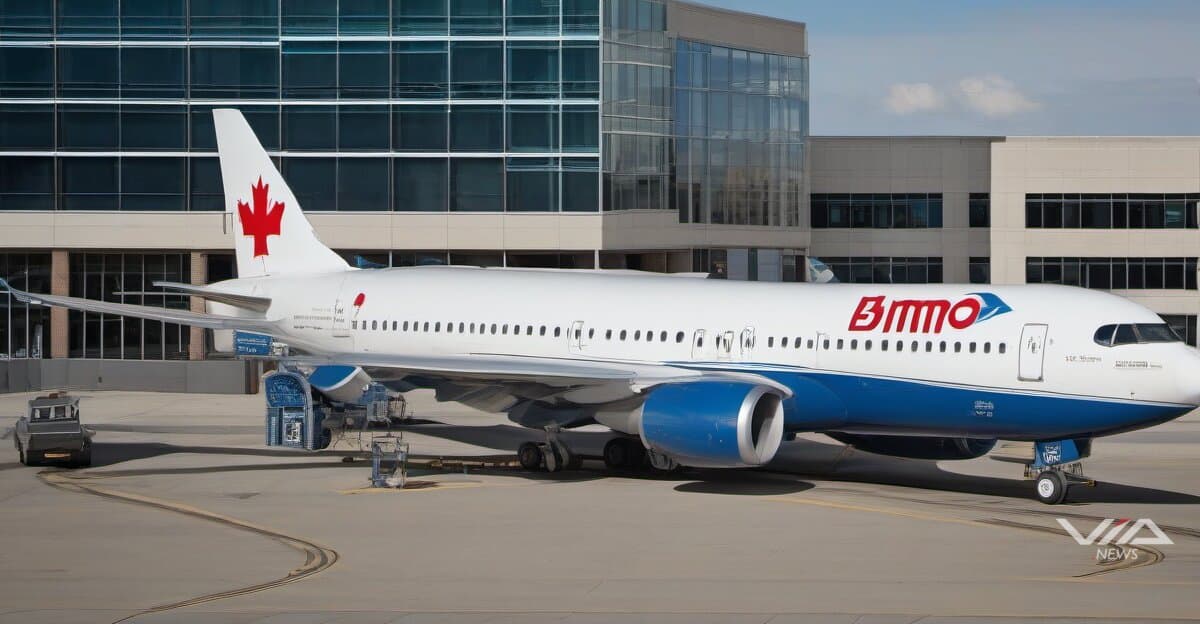
Image generated by AI for illustrative purposes. Not actual footage or photography from the reported events.
Loading stream...

Bank of Montreal announced its exit from AIR MILES on January 26, 2026, initiating a shift that analysts expect will reduce the loyalty program's transaction volume by 15-25% over the next two years. Diversified Royalty Corp (DIV.TO) owns AIR MILES through AM Royalties Limited Partnership, making BMO's departure material to the company's royalty revenue model.

BMO serves dual roles in the AIR MILES ecosystem: customer of Air Miles Loyalty Inc. and guarantor of AM Royalties Limited Partnership. The bank's transition to a proprietary loyalty program removes a major transaction generator from the AIR MILES network at a confidence level of 78% for the predicted impact range.

Multiple partnership amendments and contract awards materialized on January 26, pointing to immediate contract restructuring. The timing suggests AIR MILES management anticipated the departure and moved to shore up alternative partnerships. Market observers will track Q1-Q4 2026 enrollment and redemption volumes to validate the 15-25% transaction decline thesis.

Diversified Royalty Corp faces revenue pressure across its AIR MILES segment as BMO customers migrate to the new program. The company's quarterly earnings reports will reveal whether the partnership restructuring offsets lost BMO volume or if royalty payments from AM Royalties Limited Partnership contract accordingly.

Canadian loyalty program market share dynamics now favor players who can replace BMO's contribution. Competitors including PC Optimum and Scene+ could absorb displaced AIR MILES collectors, fragmenting the rewards ecosystem further. The 15-25% volume reduction assumes moderate customer retention by AIR MILES through existing grocery, fuel, and retail partnerships.

Investors monitoring DIV.TO should examine three metrics through 2027: AIR MILES segment revenue changes in quarterly reports, program enrollment trends, and BMO customer migration rates. The test criteria provide clear validation points for the predictive hypothesis, with Q2 2026 results offering the first substantive data on post-exit performance.

The departure marks a shift in bank-loyalty program relationships, with financial institutions increasingly favoring proprietary rewards systems over third-party platforms. This trend could pressure other AIR MILES banking partners to reconsider their participation, compounding volume risks beyond the immediate BMO impact.

What we know · the intelligence behind this page
Live from the substrate
What we're seeing
Vertical AI Agents Attract a Funding Wave Across Fintech-Adjacent Industries
A cluster of AI-native startups applying autonomous agents to narrow, operational problems — hotel front-desk staffing (Dextr AI), identity/fraud risk for financial institutions (Baselayer), insurance distribution (Napo, Connie Health, MGT Insurance) — closed seed-to-Series A rounds within days of each other in September 2026, with CB Insights running a coordinated CEO interview series to spotlight them. The pattern points to agentic AI maturing from generic chat tools into vertical, revenue-generating products, with identity verification for AI agents themselves (Baselayer) emerging as a new fintech infrastructure category responding directly to AI-driven fraud risk.
Our read on the data ›
Signals we're tracking
Satellite-Terrestrial Network Integration Acceleration
Increased investment and launches in hybrid satellite-cellular networks across telecom industry; competitive responses from other carriers; regulatory activity around satellite spectrum; expansion of emergency/rural connectivity use cases
Patterns we're watching ›
Where sources disagree
ING Group
Both facts record the same metric (shares_outstanding) for ING Group at the identical observation date (2025-12-31). FACT A states 2,902,437,688 shares; FACT B states 2,902 million shares (2,902,000,000). The difference is 437,688 shares (~0.015%). This is a genuine value conflict, though the discrepancy appears to result from FACT B rounding to the nearest million while FACT A provides the precise count.
We flag conflicts openly ›
Recently verified
✓ Checked against the original source
4,984
facts traced to their source — and we flag the ones that don't hold up.
101 entities tracked4,984 facts checked against source5,306 source documents archived
Query this data → isubstrate.com
BMO Exit Could Cut AIR MILES Transaction Volume 15-25%, Threatening Diversified Royalty Revenue | ViaNews Market