

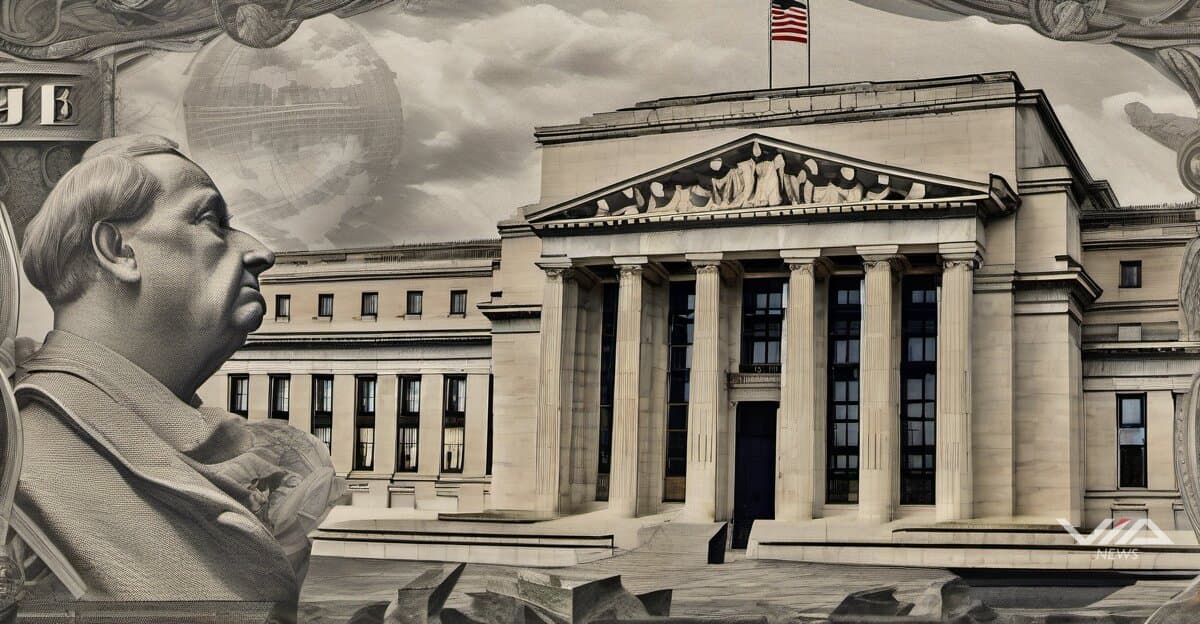
Fed rate futures price just a 1-in-3 probability of a cut in 2026, as G-7 central banks lock into a synchronized rate-hold cycle.1 The Fed, Bank of England, ECB, Bank of Japan, and Bank of Canada are all holding — a global pause driven by persistent inflation and ongoing trade policy uncertainty.
Jerome Powell's chairmanship expires May 15. Kevin Warsh is the frontrunner to succeed him — a hawkish pick that signals tighter-for-longer policy regardless of political pressure. "If Trump wants someone easy on inflation, he got the wrong guy in Kevin Warsh," one analyst warned. Powell himself acknowledged that "expectations for inflation have climbed since the start of the year," setting the tone for a cautious handoff.
ECB policymakers reflect the same posture. Governing Council member Gediminas Simkus said the bank should not raise rates at its April meeting but could not rule out a hike later in 2026.2 Fellow member Martins Kazaks added there is "no urgency" to act from the current 2% rate, with data not yet justifying a move.3 Baltic central bank commentary from Eesti Pank echoes the broader ECB consensus: watch and wait.4
Equity markets are already repricing the higher-for-longer environment. Cloud ETFs CLOD and WCLD have lost 14% and 22%, respectively. SKYY dropped 10%. Credit scoring firm FICO fell 6%. Fintech faces a compounding headwind: elevated borrowing costs plus government-mandated reductions to credit scoring fees, squeezing margins from two directions simultaneously.
For rates traders, the Warsh succession reshapes the risk distribution. A Fed chair focused on inflation control — during a period of trade disruption — reduces early easing probability even if growth data weakens. The current 1-in-3 cut odds in futures may prove optimistic.1
Short-end rate futures remain the cleanest expression of this thesis. Fed funds futures positioning for the back half of 2026 will be sensitive to two catalysts: any upside inflation surprise and the tone of Warsh's Senate confirmation hearings. Either could push cut expectations further out — and deepen the repricing already underway in rate-sensitive equities.