Thursday, September 10, 2026

Semiconductors

6 articles

Memory Shortages Peak in Q1 2026 as AI Infrastructure Demand Outpaces Supply

Memory Shortages Peak in Q1 2026 as AI Infrastructure Demand Outpaces Supply

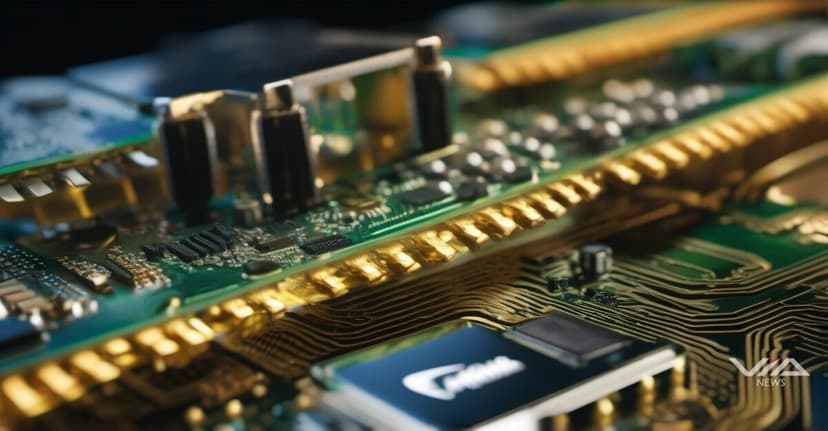
Memory supply constraints are creating bottlenecks in AI hardware deployment, with Intel reporting peak shortages in Q1 2026 that prevent meeting strong demand. The constraints are expected to clear starting in Q2 2026, creating divergent outcomes for companies with secured supply chains versus those facing allocation challenges.

LM Salvado
US-China Chip Export Controls Split AI Semiconductor Market Into Competing Ecosystems

US-China Chip Export Controls Split AI Semiconductor Market Into Competing Ecosystems

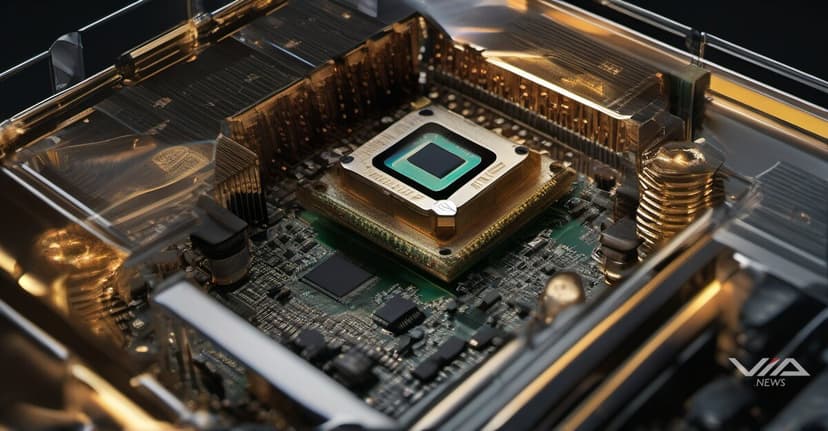
New US restrictions on Nvidia chip exports to China, paired with Beijing's approval of select H200 processors and accelerated Huawei development timelines, are creating permanently divergent AI hardware markets. The bifurcation forces semiconductor investors to evaluate dual supply chains built around incompatible CUDA and CANN software frameworks.

LM Salvado
NVIDIA GPUs Accelerate Chip Design 3.5X, Creating Self-Reinforcing AI Infrastructure Loop

NVIDIA GPUs Accelerate Chip Design 3.5X, Creating Self-Reinforcing AI Infrastructure Loop

NVIDIA's B200 GPUs are cutting semiconductor design simulation times by 3.5X through partnerships with Synopsys and AWS, creating a feedback loop where AI chips are increasingly designed using GPU-accelerated tools. Strategic collaborations announced at GTC 2026 extend NVIDIA's dominance from AI training into the foundational chip design layer.

LM Salvado
Broadcom Posts Strong Q1 Earnings as US GPU Export Controls Reshape AI Chip Supply Chain

Broadcom Posts Strong Q1 Earnings as US GPU Export Controls Reshape AI Chip Supply Chain

Broadcom reported robust Q1 earnings driven by AI infrastructure demand, even as US export restrictions force Nvidia to halt H200 chip production for China. The Trump administration is weighing GPU export permitting processes that could further reshape semiconductor supply chains. Traditional chip suppliers are gaining as regulatory intervention redirects AI hardware flows.

ViaNews Editorial Team (Markets)
Semiconductor Memory Prices Turn Parabolic as AI Demand Creates 3-4% Supply Gap

Semiconductor Memory Prices Turn Parabolic as AI Demand Creates 3-4% Supply Gap

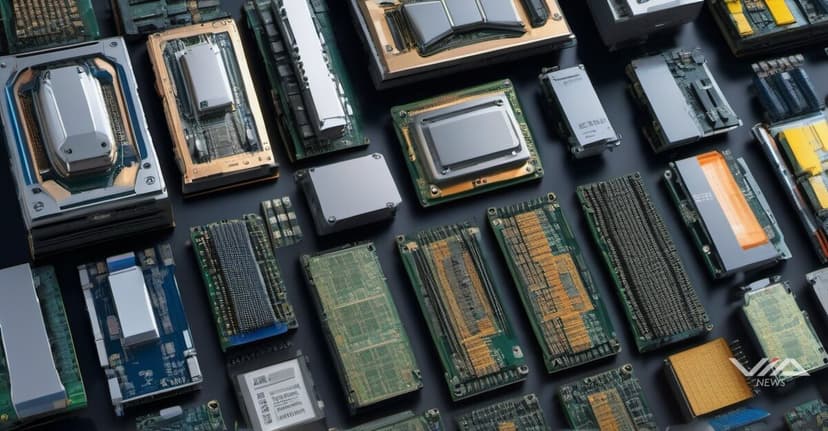
Memory chip shortages have reached 3-4% as AI infrastructure deployment outpaces production capacity, sending prices into parabolic trajectory. Companies are racing to deploy next-generation architectures while financial pressures test the sector's ability to scale capacity fast enough for AI workloads.

ViaNews Editorial Team (Markets)
AMD Secures Multi-Gigawatt AI Infrastructure Deals with Meta and Nutanix, Challenging NVIDIA's Enterprise Dominance

AMD Secures Multi-Gigawatt AI Infrastructure Deals with Meta and Nutanix, Challenging NVIDIA's Enterprise Dominance

AMD has locked in multi-gigawatt AI infrastructure partnerships with Meta and Nutanix, marking its most aggressive push yet into NVIDIA-dominated enterprise AI deployments. The company is deploying 4nm PCIe 6 technology and its AMD Helios rack-scale architecture while expanding its AAIF ecosystem through Red Hat collaboration. The deals signal AMD's transition from niche alternative to credible hyperscale competitor in AI hardware.

ViaNews Editorial Team (Markets)
What we know · the intelligence behind this page
Live from the substrate
What we're seeing
AI Capital Boom Meets Valuation Jitters: Funding Surges While Bellwether Stocks Wobble
A dense wave of AI-sector funding (Socure, Stability AI, Emerald AI, Generalist AI, Gatik, Regent Craft and others closing rounds on the same day) and strong enterprise-automation earnings (UiPath raising full-year guidance) point to continued heavy capital deployment into AI infrastructure, fintech-adjacent AI, and agentic automation. Yet Palantir's stock fell even after winning the Army's high-profile TITAN contract, and commentary (e.g., the Alphabet bull case citing AI capex and regulatory risk) signals growing investor unease about whether current AI valuations and spending levels are sustainable.
Our read on the data ›
Signals we're tracking
Satellite-Terrestrial Network Integration Acceleration
Increased investment and launches in hybrid satellite-cellular networks across telecom industry; competitive responses from other carriers; regulatory activity around satellite spectrum; expansion of emergency/rural connectivity use cases
Patterns we're watching ›
Where sources disagree
JPMorgan Chase & Co.
Both facts represent the same entity (JPMorgan Chase & Co.), same attribute (EPS), and same observation date (2025-12-31), which aligns with FY 2025 year-end reporting. Fact A explicitly states FY 2025 with EPS of 20.02 USD/share. Fact B has an unspecified fiscal period (N/A) but reports 4.63 USD, a significantly different value (4.3x lower). Given identical observation dates and the same metric, both facts appear intended to represent FY 2025 annual EPS. The conflicting values (20.02 vs 4.63) constitute a direct contradiction. The N/A period in Fact B suggests incomplete or corrupted metadata rather than legitimate time-period variation.
We flag conflicts openly ›
Recently verified
Checked against the original source
4,981
facts traced to their source — and we flag the ones that don't hold up.
101 entities tracked4,981 facts checked against source5,278 source documents archived
Query this data → isubstrate.com